Kotake Masanori, Bando Hiroyuki, Kaneko Mami, Takemura Hirofumi, Minamoto Toshinari, Kawakami Kazuyuki
Department of General and Cardiothoracic Surgery, Graduate School of Medical Science, Kanazawa University, Kanazawa, Ishikawa 920-8641, Japan.
Department of Gastrointestinal Surgery, Ishikawa Prefectural Central Hospital, Kanazawa, Ishikawa 920-8530, Japan.
Mol Clin Oncol. 2021 Nov;15(5):235. doi: 10.3892/mco.2021.2398. Epub 2021 Sep 17.
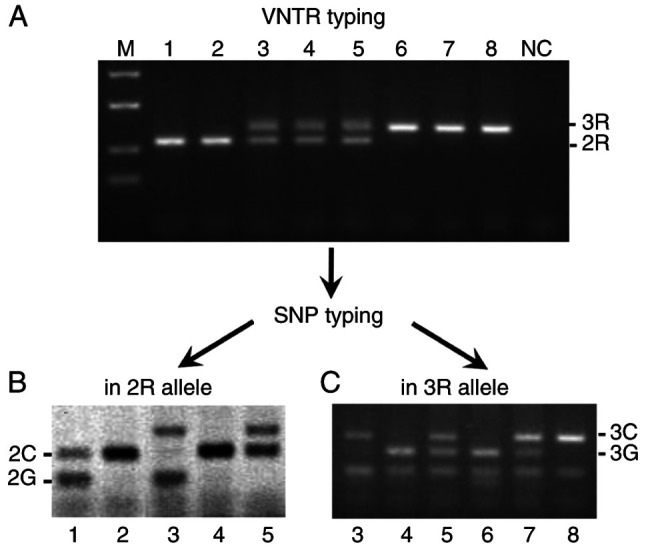
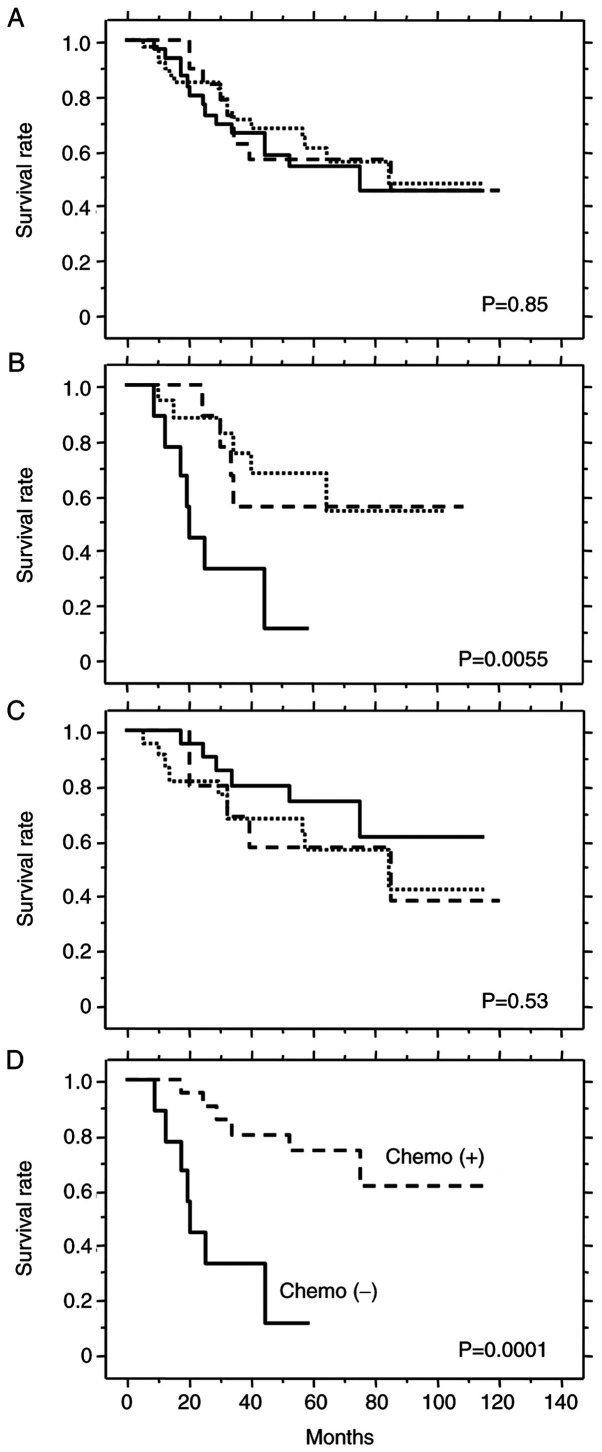
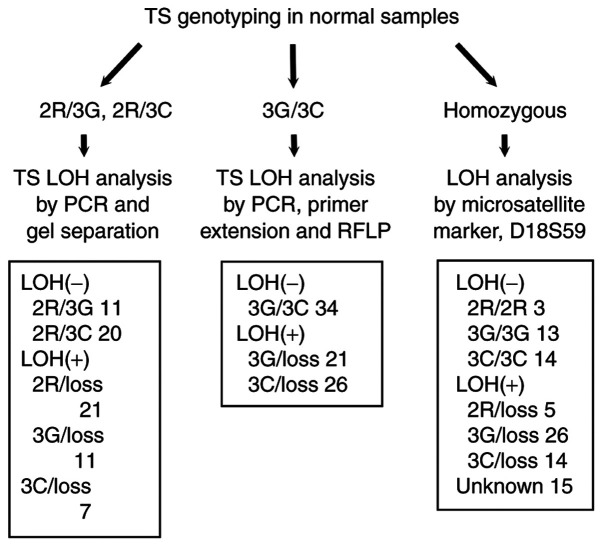
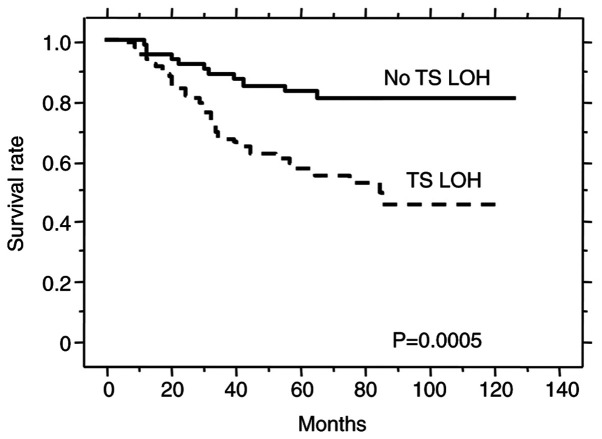
The aim of the current study was to investigate the prognostic and predictive significance of polymorphisms in the thymidylate synthase (TS) gene, alongside the loss of heterozygocity (LOH) at this gene locus in patients with colorectal cancer. Genotyping was carried out for a variable number tandem repeat (VNTR) polymorphism in the TS 5'-untranslated region, a G/C single nucleotide polymorphism (SNP) located within this VNTR, and for TS LOH status in 246 colorectal cancer and paired normal DNA samples. The results were analyzed in relation to clinicopathological features, including the prognostic and predictive significance of TS genotype in patients who underwent curative surgery. Complete VNTR, SNP and LOH information for TS was obtained in 226 cases. No significant associations were observed between normal tissue TS genotype status and clinicopathological features. LOH of TS was observed in 58% of tumor samples and was associated with poor prognosis independently of clinical stage. Cases exhibiting TS LOH were classified into the three groups of 2R/loss, 3G/loss and 3C/loss. Patients with 3C/loss genotype status had poor outcomes when treated by surgery alone, but their survival was similar to patients with other genotypes following Fluorouracil (5-FU)-based adjuvant chemotherapy. The results suggested that LOH of the TS locus may be a significant prognostic factor in colorectal cancer, with the genotype of the residual allele also demonstrating an influence on prognosis. In conclusion, LOH status should be considered when TS genotype is explored as a potential prognostic and predictive marker for 5-FU-based adjuvant chemotherapy in colorectal cancer.
本研究的目的是调查胸苷酸合成酶(TS)基因多态性的预后和预测意义,以及结直肠癌患者该基因位点的杂合性缺失(LOH)情况。对246份结直肠癌及配对的正常DNA样本进行胸苷酸合成酶5'-非翻译区可变数目串联重复序列(VNTR)多态性、位于该VNTR内的G/C单核苷酸多态性(SNP)以及胸苷酸合成酶LOH状态的基因分型。结合临床病理特征分析结果,包括TS基因型对接受根治性手术患者的预后和预测意义。226例病例获得了完整的胸苷酸合成酶VNTR、SNP和LOH信息。正常组织TS基因型状态与临床病理特征之间未观察到显著关联。58%的肿瘤样本中观察到胸苷酸合成酶LOH,且与预后不良相关,独立于临床分期。表现出胸苷酸合成酶LOH的病例分为2R/缺失、3G/缺失和3C/缺失三组。3C/缺失基因型状态的患者单纯手术治疗时预后较差,但在接受基于氟尿嘧啶(5-FU)的辅助化疗后,其生存率与其他基因型患者相似。结果表明,胸苷酸合成酶基因座的LOH可能是结直肠癌的一个重要预后因素,残留等位基因的基因型也对预后有影响。总之,在探索胸苷酸合成酶基因型作为结直肠癌基于5-FU辅助化疗的潜在预后和预测标志物时,应考虑LOH状态。