Department of Surgery, Kaohsiung Veterans General Hospital, No. 386, Da-Zhong 1st Rd., Kaohsiung, Taiwan, Republic of China.
School of Medicine, National Yang Ming Chiao Tung University, No. 155, Sec. 2, Linong St., Taipei, Taiwan, Republic of China.
Sci Rep. 2021 Oct 15;11(1):20524. doi: 10.1038/s41598-021-99950-1.
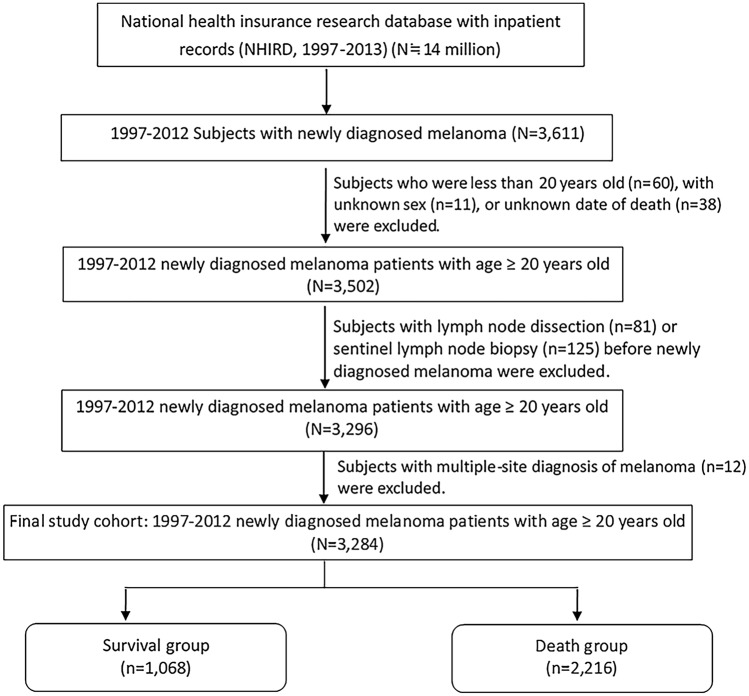
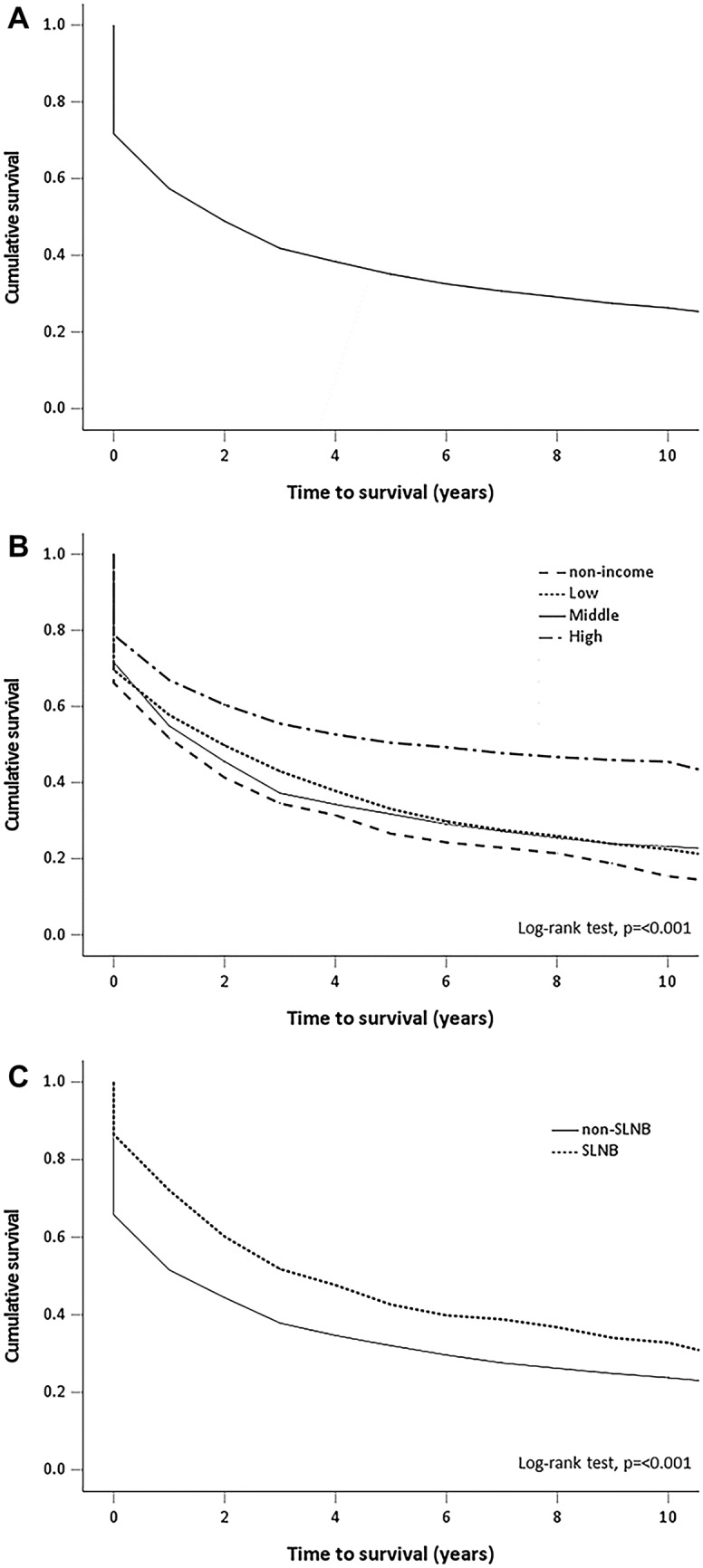
Cutaneous malignant melanoma is a rare but fatal disease in East Asia. Despite its increasing incidence, a general lack of awareness about the disease was noted. This study aims to provide population-based prognostic analysis of melanoma with sentinel lymph node biopsy (SLNB) in Taiwan. We conducted this retrospective cohort study using the data from Taiwan National Health Insurance Research Database during 1997-2013. The study cohort contains 3284 patients. The 5-year survival rates of patients undergoing SLNB and not undergoing SLNB were 45.5% and 33.6%. In multivariate analysis, age ≥ 80 years [adjusted hazard ratio (aHR) = 2.15] and male (aHR = 1.19) were associated with a poorer prognosis, while high social economic status (SES) (aHR = 0.69) and undergoing SLNB (aHR = 0.84) were good prognostic factors. Old age and low SES were associated with lower percentages of patients undergoing SLNB (P < 0.001). E-value analysis suggested robustness to unmeasured confounding. In conclusion, undergoing SLNB was associated with a better prognosis. The poor prognosis of old age and low SES may be due to decreased percentages of patients undergoing SLNB. Therefore, we recommend that SLNB should be performed on patients, especially in old age or low SES, who are candidates for SLNB according to current guidelines to achieve maximal survival.
皮肤恶性黑色素瘤在东亚是一种罕见但致命的疾病。尽管发病率不断上升,但人们普遍缺乏对这种疾病的认识。本研究旨在对台湾进行基于人群的黑色素瘤伴前哨淋巴结活检(SLNB)的预后分析。我们使用台湾国家健康保险研究数据库 1997-2013 年的数据进行了这项回顾性队列研究。研究队列包含 3284 名患者。接受 SLNB 和未接受 SLNB 的患者的 5 年生存率分别为 45.5%和 33.6%。在多变量分析中,年龄≥80 岁(调整后的危险比[aHR] = 2.15)和男性(aHR = 1.19)与预后较差相关,而高社会经济地位(SES)(aHR = 0.69)和接受 SLNB(aHR = 0.84)是良好的预后因素。老年和低 SES 与接受 SLNB 的患者比例较低有关(P < 0.001)。E 值分析表明,对未测量的混杂因素具有稳健性。总之,接受 SLNB 与较好的预后相关。年龄较大和 SES 较低的不良预后可能是由于接受 SLNB 的患者比例较低所致。因此,我们建议根据当前指南对 SLNB 候选患者,特别是老年或 SES 较低的患者进行 SLNB,以实现最大生存。