Interdisciplinary Graduate Program in Health Sciences, Federal University of Sao Paulo (UNIFESP), Brazil.
Neurology / Neuroscience Graduate Program, Federal University of Sao Paulo (UNIFESP), Brazil.
Behav Brain Res. 2022 Jan 24;417:113630. doi: 10.1016/j.bbr.2021.113630. Epub 2021 Oct 14.
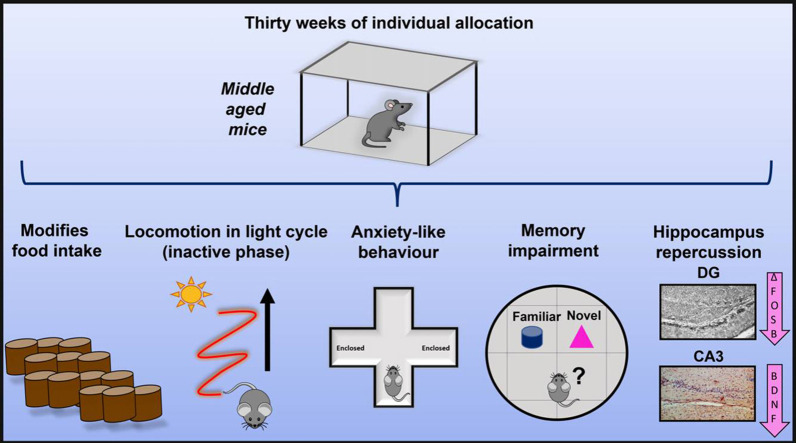
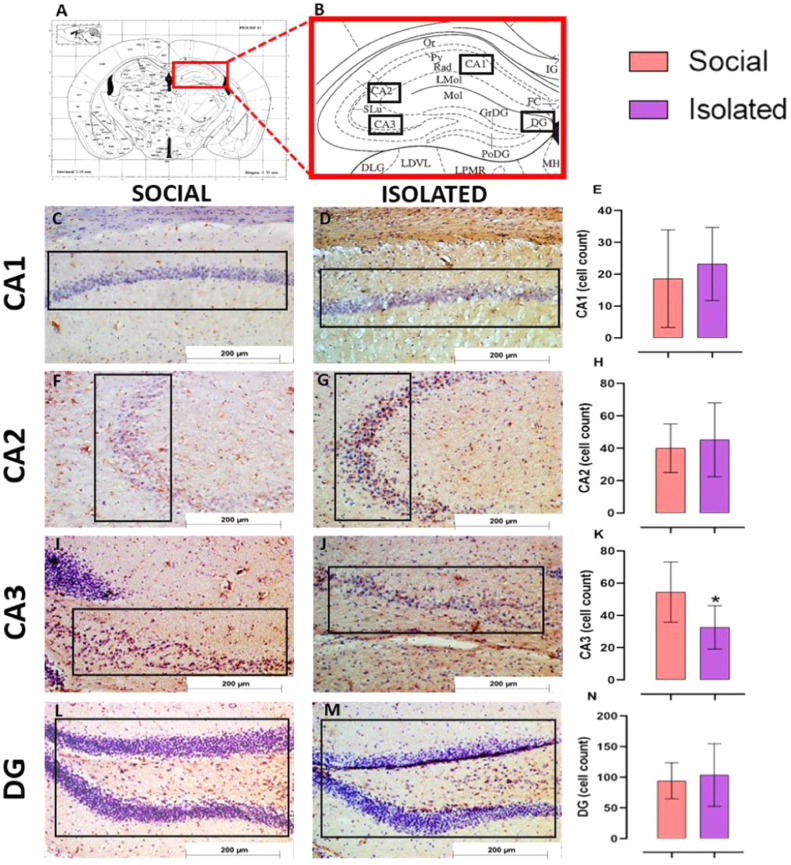
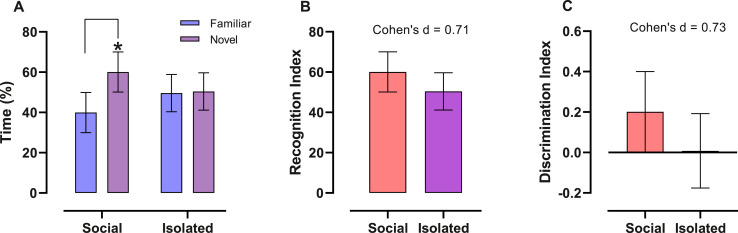
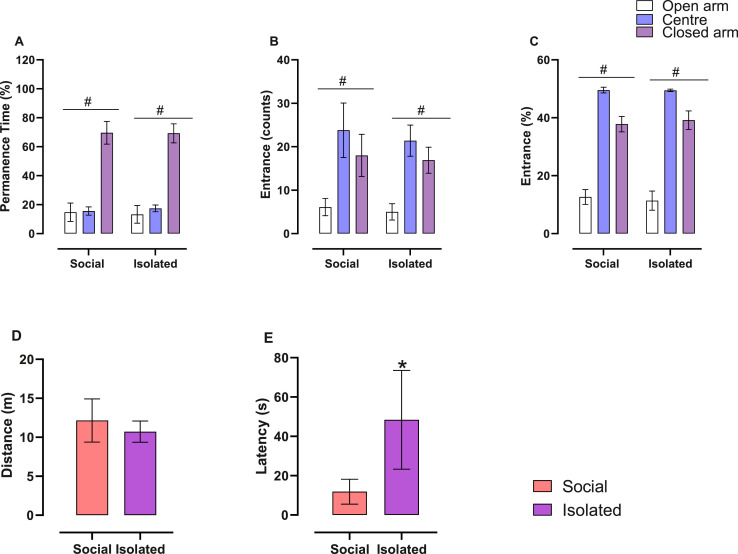
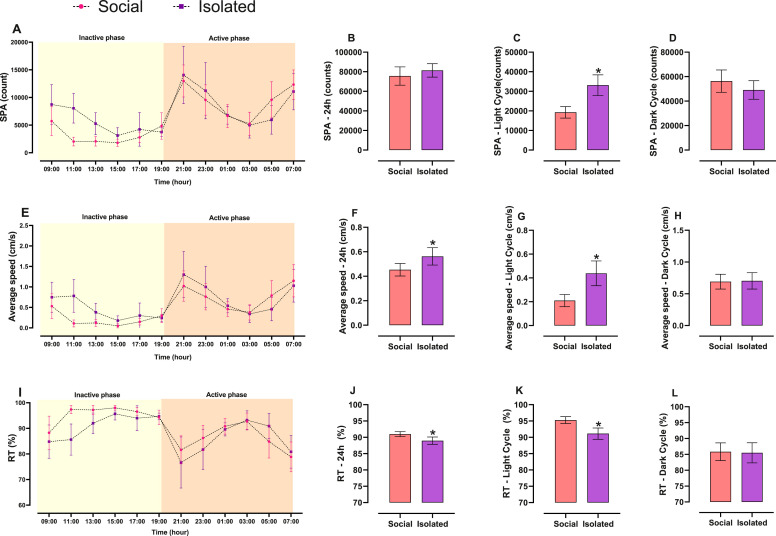
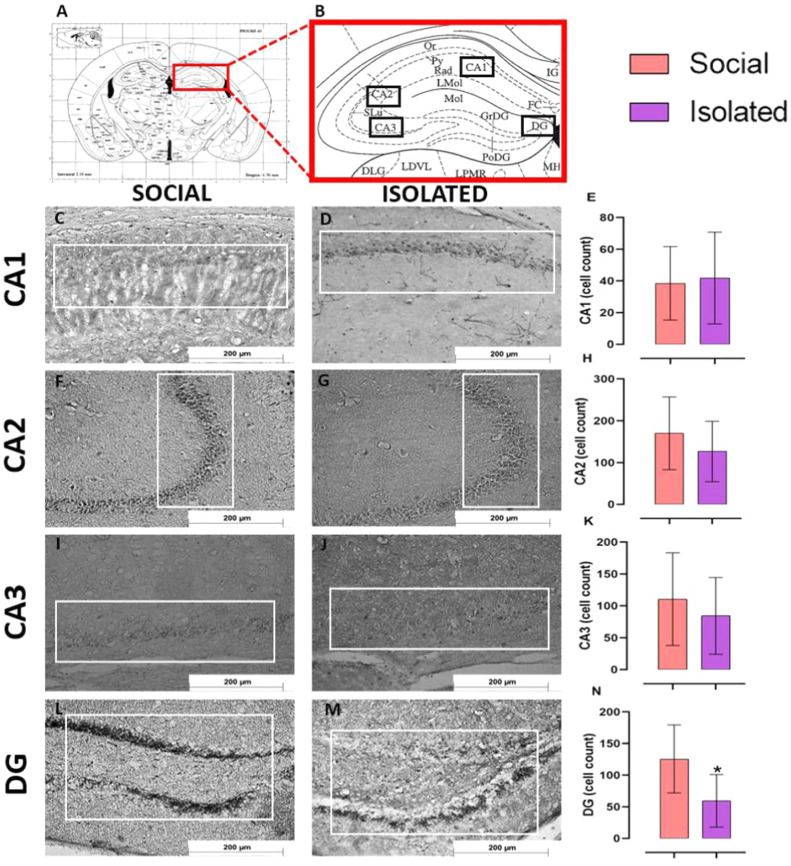
Social isolation gained discussion momentum due to the COVID-19 pandemic. Whereas many studies address the effects of long-term social isolation in post-weaning and adolescence and for periods ranging from 4 to 12 weeks, little is known about the repercussions of adult long-term social isolation in middle age. Thus, our aim was to investigate how long-term social isolation can influence metabolic, behavioural, and central nervous system-related areas in middle-aged mice. Adult male C57Bl/6 mice (4 months-old) were randomly divided into Social (2 cages, n = 5/cage) and Isolated (10 cages, n = 1/cage) housing groups, totalizing 30 weeks of social isolation, which ended concomitantly with the onset of middle age of mice. At the end of the trial, metabolic parameters, short-term memory, anxiety-like behaviour, and physical activity were assessed. Immunohistochemistry in the hippocampus (ΔFosB, BDNF, and 8OHDG) and hypothalamus (ΔFosB) was also performed. The Isolated group showed impaired memory along with a decrease in hippocampal ΔFosB at dentate gyrus and in BDNF at CA3. Food intake was also affected, but the direction depended on how it was measured in the Social group (individually or in the group) with no alteration in ΔFosB at the hypothalamus. Physical activity parameters increased with chronic isolation, but in the light cycle (inactive phase), with some evidence of anxiety-like behaviour. Future studies should better explore the timepoint at which the alterations found begin. In conclusion, long-term social isolation in adult mice contributes to alterations in feeding, physical activity pattern, and anxiety-like behaviour. Moreover, short-term memory deficit was associated with lower levels of hippocampal ΔFosB and BDNF in middle age.
社交隔离因 COVID-19 大流行而受到关注。虽然许多研究都针对断奶后和青春期的长期社交隔离以及 4 至 12 周的时间段进行了研究,但对于中年时期成年长期社交隔离的影响却知之甚少。因此,我们的目的是研究长期社交隔离如何影响中年小鼠的代谢、行为和中枢神经系统相关区域。成年雄性 C57Bl/6 小鼠(4 个月大)被随机分为社交(2 个笼子,n = 5/笼)和隔离(10 个笼子,n = 1/笼)饲养组,总共进行 30 周的社交隔离,正好与小鼠中年的开始同时进行。试验结束时,评估了代谢参数、短期记忆、焦虑样行为和身体活动。还对海马体(ΔFosB、BDNF 和 8OHDG)和下丘脑(ΔFosB)进行了免疫组织化学分析。隔离组的记忆受损,同时海马齿状回的 ΔFosB 和 CA3 区的 BDNF 减少。食物摄入也受到影响,但方向取决于社交组(单独或分组)如何测量,下丘脑的 ΔFosB 没有变化。随着慢性隔离,身体活动参数增加,但在光照周期(非活动期)中,出现了焦虑样行为的一些迹象。未来的研究应该更好地探索发现的改变开始的时间点。总之,成年小鼠的长期社交隔离会导致摄食、身体活动模式和焦虑样行为的改变。此外,短期记忆缺陷与中年时海马体 ΔFosB 和 BDNF 水平降低有关。