Laboratory of Behavioral Genetics, Brain Mind Institute, École Polytechnique Fédérale de Lausanne (EPFL), CH-1015, Lausanne, Switzerland.
Neuroscience Institute and Department of Neurology, Langone Medical Center, New York University, New York, NY, USA.
Transl Psychiatry. 2021 Oct 16;11(1):533. doi: 10.1038/s41398-021-01659-2.
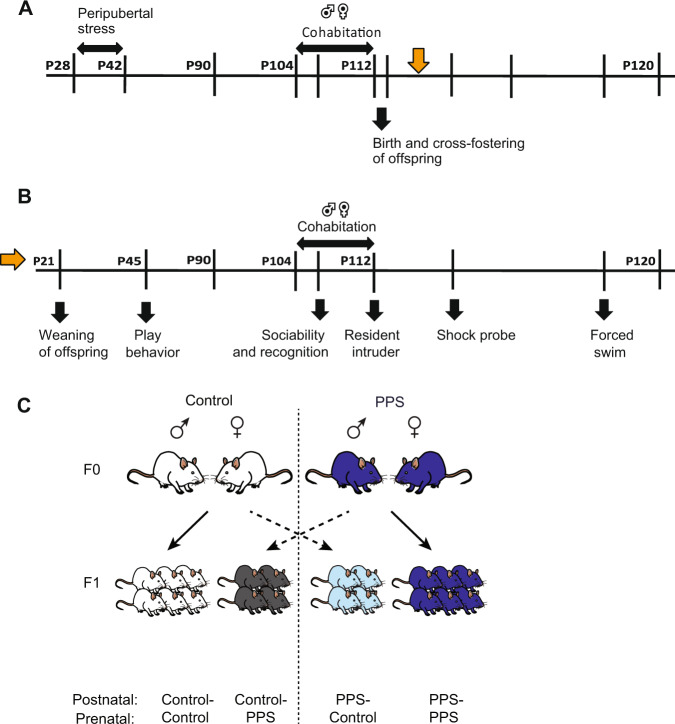
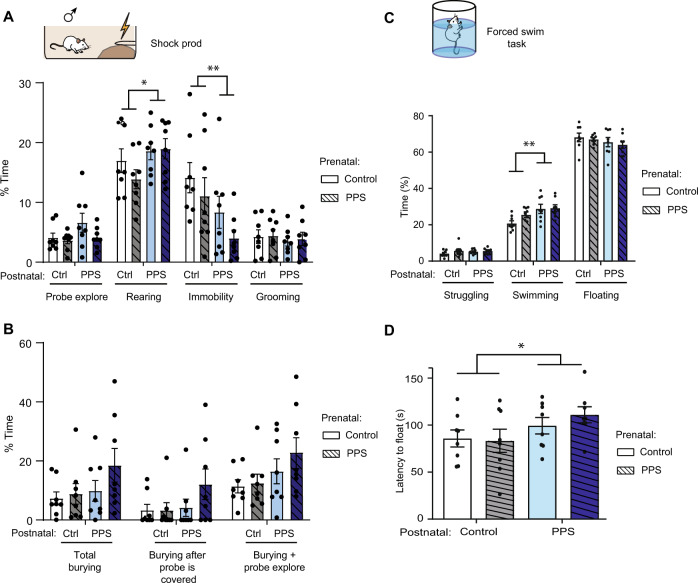
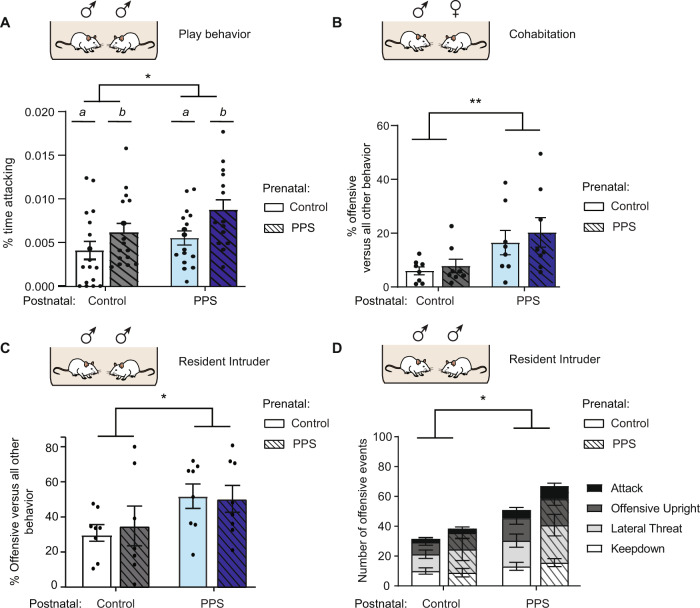
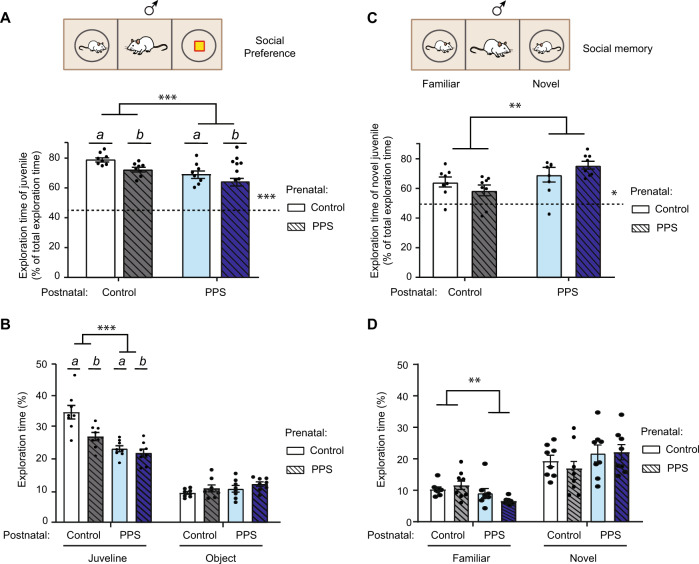
Prenatal experience and transgenerational influences are increasingly recognized as critical for defining the socio-emotional system, through the development of social competences and of their underlying neural circuitries. Here, we used an established rat model of social stress resulting from male partner aggression induced by peripubertal (P28-42) exposure to unpredictable fearful experiences. Using this model, we aimed to first, characterize adult emotionality in terms of the breadth of the socio-emotional symptoms and second, to determine the relative impact of prenatal vs postnatal influences. For this purpose, male offspring of pairs comprising a control or a peripubertally stressed male were cross-fostered at birth and tested at adulthood on a series of socio-emotional tests. In the offspring of peripubertally stressed males, the expected antisocial phenotype was observed, as manifested by increased aggression towards a female partner and a threatening intruder, accompanied by lower sociability. This negative outcome was yet accompanied by better social memory as well as enhanced active coping, based on more swimming and longer latency to immobility in the forced swim test, and less immobility in the shock probe test. Furthermore, the cross-fostering manipulation revealed that these adult behaviors were largely influenced by the post- but not the prenatal environment, an observation contrasting with both pre- and postnatal effects on attacks during juvenile play behavior. Adult aggression, other active coping behaviors, and social memory were determined by the predominance at this developmental stage of postnatal over prenatal influences. Together, our data highlight the relative persistence of early life influences.
产前经历和跨代影响越来越被认为是定义社会情感系统的关键因素,通过发展社会能力及其潜在的神经回路来实现。在这里,我们使用了一种已建立的大鼠社交应激模型,该模型由青春期前(P28-42)暴露于不可预测的恐惧经历引起的雄性伴侣攻击引起。使用这种模型,我们旨在首先根据社会情感症状的广度来描述成年情感性,其次确定产前和产后影响的相对影响。为此,在出生时对包括对照或青春期应激雄性的雄性后代进行交叉寄养,并在成年后进行一系列社会情感测试。在青春期应激雄性的后代中,观察到了预期的反社会表型,表现为对雌性伴侣和威胁性入侵者的攻击性增加,同时社交性降低。这种负面结果还伴随着更好的社会记忆以及增强的积极应对能力,表现在强迫游泳测试中游泳更多和不动的潜伏期更长,以及在电击探头测试中不动的时间更少。此外,交叉寄养操作表明,这些成年行为主要受产后环境而不是产前环境的影响,这一观察结果与青少年玩耍行为中的攻击行为的产前和产后影响形成对比。成年攻击、其他积极应对行为和社会记忆主要取决于这个发育阶段产后环境对产前环境的优势。总之,我们的数据强调了早期生活影响的相对持久性。