Liver Cancer Laboratory, Xiangya Hospital, Central South University, Changsha 410008, Hunan, China.
Department of Surgery, Xiangya Hospital, Central South University, Changsha 410008, Hunan, China.
Carcinogenesis. 2021 Nov 12;42(11):1357-1369. doi: 10.1093/carcin/bgab098.
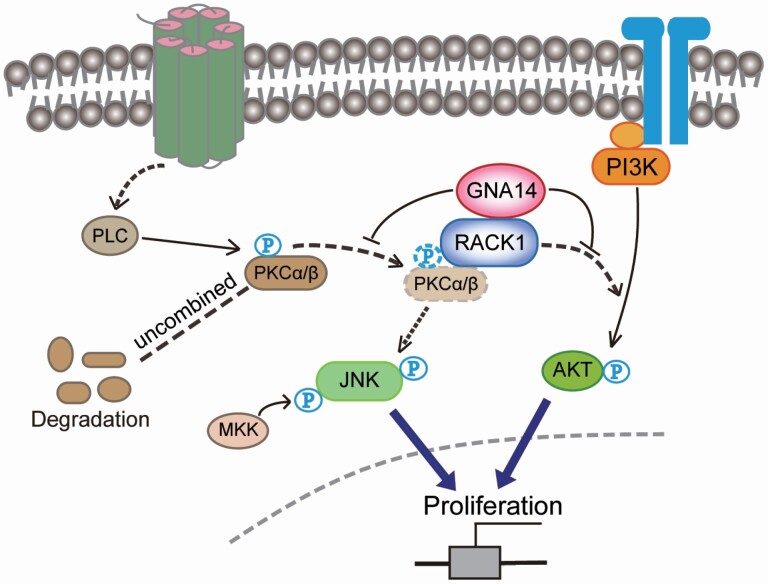
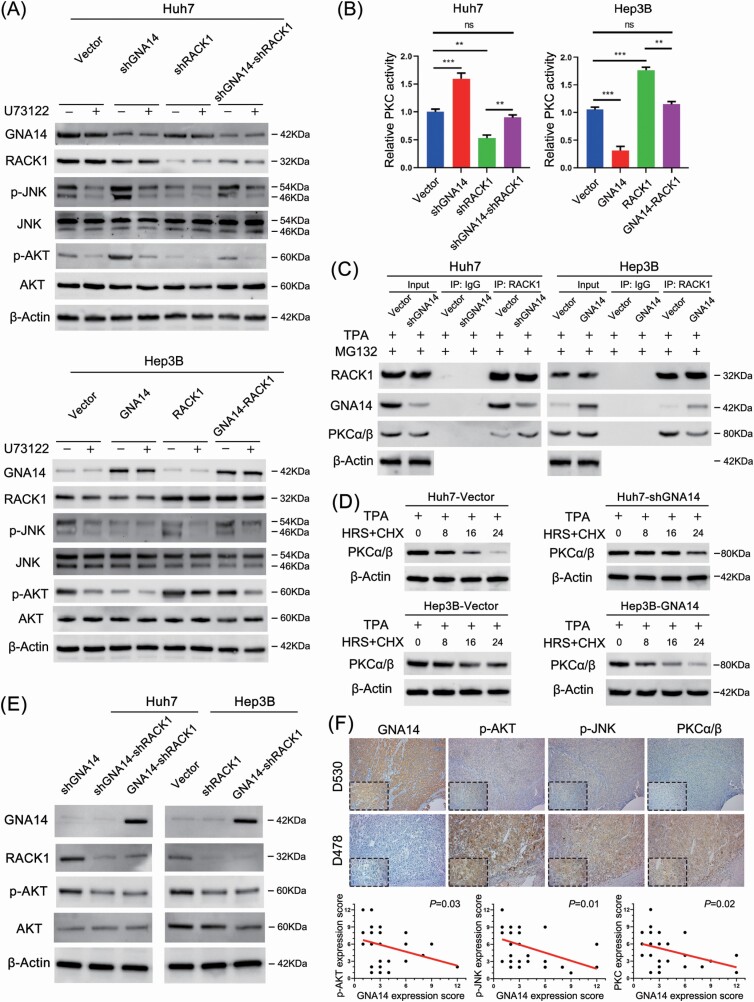
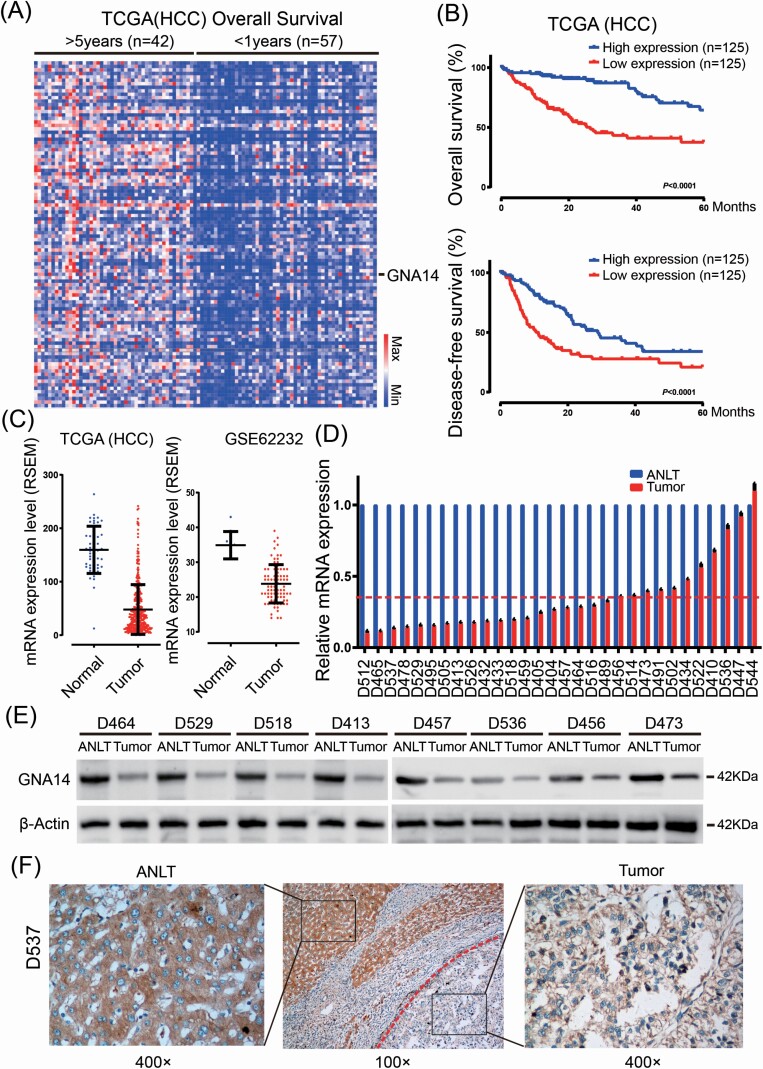
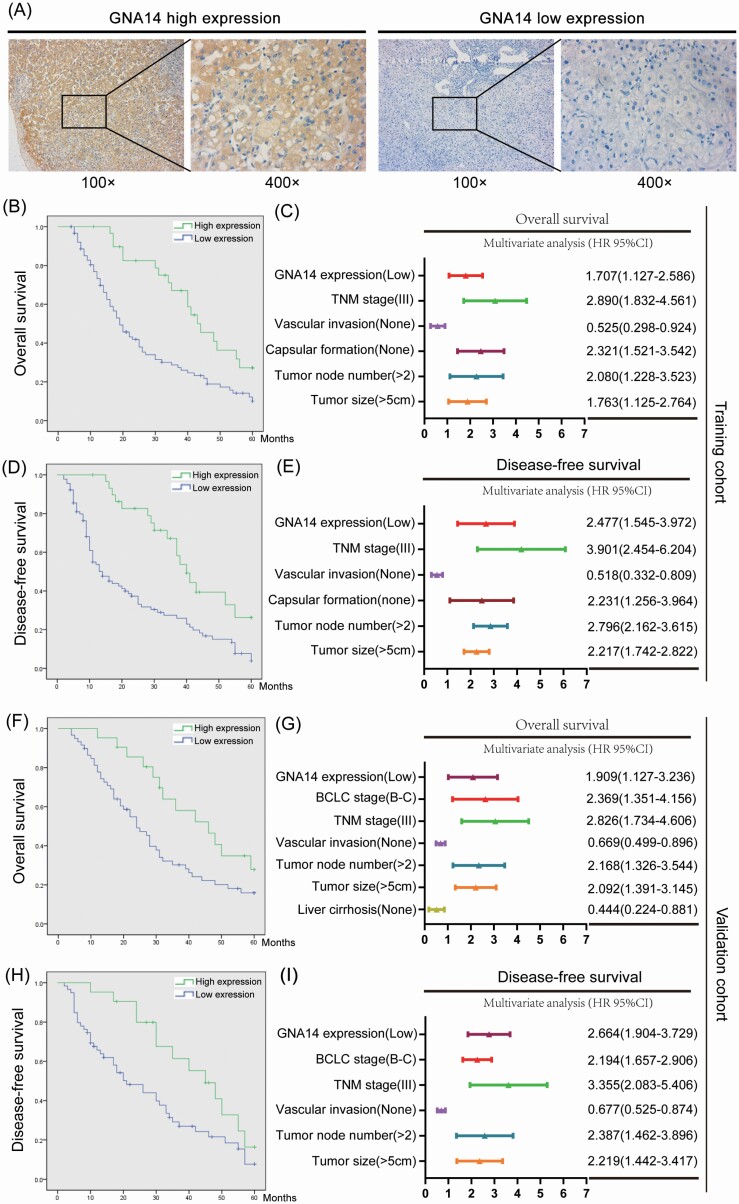
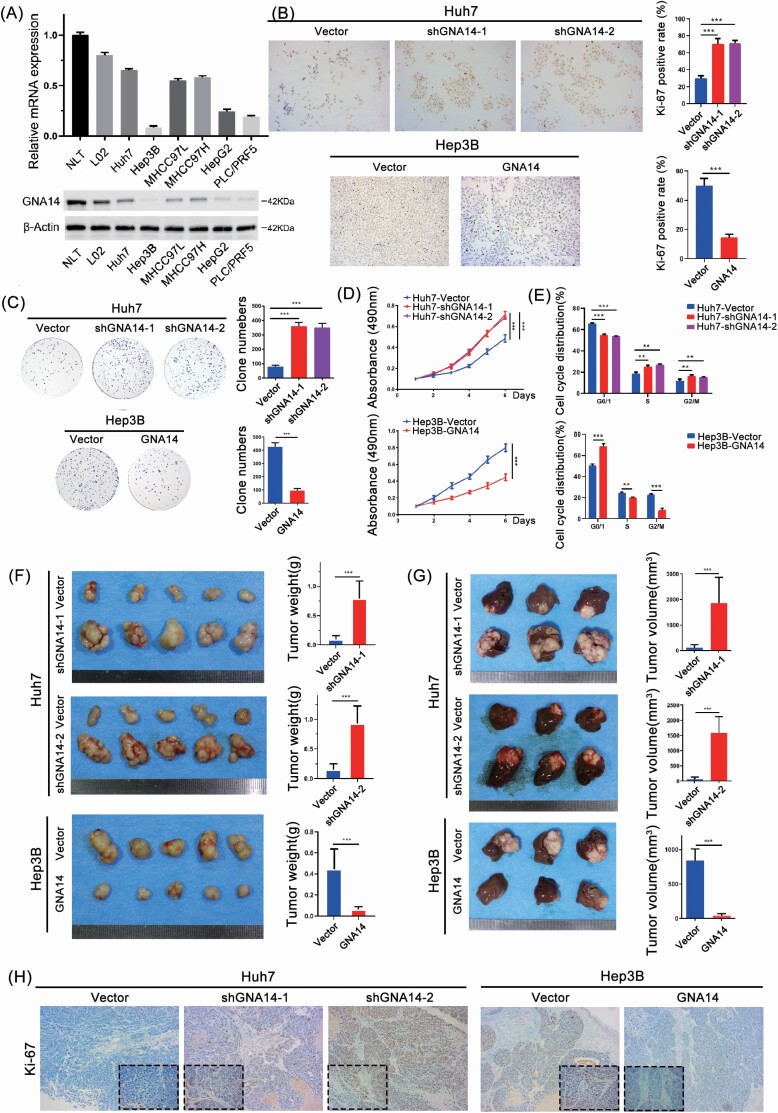
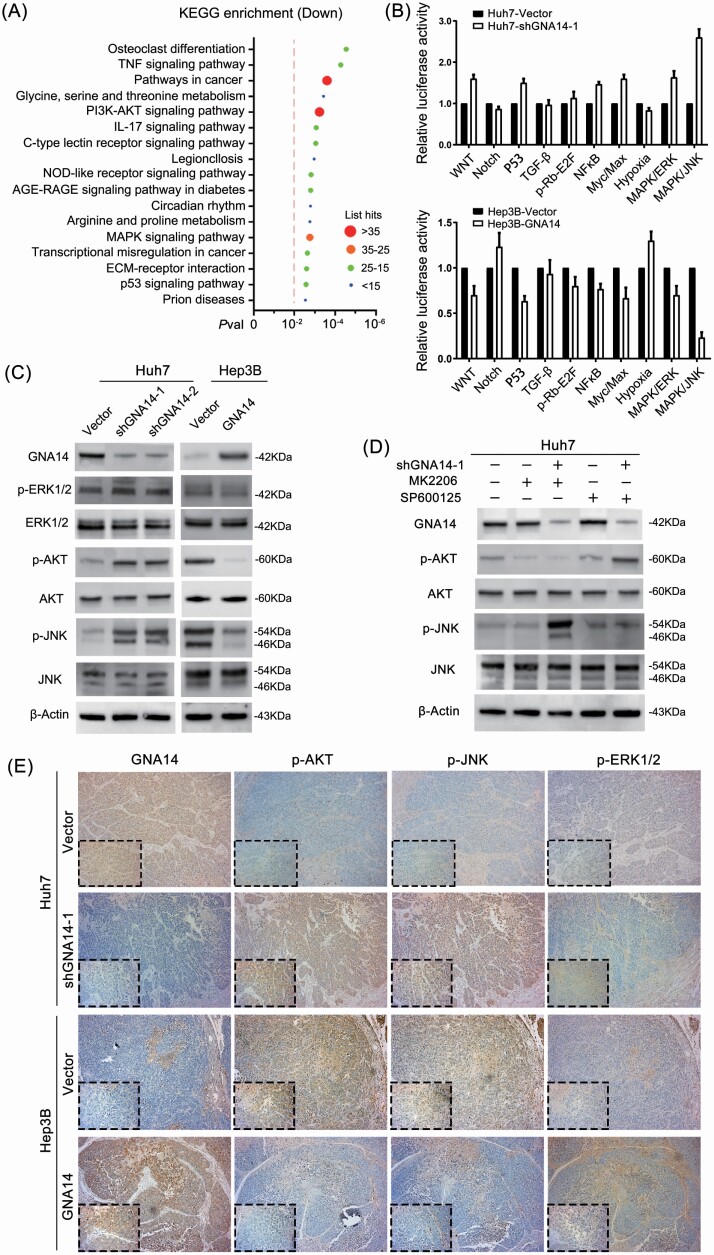
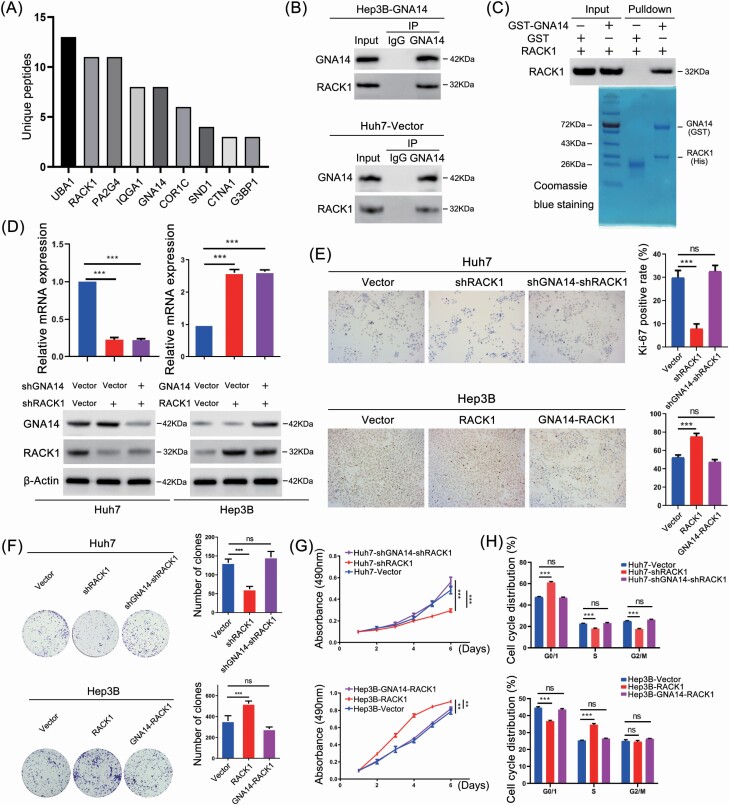
Gαq subfamily proteins play critical roles in many biological functions including cardiovascular development, angiogenesis, and tumorigenesis of melanoma. However, the understanding of G Protein Subunit Alpha 14 (GNA14) in diseases, especially in cancers is limited. Here, we revealed that GNA14 was significantly low expression in Human hepatocellular carcinoma (HCC) samples. Low GNA14 expression was correlated with aggressive clinicopathological features. Moreover, the overall survival (OS) and disease-free survival (DFS) of high GNA14 expression HCC patients were much better than low GNA14 expression group. Lentivirus-mediated GNA14 knockdown significantly promoted the growth of liver cancer in vitro and in vivo. However, opposing results were observed when GNA14 is upregulated. Mechanistically, We identified receptor for activated C kinase 1 (RACK1) as a binding partner of GNA14 by co-immunoprecipitation and mass spectrometry (MS). Glutathione-S-transferase (GST) pull-down assay further verified the direct interaction between GNA14 and RACK1. RNA-Seq and loss- and gain-of-function assays also confirmed that GNA14 reduced the activity of both MAPK/JNK and PI3K/AKT signaling pathways through RACK1. GNA14 synergized with U73122 (PLC inhibitor) to enhance this effect. Further studies suggested that GNA14 potentially competed with protein kinase C (PKC) to bind with RACK1, consequently reducing the stability of PKC. Moreover, we also showed that GNA14'supression of p-AKT protein level depended on sufficient RACK1 expression. In conclusion, we indicated a different role of GNA14, which acted as a suppressor inhibiting liver cancer progression through MAPK/JNK and PI3K/AKT signaling pathways. Due to this, GNA14 served as a potentially valuable prognostic biomarker for liver cancer.
Gαq 亚家族蛋白在许多生物学功能中发挥着关键作用,包括心血管发育、血管生成和黑色素瘤的肿瘤发生。然而,对于 G 蛋白亚单位 Alpha 14(GNA14)在疾病中的作用,尤其是在癌症中的作用了解有限。在这里,我们发现 GNA14 在人肝癌(HCC)样本中的表达显著降低。低 GNA14 表达与侵袭性临床病理特征相关。此外,高 GNA14 表达 HCC 患者的总生存(OS)和无病生存(DFS)明显好于低 GNA14 表达组。慢病毒介导的 GNA14 敲低显著促进了肝癌在体外和体内的生长。然而,当 GNA14 上调时,观察到相反的结果。机制上,我们通过共免疫沉淀和质谱(MS)鉴定受体激活 C 激酶 1(RACK1)为 GNA14 的结合伴侣。谷胱甘肽 S-转移酶(GST)下拉实验进一步验证了 GNA14 与 RACK1 之间的直接相互作用。RNA-Seq 和缺失和获得功能实验也证实,GNA14 通过 RACK1 降低了 MAPK/JNK 和 PI3K/AKT 信号通路的活性。GNA14 与 U73122(PLC 抑制剂)协同作用增强了这种效应。进一步的研究表明,GNA14 可能与蛋白激酶 C(PKC)竞争与 RACK1 结合,从而降低 PKC 的稳定性。此外,我们还表明,GNA14 对 p-AKT 蛋白水平的抑制作用取决于足够的 RACK1 表达。总之,我们表明了 GNA14 的不同作用,它作为一种抑制物通过 MAPK/JNK 和 PI3K/AKT 信号通路抑制肝癌的进展。因此,GNA14 可作为肝癌有价值的潜在预后生物标志物。