Medhane Fitsumberhan, Kirkpatrick James N
Division of Cardiology, University of Washington Medical Center, Seattle, WA, 98195, USA.
Curr Cardiol Rep. 2021 Oct 16;23(12):178. doi: 10.1007/s11886-021-01610-3.
Poor cardiovascular outcomes are linked to COVID-19 in patients with or without prior cardiovascular disease or risk factors. Echocardiography, as a portable, versatile, and comprehensive imaging technique, has been on the frontlines. Yet sonographers and physician imagers are at increased risk of contracting or transmitting COVID-19.
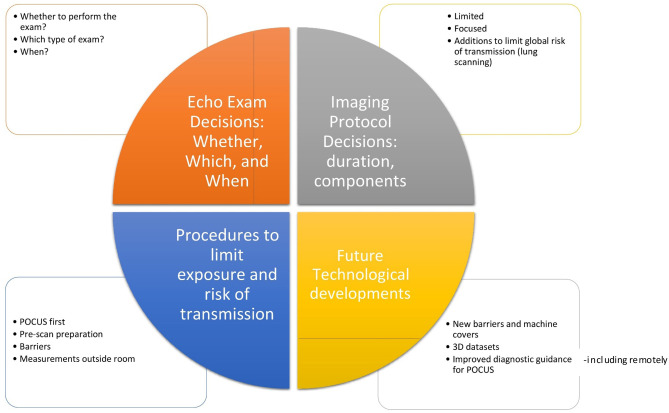
Recent scientific statements incorporate triaging approaches to identify the appropriateness of imaging exam indications, coupled with triaging of indications. Additionally, focused protocols, procedures to reduce exposure, and point-of-care ultrasound play significant roles. Lessons learned during COVID-19 will apply to future pandemics. Echocardiography is a key diagnostic modality during pandemics in patients with or without prior cardiac diseases and risk factors. Attention to clinical questions, focused protocols, novel procedures, and future developments in imaging will contribute to safe and effective practice of echocardiography.
无论有无既往心血管疾病或危险因素,COVID-19患者的心血管预后均较差。超声心动图作为一种便携式、多功能且全面的成像技术,一直处于前沿。然而,超声检查技师和影像科医生感染或传播COVID-19的风险增加。
近期的科学声明纳入了分诊方法,以确定成像检查指征的适宜性,并对指征进行分诊。此外,重点方案、减少暴露的程序以及床旁超声发挥着重要作用。COVID-19期间吸取的经验教训将适用于未来的大流行。超声心动图是有或无既往心脏病及危险因素患者在大流行期间的关键诊断方式。关注临床问题、重点方案、新程序以及成像技术的未来发展,将有助于超声心动图的安全有效应用。