Mansour Yusra, Burchell Alyson, Kulesza Randy J
Department of Otolaryngology, Henry Ford Macomb Hospital, Detroit, MI, United States.
Department of Anatomy, Lake Erie College of Osteopathic Medicine, Erie, PA, United States.
Front Integr Neurosci. 2021 Sep 29;15:743561. doi: 10.3389/fnint.2021.743561. eCollection 2021.
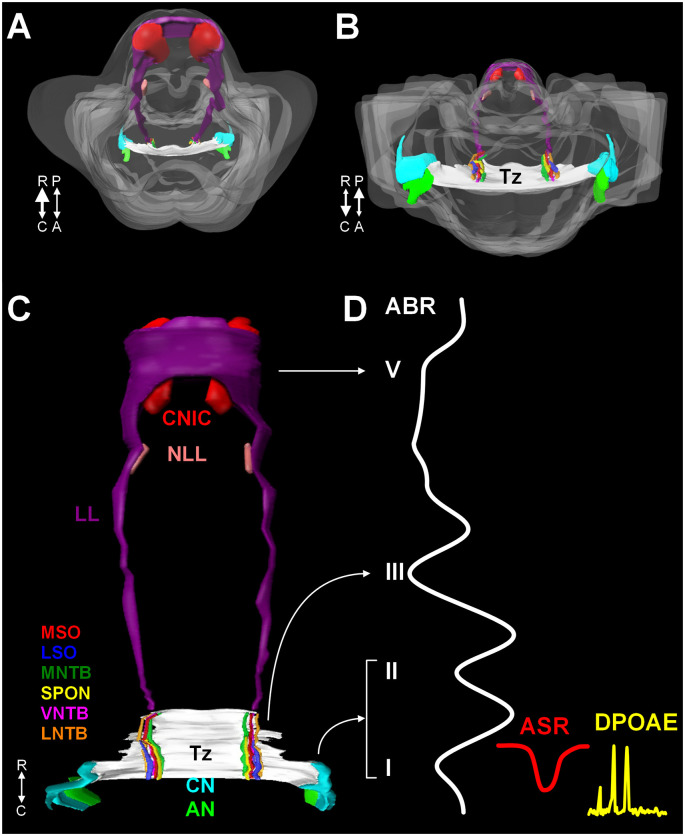
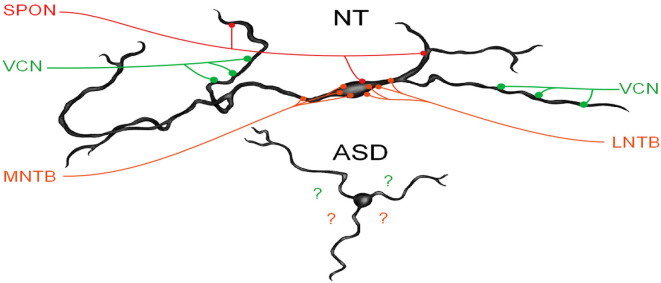
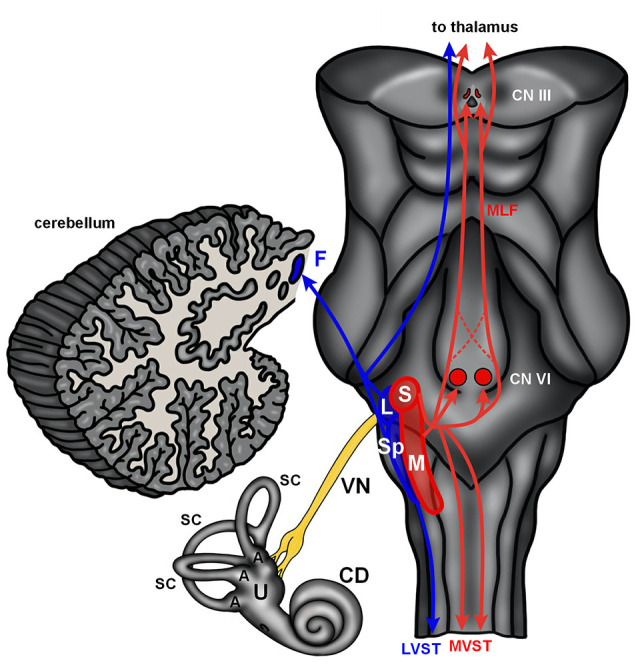
Autism spectrum disorder (ASD) is a neurodevelopmental disorder characterized by repetitive behaviors, poor social skills, and difficulties with communication. Beyond these core signs and symptoms, the majority of subjects with ASD have some degree of auditory and vestibular dysfunction. Dysfunction in these sensory modalities is significant as normal cognitive development depends on an accurate representation of our environment. The hearing difficulties in ASD range from deafness to hypersensitivity and subjects with ASD have abnormal sound-evoked brainstem reflexes and brainstem auditory evoked potentials. Vestibular dysfunction in ASD includes postural instability, gait dysfunction, and impaired gaze. Untreated vestibular dysfunction in children can lead to delayed milestones such as sitting and walking and poor motor coordination later in life. Histopathological studies have revealed that subjects with ASD have significantly fewer neurons in the auditory hindbrain and surviving neurons are smaller and dysmorphic. These findings are consistent with auditory dysfunction. Further, the cerebellum was one of the first brain structures implicated in ASD and studies have revealed loss of Purkinje cells and the presence of ectopic neurons. Together, these studies suggest that normal auditory and vestibular function play major roles in the development of language and social abilities, and dysfunction in these systems may contribute to the core symptoms of ASD. Further, auditory and vestibular dysfunction in children may be overlooked or attributed to other neurodevelopmental disorders. Herein we review the literature on auditory and vestibular dysfunction in ASD. Based on these results we developed a brainstem model of central auditory and vestibular dysfunction in ASD and propose that simple, non-invasive but quantitative testing of hearing and vestibular function be added to newborn screening protocols.
自闭症谱系障碍(ASD)是一种神经发育障碍,其特征为重复行为、社交技能差以及沟通困难。除了这些核心症状外,大多数ASD患者存在一定程度的听觉和前庭功能障碍。这些感觉模式的功能障碍很重要,因为正常的认知发展依赖于对我们环境的准确表征。ASD患者的听力困难范围从失聪到超敏,并且ASD患者有异常的声诱发脑干反射和脑干听觉诱发电位。ASD患者的前庭功能障碍包括姿势不稳、步态功能障碍和凝视受损。儿童未经治疗的前庭功能障碍会导致发育里程碑延迟,如坐立和行走延迟,以及后期生活中运动协调性差。组织病理学研究表明,ASD患者听觉后脑的神经元明显减少,存活的神经元更小且形态异常。这些发现与听觉功能障碍一致。此外,小脑是最早被认为与ASD有关的脑结构之一,研究表明浦肯野细胞丢失和异位神经元的存在。总之,这些研究表明正常的听觉和前庭功能在语言和社交能力的发展中起主要作用,这些系统的功能障碍可能导致ASD的核心症状。此外,儿童的听觉和前庭功能障碍可能被忽视或归因于其他神经发育障碍。在此,我们综述了关于ASD患者听觉和前庭功能障碍的文献。基于这些结果,我们建立了一个ASD患者中枢听觉和前庭功能障碍的脑干模型,并建议在新生儿筛查方案中增加简单、非侵入性但定量的听力和前庭功能测试。