Ali Hiba, Khurana Shruti, Ma Weijie, Peng Yuanzun, Jiang Zhi-Dong, DuPont Herbert, Zhang Hao Chi, Thomas Anusha S, Okhuysen Pablo, Wang Yinghong
Department of Internal Medicine, Baylor College of Medicine, Houston, TX, USA.
Department of Internal Medicine/Pediatrics, The University of Texas Health Science Center at Houston, Houston, TX.
J Cancer. 2021 Sep 7;12(21):6498-6506. doi: 10.7150/jca.59251. eCollection 2021.
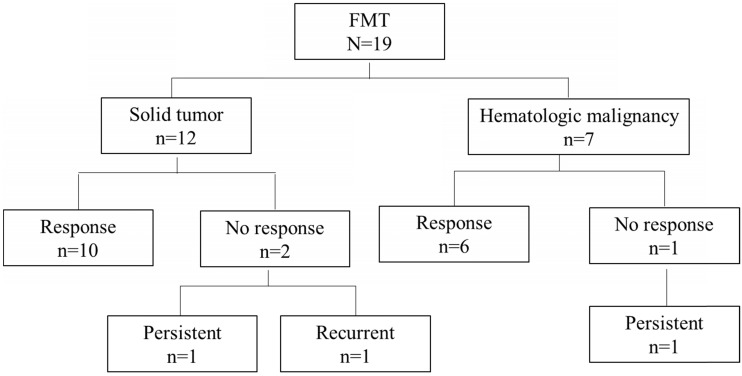
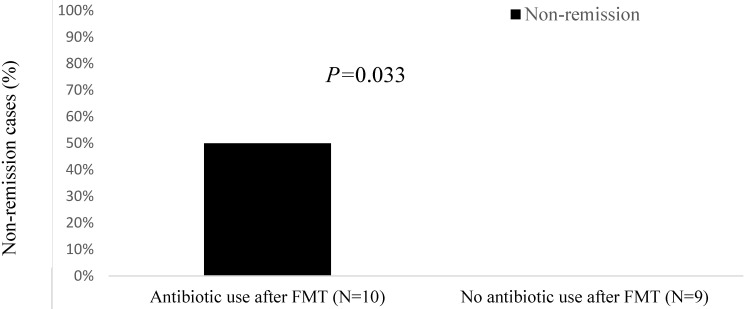
Cancer patients are at increased risk of recurrent Clostridioides difficile infection (rCDI) due to malignancy itself, cancer therapy, and frequent antibiotic use and have a lower response rate to standard oral antibiotics. There are limited data on the safety and efficacy of fecal microbiota transplantation (FMT) for treating rCDI in cancer patients. We aim to describe our experience of using FMT to treat rCDI at a tertiary cancer center. We conducted a retrospective study of cancer patients who underwent FMT for rCDI at The University of Texas MD Anderson Cancer Center from June 2017 through January 2020. Baseline clinical data and risk factors related to rCDI and FMT were evaluated and compared between cancer types and between cases with remission and recurrence. A total of 19 patients were studied: 12 with solid malignancies and 7 with hematologic malignancies. Most patients had stage IV cancer, and 21% of patients were in cancer remission. On average, patients had 2 episodes of CDI and received 3 courses of antibiotics within 1 year before FMT. 84% of patients with rCDI responded to FMT. Compared with patients who had CDI remission following FMT, non-remission cases were more likely to have received antibiotics following FMT. There were no serious adverse events or mortality within 30 days associated with FMT. FMT is safe, well-tolerated, and efficacious in treating rCDI in selected cancer patients. However, additional antibiotic use for complications from chemotherapy or immunosuppression negatively affected the efficacy of FMT in this population with advanced cancer.
由于恶性肿瘤本身、癌症治疗以及频繁使用抗生素,癌症患者复发性艰难梭菌感染(rCDI)的风险增加,并且对标准口服抗生素的反应率较低。关于粪便微生物群移植(FMT)治疗癌症患者rCDI的安全性和有效性的数据有限。我们旨在描述我们在一家三级癌症中心使用FMT治疗rCDI的经验。我们对2017年6月至2020年1月在德克萨斯大学MD安德森癌症中心接受FMT治疗rCDI的癌症患者进行了一项回顾性研究。评估并比较了不同癌症类型之间以及缓解和复发病例之间与rCDI和FMT相关的基线临床数据和风险因素。共研究了19例患者:12例患有实体恶性肿瘤,7例患有血液系统恶性肿瘤。大多数患者为IV期癌症,21%的患者处于癌症缓解期。平均而言,患者在FMT前1年内有2次CDI发作,并接受了3个疗程的抗生素治疗。84%的rCDI患者对FMT有反应。与FMT后CDI缓解的患者相比,未缓解病例在FMT后更有可能接受抗生素治疗。FMT后30天内没有与FMT相关的严重不良事件或死亡。FMT在治疗特定癌症患者的rCDI方面是安全、耐受性良好且有效的。然而,因化疗或免疫抑制并发症而额外使用抗生素对该晚期癌症人群中FMT的疗效产生了负面影响。