Shen Lin, Li Na, Zhou Qin, Li Zhanzhan, Shen Liangfang
Department of Oncology, Xiangya Hospital, Central South University, Changsha, China.
Front Oncol. 2021 Oct 1;11:743611. doi: 10.3389/fonc.2021.743611. eCollection 2021.
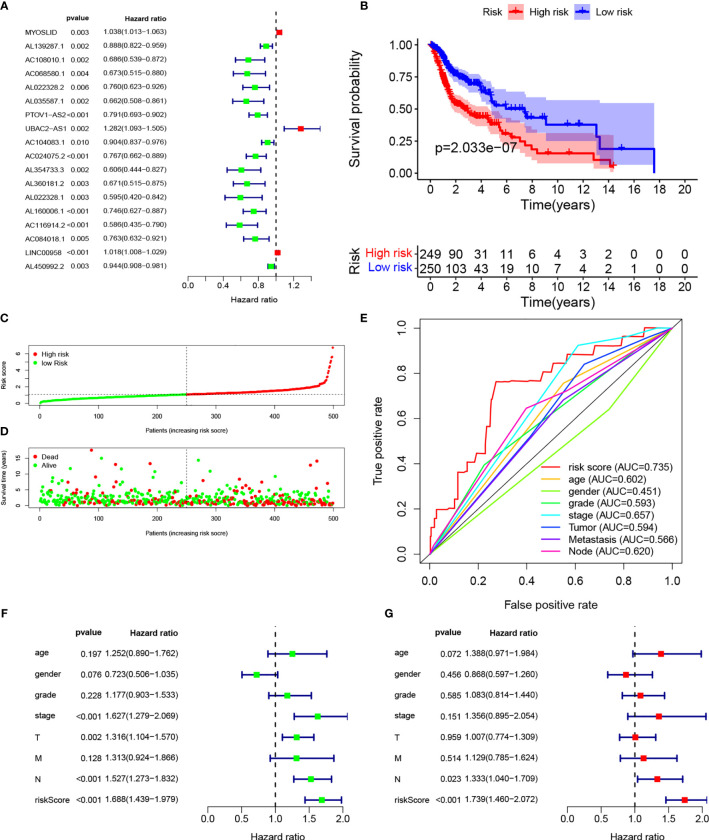
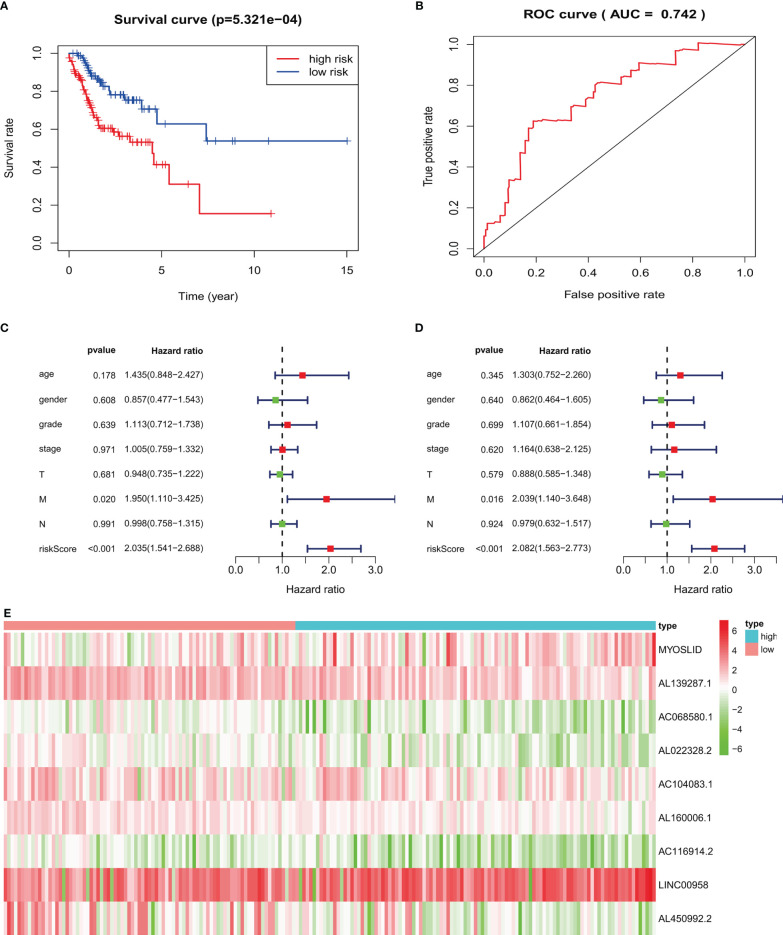
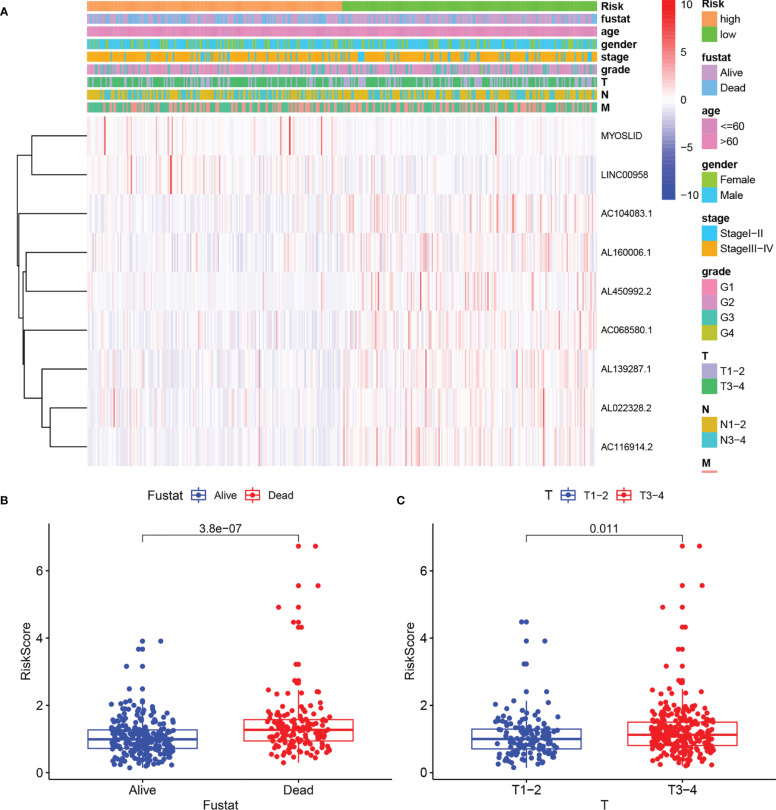
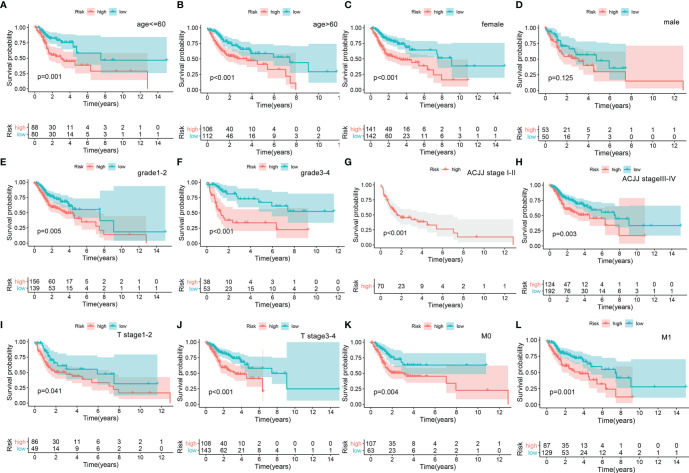
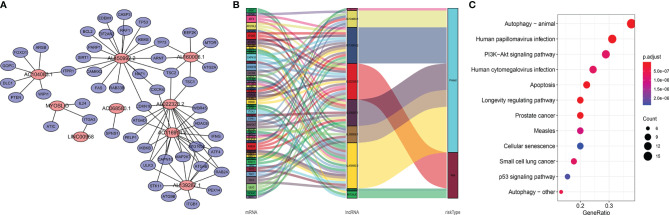
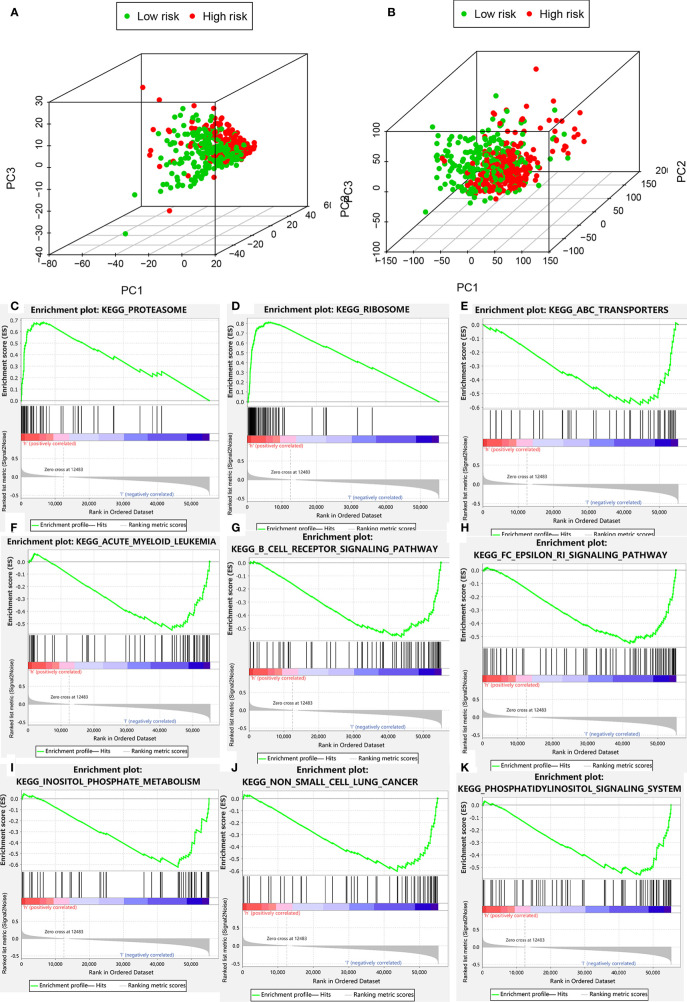
Head and neck squamous cell carcinoma (HNSCC) is one of the greatest public challenges because of delayed diagnosis and poor prognosis. In this study, we established an autophagy-associated long non-coding (Lnc)RNA prognostic signature to assess the prognosis of HNSCC patients. The LncRNA expression profiles and clinical information of 499 HNSCC samples were available in The Cancer Genome Atlas. Autophagic LncRNAs were analyzed using Pearson correlation. A co-expression network showed the interactions between autophagic genes and LncRNAs. An autophagic LncRNAs prognostic signature, consisting of MYOSLID, AL139287.1, AC068580.1, AL022328.2, AC104083.1, AL160006.1, AC116914.2, LINC00958, and AL450992.2, was developed through uni- and multivariate Cox regressions. High- and low-risk groups were classified based on the median risk scores. The high-risk group had significantly worse overall survival according to Kaplan-Meier curve analysis. Multivariate Cox regression demonstrated that risk scores were a significant independent prognostic factor (hazard ratio = 1.739, 95% confidence interval: 1.460-2.072), with an area under the curve of 0.735. Principal component analysis distinguished two categories based on the nine-LncRNA prognostic signature. In conclusion, this novel autophagic LncRNA signature is an independent prognostic factor and may suggest novel therapeutic targets for HNSCC.
头颈部鳞状细胞癌(HNSCC)由于诊断延迟和预后不良,是最大的公共挑战之一。在本研究中,我们建立了一种自噬相关的长链非编码(Lnc)RNA预后特征,以评估HNSCC患者的预后。癌症基因组图谱中提供了499个HNSCC样本的LncRNA表达谱和临床信息。使用Pearson相关性分析自噬LncRNAs。共表达网络显示了自噬基因与LncRNAs之间的相互作用。通过单变量和多变量Cox回归建立了一个由MYOSLID、AL139287.1、AC068580.1、AL022328.2、AC104083.1、AL160006.1、AC116914.2、LINC00958和AL450992.2组成的自噬LncRNAs预后特征。根据中位风险评分将高风险组和低风险组进行分类。根据Kaplan-Meier曲线分析,高风险组的总生存期明显更差。多变量Cox回归表明,风险评分是一个显著的独立预后因素(风险比=1.739,95%置信区间:1.460-2.072),曲线下面积为0.735。主成分分析根据九LncRNA预后特征区分了两类。总之,这种新的自噬LncRNA特征是一个独立的预后因素,可能为HNSCC提示新的治疗靶点。