Disease Elimination Program, Burnet Institute, Melbourne, Australia.
Health Security Program, Burnet Institute Myanmar, Yangon, Myanmar.
BMC Med Inform Decis Mak. 2021 Oct 18;21(1):285. doi: 10.1186/s12911-021-01646-z.
Strengthening surveillance systems to collect near-real-time case-based data plays a fundamental role in achieving malaria elimination in the Greater Mekong Subregion (GMS). With the advanced and widespread use of digital technology, mHealth is increasingly taking a prominent role in malaria surveillance systems in GMS countries, including Myanmar. In Myanmar's malaria elimination program, an mHealth system called Malaria Case-based Reporting (MCBR) has been applied for case-based reporting of malaria data by integrated community malaria volunteers (ICMVs). However, the sustainability of such mHealth systems in the context of existing malaria elimination programs in Myanmar is unknown.
Focus group discussions were conducted with ICMVs and semi-structured in-depth interviews were conducted with malaria program stakeholders from Myanmar's Ministry of Health and Sports and its malaria program implementing partners. Thematic (deductive followed by inductive) analysis was undertaken using a qualitative descriptive approach.
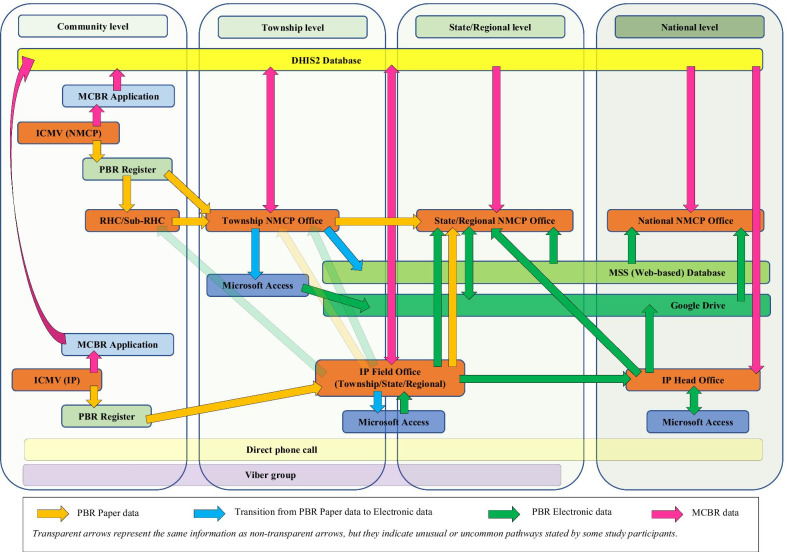
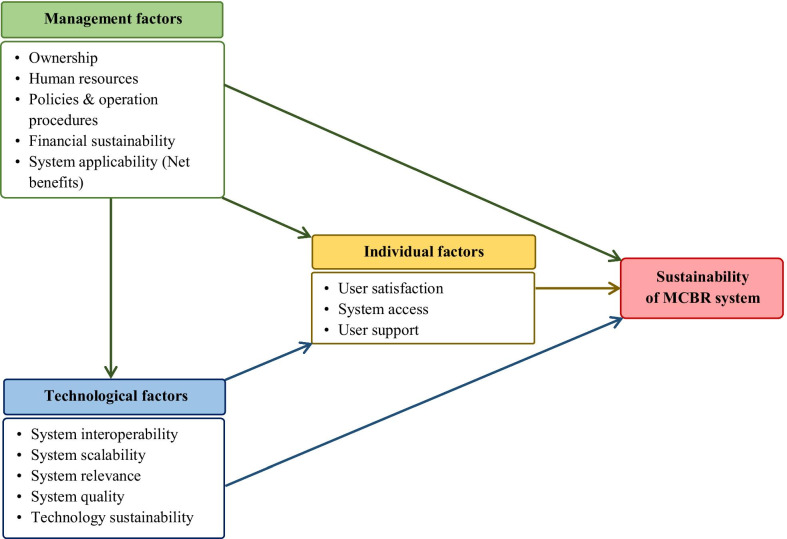
Technological and financial constraints such as inadequate internet access, software errors, and insufficient financial resources to support mobile phone-related costs have hampered users' access to MCBR. Poor system integrity, unpredictable reporting outcomes, inadequate human resources for system management, and inefficient user support undermined the perceived quality of the system and user satisfaction, and hence its sustainability. Furthermore, multiple parallel systems with functions overlapping those of MCBR were in use.
Despite its effectiveness and efficiency in malaria surveillance, the sustainability of nationwide implementation of MCBR is uncertain. To make it sustainable, stakeholders should deploy a dedicated human workforce with the necessary technical and technological capacities; secure sustainable, long-term funding for implementation of MCBR; find an alternative cost-effective plan for ensuring sustainable system access by ICMVs, such as using volunteer-owned mobile phones for reporting rather than supporting new mobile phones to them; and find a solution to the burden of multiple parallel systems.
Not applicable.
加强监测系统以收集近乎实时的基于病例的数据,在大湄公河次区域(GMS)实现消除疟疾目标方面发挥着基础性作用。随着数字技术的先进和广泛应用,移动医疗(mHealth)在 GMS 国家的疟疾监测系统中越来越发挥突出作用,包括缅甸。在缅甸的消除疟疾规划中,一种名为基于病例的疟疾报告(MCBR)的 mHealth 系统已被用于由综合社区疟疾志愿者(ICMV)进行基于病例的疟疾数据报告。然而,在缅甸现有的消除疟疾规划背景下,这种 mHealth 系统的可持续性尚不清楚。
与 ICMV 进行焦点小组讨论,并对来自缅甸卫生体育部及其疟疾规划实施伙伴的疟疾规划利益相关者进行半结构化深入访谈。采用定性描述性方法进行主题(演绎后归纳)分析。
技术和财务方面的限制,如互联网接入不足、软件错误以及支持手机相关费用的资金不足,妨碍了用户对 MCBR 的使用。系统完整性差、报告结果不可预测、系统管理人力资源不足以及用户支持效率低下,破坏了系统的质量感知和用户满意度,从而影响了其可持续性。此外,还在使用具有与 MCBR 功能重叠的多个并行系统。
尽管 MCBR 在疟疾监测方面具有有效性和效率,但在全国范围内实施的可持续性尚不确定。为了使其可持续,利益相关者应部署具有必要技术和技术能力的专门人力资源;为 MCBR 的实施确保可持续、长期的资金;为 ICMV 找到一种可持续系统访问的替代经济有效的计划,例如使用志愿者拥有的手机进行报告,而不是为他们提供新的手机;并找到解决多个并行系统负担的办法。
不适用。