Department of Neuropsychology and Physiology, KU Leuven, 3000 Leuven, Belgium.
Biosensors (Basel). 2021 Oct 18;11(10):404. doi: 10.3390/bios11100404.
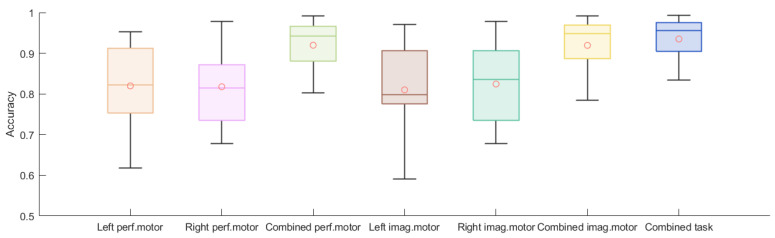
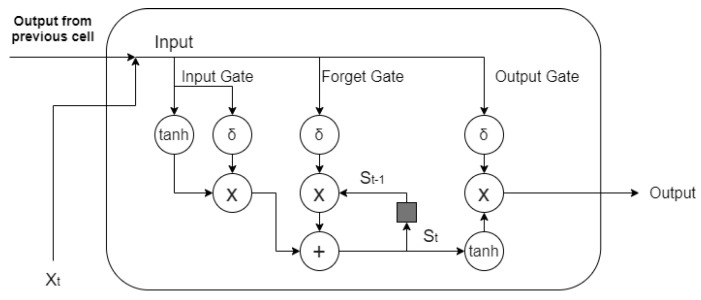
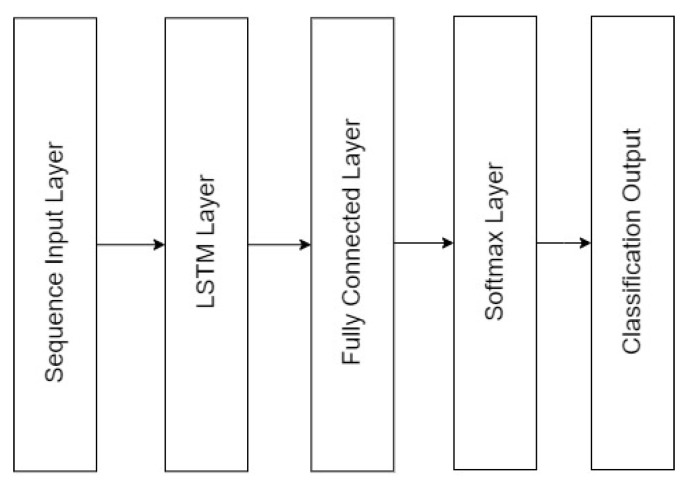
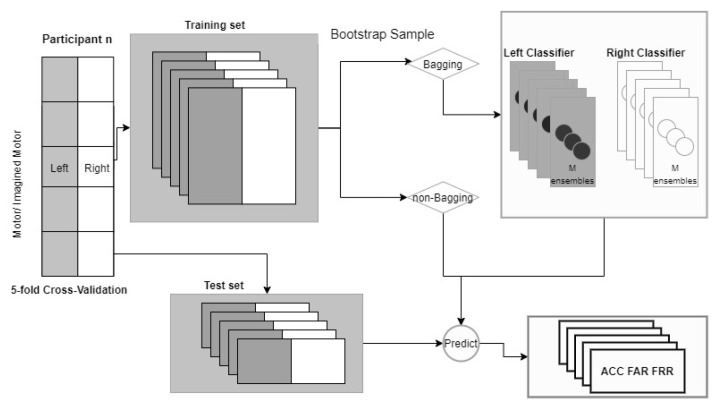
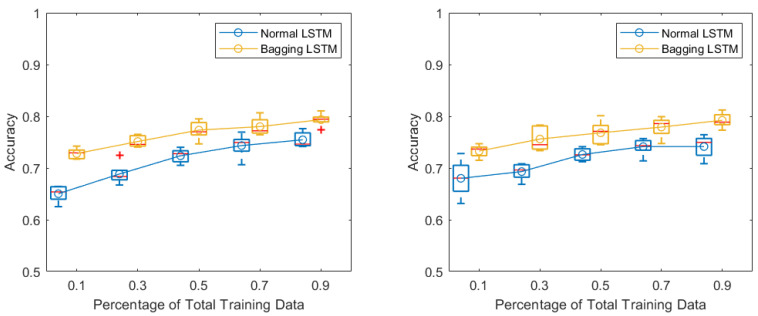
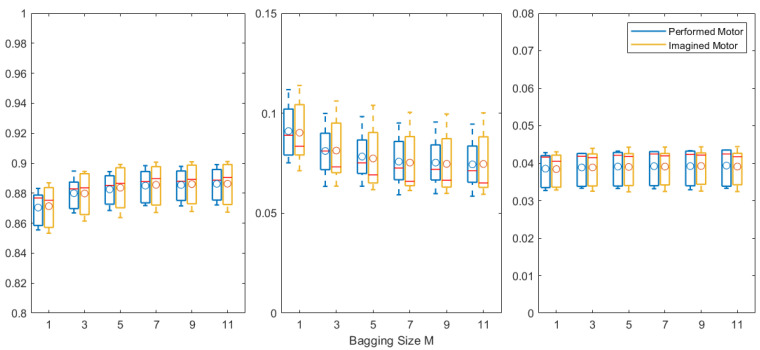
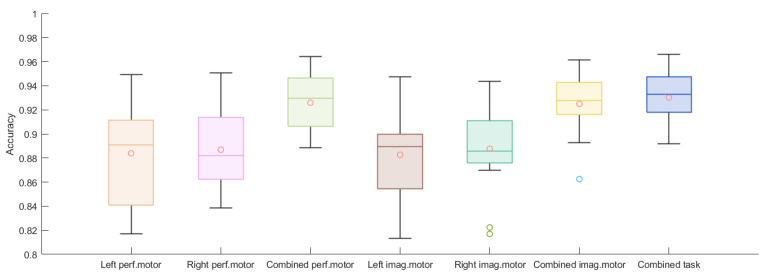
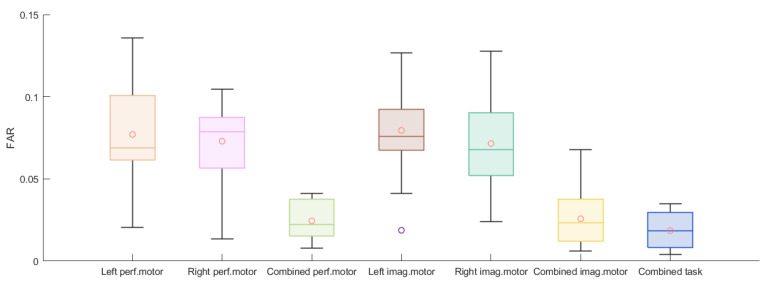
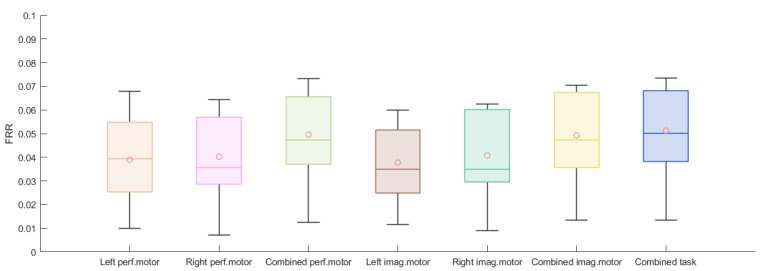
With the advent of the digital age, concern about how to secure authorized access to sensitive data is increasing. Besides traditional authentication methods, there is an interest in biometric traits such as fingerprints, the iris, facial characteristics, and, recently, brainwaves, primarily based on electroencephalography (EEG). Current work on EEG-based authentication focuses on acute recordings in laboratory settings using high-end equipment, typically equipped with 64 channels and operating at a high sampling rate. In this work, we validated the feasibility of EEG-based authentication in a real-world, out-of-laboratory setting using a commercial dry-electrode EEG headset and chronic recordings on a population of 15 healthy people. We used an LSTM-based network with bootstrap aggregating (bagging) to decode our recordings in response to a multitask scheme consisting of performed and imagined motor tasks, and showed that it improved the performance of the standard LSTM approach. We achieved an authentication accuracy, false acceptance rate (FAR), and false rejection rate (FRR) of 92.6%, 2.5%, and 5.0% for the performed motor task; 92.5%, 2.6%, and 4.9% for the imagined motor task; and 93.0%, 1.9%, and 5.1% for the combined tasks, respectively. We recommend the proposed method for time- and data-limited scenarios.
随着数字时代的到来,人们越来越关注如何安全地授权访问敏感数据。除了传统的身份验证方法外,人们还对生物特征(如指纹、虹膜、面部特征,最近还包括脑电波)感兴趣,主要基于脑电图(EEG)。目前基于 EEG 的身份验证研究主要集中在使用高端设备在实验室环境中进行急性记录,这些设备通常配备 64 个通道,采样率很高。在这项工作中,我们使用商用干电极 EEG 耳机和对 15 名健康人的慢性记录,在真实的实验室外环境中验证了基于 EEG 的身份验证的可行性。我们使用基于 LSTM 的网络和 bootstrap aggregating(bagging)来对我们的记录进行解码,以响应由执行和想象运动任务组成的多任务方案,并表明它提高了标准 LSTM 方法的性能。对于执行运动任务,我们分别实现了 92.6%、2.5%和 5.0%的身份验证准确率、误接受率(FAR)和误拒绝率(FRR);对于想象运动任务,我们分别实现了 92.5%、2.6%和 4.9%的身份验证准确率、误接受率(FAR)和误拒绝率(FRR);对于组合任务,我们分别实现了 93.0%、1.9%和 5.1%的身份验证准确率、误接受率(FAR)和误拒绝率(FRR)。我们推荐该方法用于时间和数据有限的情况。