Wang Guangxu, Muhammad Akhter, Liu Chang, Du Ling, Li Daoliang
National Innovation Center for Digital Fishery, China Agricultural University, Beijing 100083, China.
College of Information and Electrical Engineering, China Agricultural University, Beijing 100083, China.
Animals (Basel). 2021 Sep 23;11(10):2774. doi: 10.3390/ani11102774.
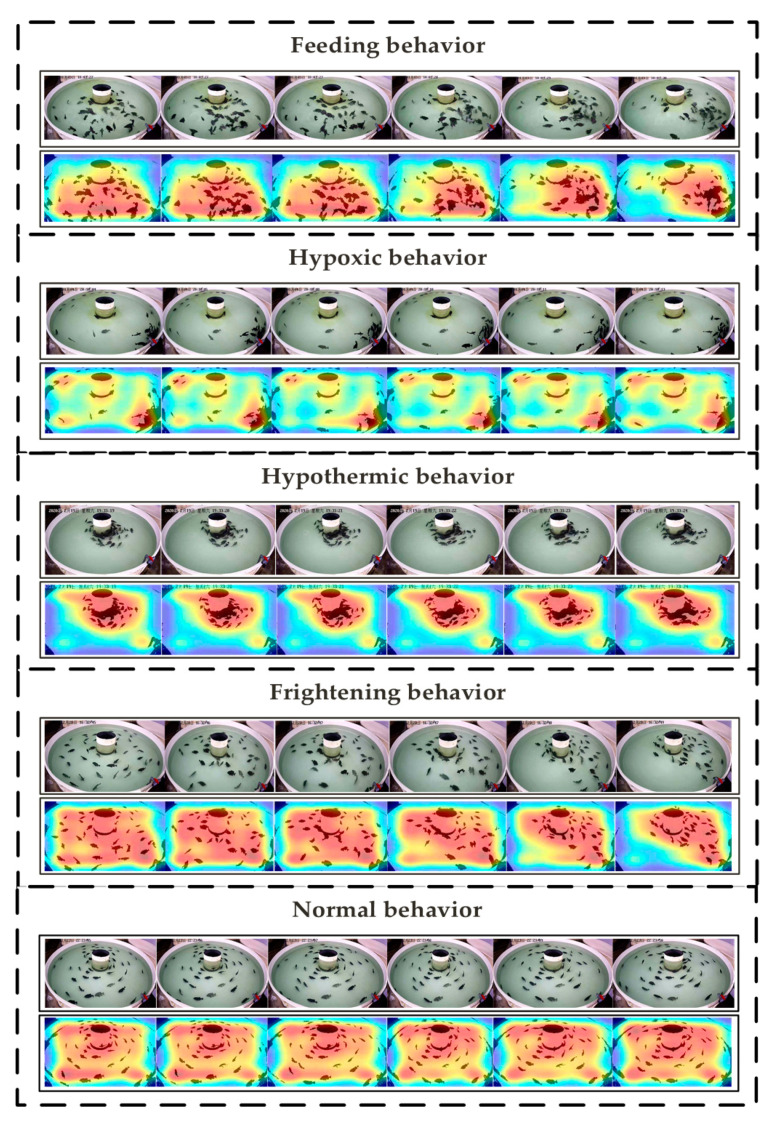
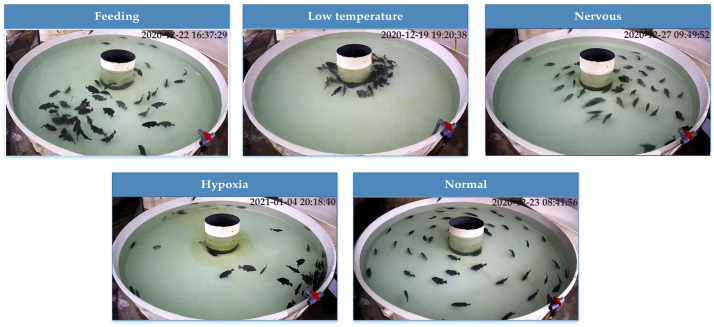
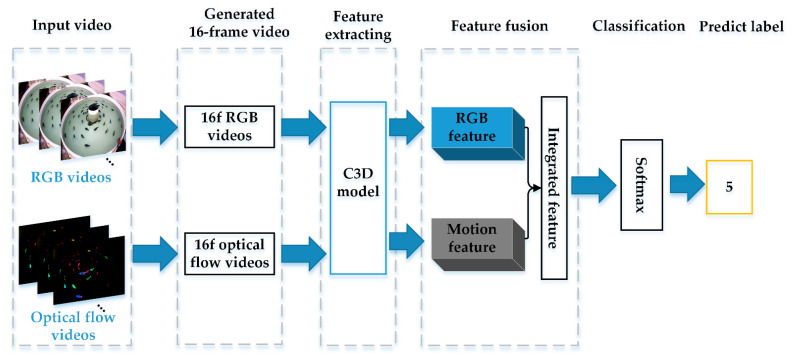
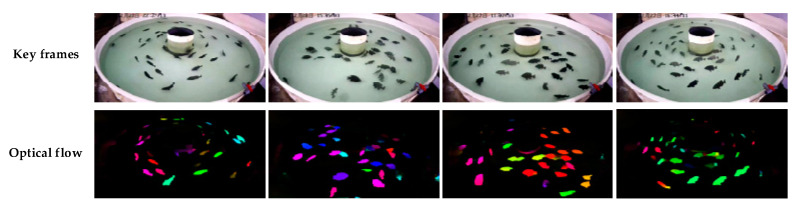
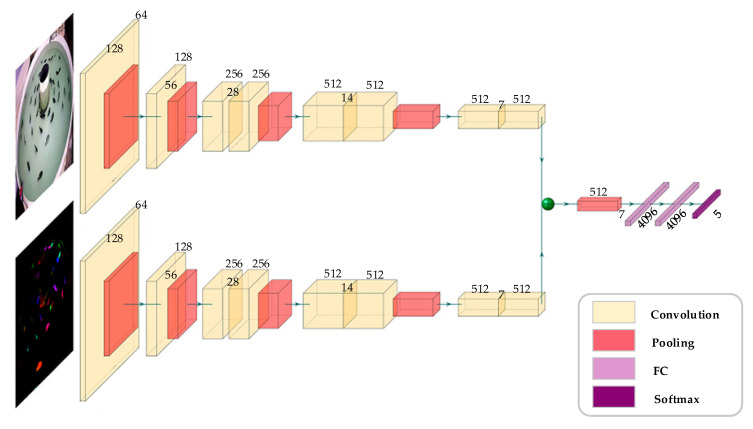
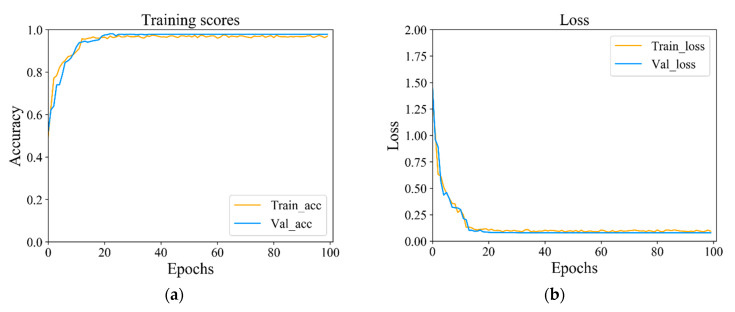
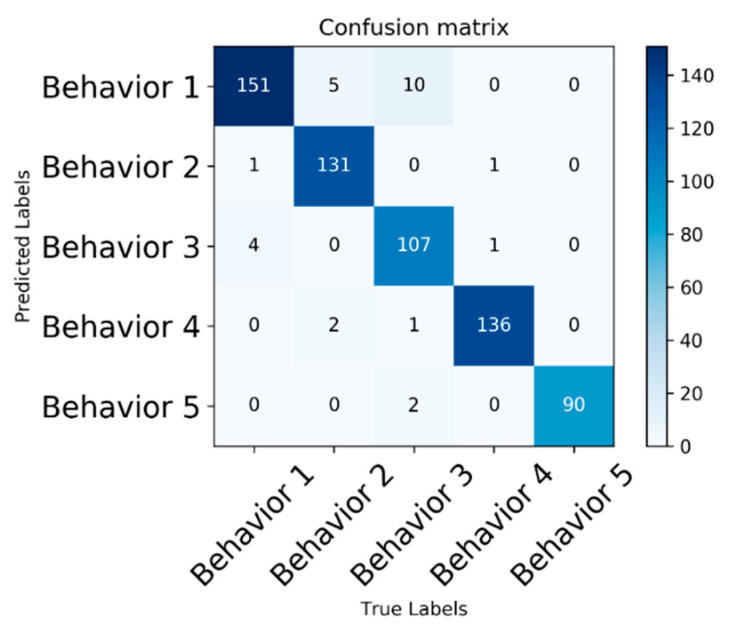
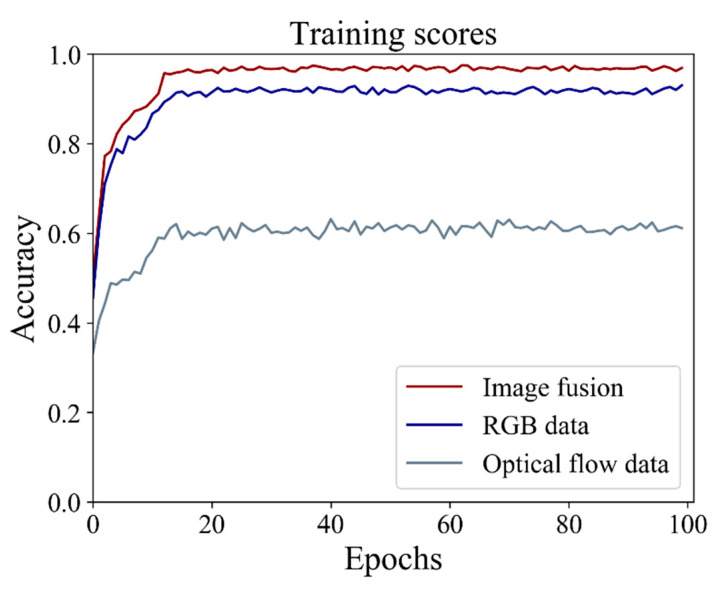
The rapid and precise recognition of fish behavior is critical in perceiving health and welfare by allowing farmers to make informed management decisions on recirculating aquaculture systems while reducing labor. The conventional recognition methods are to obtain movement information by implanting sensors on the skin or in the body of the fish, which can affect the normal behavior and welfare of the fish. We present a novel nondestructive method with spatiotemporal and motion information based on deep learning for real-time recognition of fish schools' behavior. In this work, a dual-stream 3D convolutional neural network (DSC3D) was proposed for the recognition of five behavior states of fish schools, including feeding, hypoxia, hypothermia, frightening and normal behavior. This DSC3D combines spatiotemporal features and motion features by using FlowNet2 and 3D convolutional neural networks and shows significant results suitable for industrial applications in automatic monitoring of fish behavior, with an average accuracy rate of 95.79%. The model evaluation results on the test dataset further demonstrated that our proposed method could be used as an effective tool for the intelligent perception of fish health status.
快速准确地识别鱼类行为对于通过让养殖者在循环水产养殖系统中做出明智的管理决策同时减少劳动力来感知鱼类健康和福利至关重要。传统的识别方法是通过在鱼的皮肤或体内植入传感器来获取运动信息,这会影响鱼的正常行为和福利。我们提出了一种基于深度学习的具有时空和运动信息的新型无损方法,用于实时识别鱼群行为。在这项工作中,提出了一种双流3D卷积神经网络(DSC3D)来识别鱼群的五种行为状态,包括进食、缺氧、低温、受惊和正常行为。该DSC3D通过使用FlowNet2和3D卷积神经网络结合时空特征和运动特征,并在鱼类行为自动监测的工业应用中显示出显著效果,平均准确率为95.79%。在测试数据集上的模型评估结果进一步表明,我们提出的方法可以作为智能感知鱼类健康状况的有效工具。