Pandey Arvind, Tripathi Satyendra C, Mai Junhua, Hanash Samir M, Shen Haifa, Mitra Sankar, Rostomily Robert C
Department of Neurosurgery, Houston Methodist Research Institute, Houston, TX 77030, USA.
Department of Radiation Oncology, Houston Methodist Research Institute, Houston, TX 77030, USA.
Cancers (Basel). 2021 Oct 12;13(20):5114. doi: 10.3390/cancers13205114.
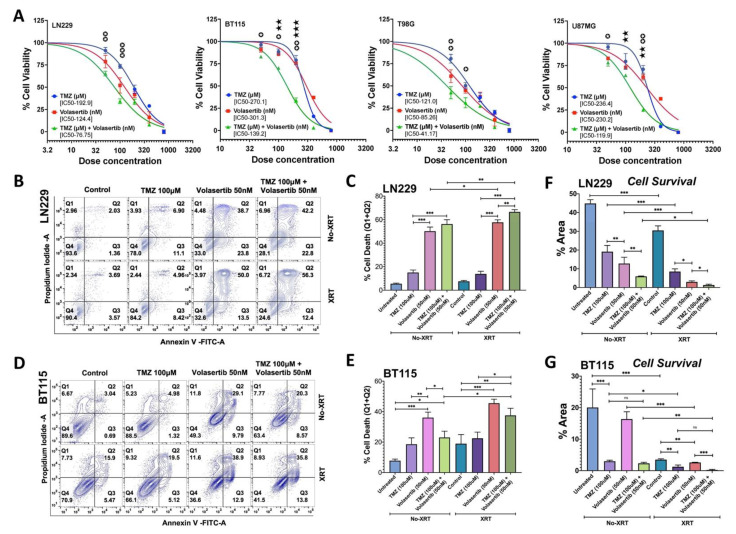
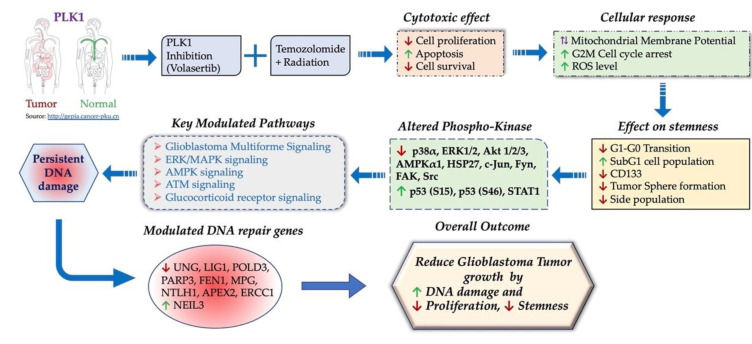
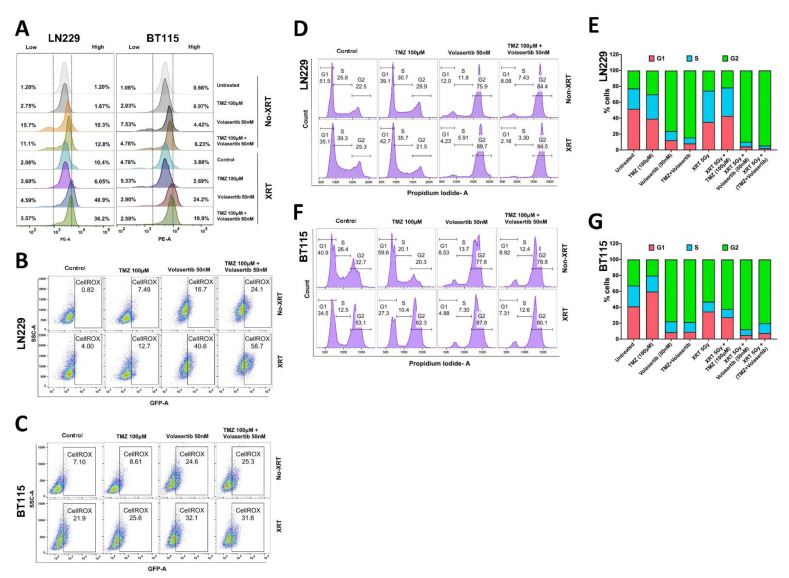
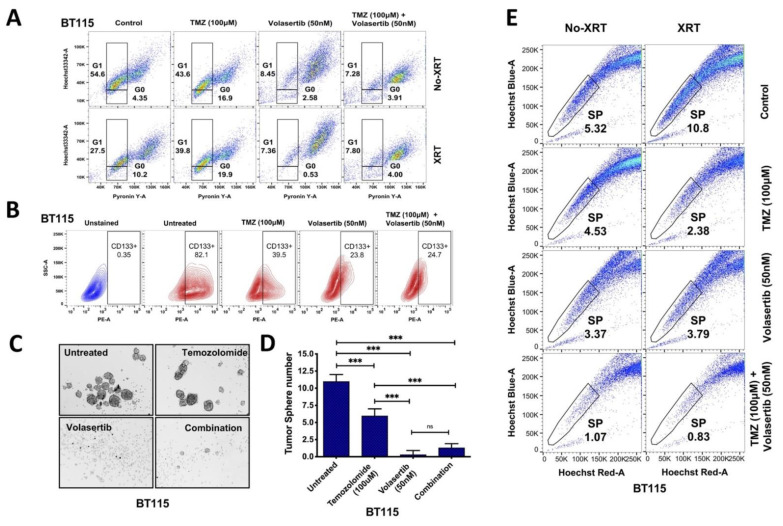
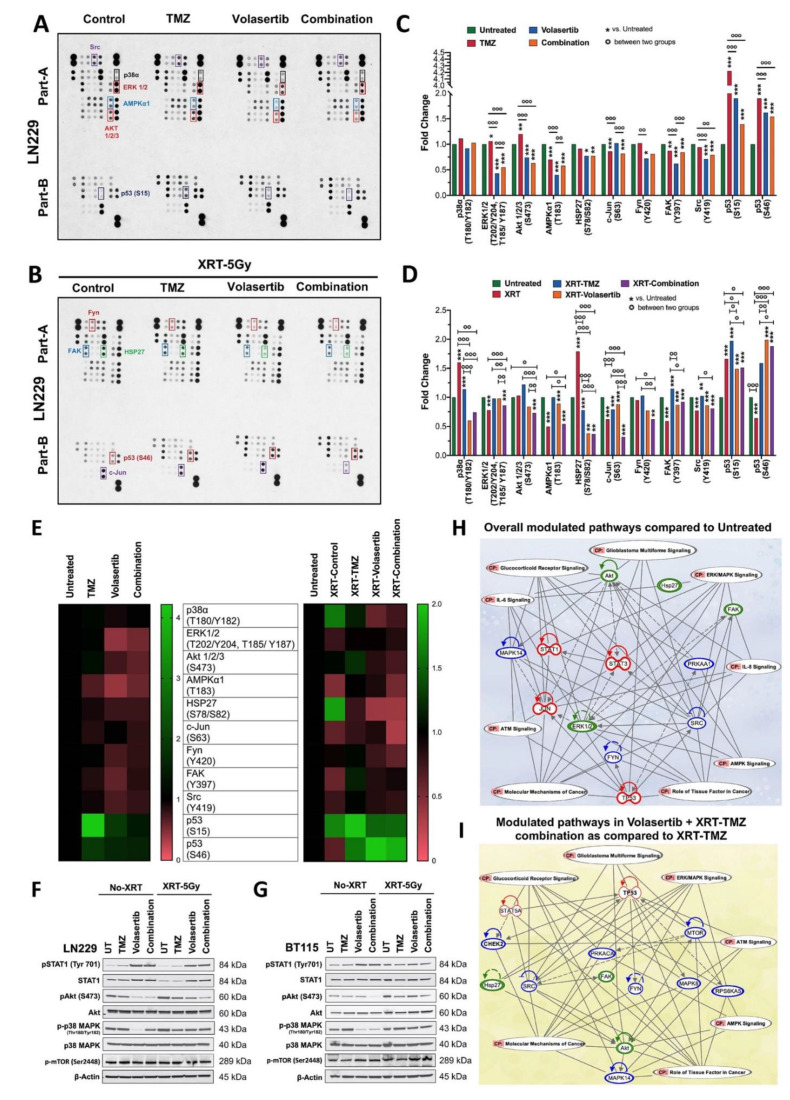
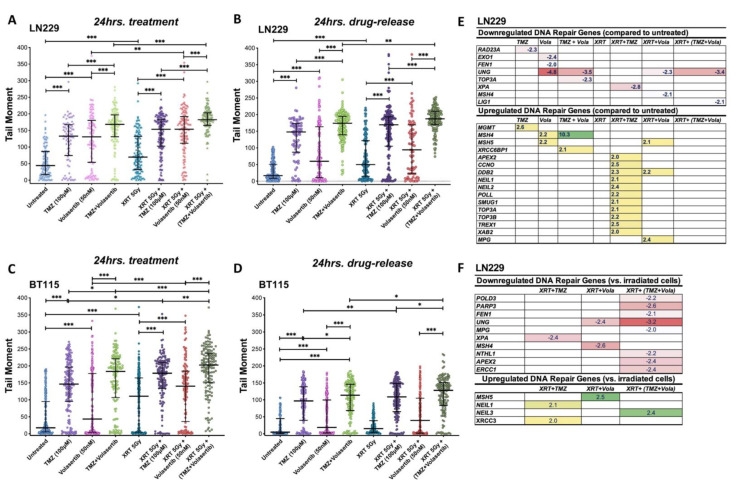
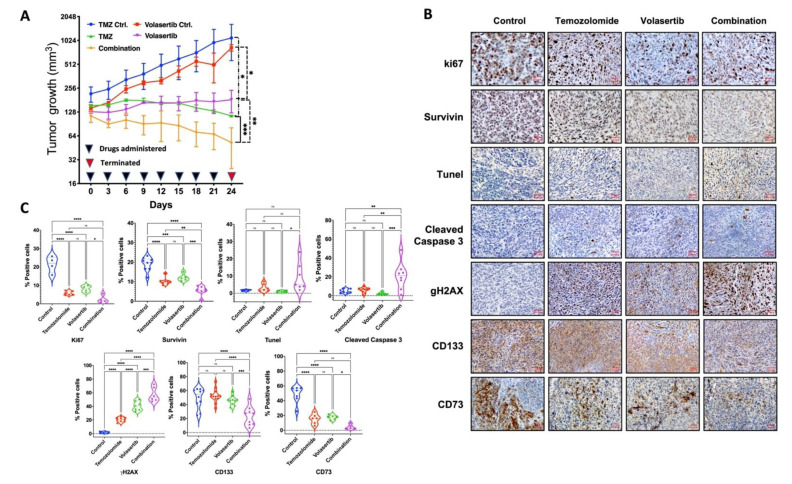
New strategies that improve median survivals of only ~15-20 months for glioblastoma (GBM) with the current standard of care (SOC) which is concurrent temozolomide (TMZ) and radiation (XRT) treatment are urgently needed. Inhibition of polo-like kinase 1 (PLK1), a multifunctional cell cycle regulator, overexpressed in GBM has shown therapeutic promise but has never been tested in the context of SOC. Therefore, we examined the mechanistic and therapeutic impact of PLK1 specific inhibitor (volasertib) alone and in combination with TMZ and/or XRT on GBM cells. We quantified the effects of volasertib alone and in combination with TMZ and/or XRT on GBM cell cytotoxicity/apoptosis, mitochondrial membrane potential (MtMP), reactive oxygen species (ROS), cell cycle, stemness, DNA damage, DNA repair genes, cellular signaling and in-vivo tumor growth. Volasertib alone and in combination with TMZ and/or XRT promoted apoptotic cell death, altered MtMP, increased ROS and G2/M cell cycle arrest. Combined volasertib and TMZ treatment reduced side population (SP) indicating activity against GBM stem-like cells. Volasertib combinatorial treatment also significantly increased DNA damage and reduced cell survival by inhibition of DNA repair gene expression and modulation of ERK/MAPK, AMPK and glucocorticoid receptor signaling. Finally, as observed in-vitro, combined volasertib and TMZ treatment resulted in synergistic inhibition of tumor growth in-vivo. Together these results identify new mechanisms of action for volasertib that provide a strong rationale for further investigation of PLK1 inhibition as an adjunct to current GBM SOC therapy.
目前胶质母细胞瘤(GBM)的标准治疗方案(SOC)是同步使用替莫唑胺(TMZ)和放射治疗(XRT),只能将患者的中位生存期提高约15 - 20个月,因此迫切需要新的治疗策略。Polo样激酶1(PLK1)是一种多功能细胞周期调节因子,在GBM中过表达,抑制该因子已显示出治疗前景,但从未在SOC背景下进行过测试。因此,我们研究了PLK1特异性抑制剂(沃拉替尼)单独使用以及与TMZ和/或XRT联合使用对GBM细胞的作用机制和治疗效果。我们量化了沃拉替尼单独使用以及与TMZ和/或XRT联合使用对GBM细胞毒性/凋亡、线粒体膜电位(MtMP)、活性氧(ROS)、细胞周期、干性、DNA损伤、DNA修复基因、细胞信号传导以及体内肿瘤生长的影响。沃拉替尼单独使用以及与TMZ和/或XRT联合使用可促进凋亡性细胞死亡、改变MtMP、增加ROS并使细胞周期停滞于G2/M期。沃拉替尼与TMZ联合治疗可减少侧群细胞(SP),表明对GBM干细胞样细胞有活性。沃拉替尼联合治疗还通过抑制DNA修复基因表达以及调节ERK/MAPK、AMPK和糖皮质激素受体信号传导,显著增加了DNA损伤并降低了细胞存活率。最后,正如在体外观察到的那样,沃拉替尼与TMZ联合治疗在体内产生了协同抑制肿瘤生长的效果。这些结果共同确定了沃拉替尼的新作用机制,为进一步研究将PLK1抑制作为当前GBM SOC治疗的辅助手段提供了有力的理论依据。