García-Sancha Natalia, Corchado-Cobos Roberto, Bellido-Hernández Lorena, Román-Curto Concepción, Cardeñoso-Álvarez Esther, Pérez-Losada Jesús, Orfao Alberto, Cañueto Javier
IBMCC-CSIC, Laboratory 7, Campus Miguel de Unamuno s/n, 37007 Salamanca, Spain.
Instituto de Investigación Biomédica de Salamanca (IBSAL), Hospital Universitario de Salamanca, Paseo de San Vicente 58-182, 37007 Salamanca, Spain.
Cancers (Basel). 2021 Oct 13;13(20):5134. doi: 10.3390/cancers13205134.
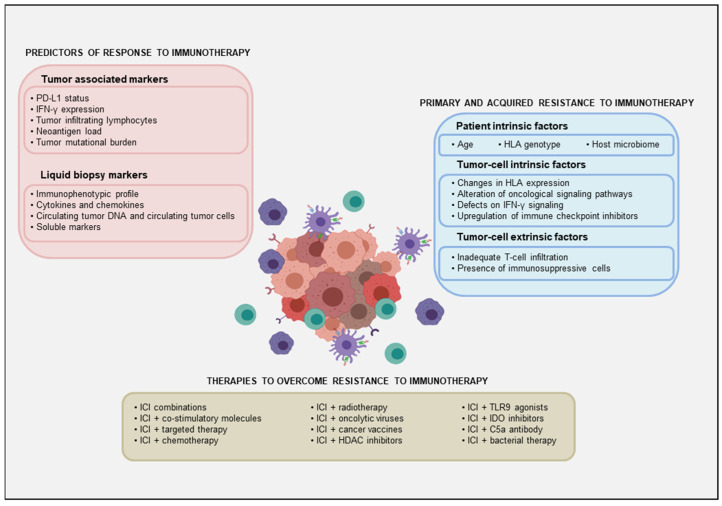
Cutaneous squamous cell carcinoma (CSCC) is the second most frequent cancer in humans, and is now responsible for as many deaths as melanoma. Immunotherapy has changed the therapeutic landscape of advanced CSCC after the FDA approval of anti-PD1 molecules for the treatment of locally advanced and metastatic CSCC. However, roughly 50% of patients will not respond to this systemic treatment and even those who do respond can develop resistance over time. The etiologies of primary and secondary resistance to immunotherapy involve changes in the neoplastic cells and the tumor microenvironment. Indirect modulation of immune system activation with new therapies, such as vaccines, oncolytic viruses, and new immunotherapeutic agents, and direct modulation of tumor immunogenicity using other systemic treatments or radiotherapy are now under evaluation in combined regimens. The identification of predictors of response is an important area of research. In this review, we focus on the features associated with the response to immunotherapy, and the evaluation of combination treatments and new molecules, a more thorough knowledge of which is likely to improve the survival of patients with advanced CSCC.
皮肤鳞状细胞癌(CSCC)是人类第二常见的癌症,目前导致的死亡人数与黑色素瘤相当。在美国食品药品监督管理局(FDA)批准抗PD1分子用于治疗局部晚期和转移性CSCC后,免疫疗法改变了晚期CSCC的治疗格局。然而,大约50%的患者对这种全身治疗无反应,即使是有反应的患者也可能随着时间的推移产生耐药性。免疫疗法原发性和继发性耐药的病因涉及肿瘤细胞和肿瘤微环境的变化。目前正在联合治疗方案中评估用新疗法(如疫苗、溶瘤病毒和新型免疫治疗药物)间接调节免疫系统激活,以及使用其他全身治疗或放疗直接调节肿瘤免疫原性。确定反应预测指标是一个重要的研究领域。在本综述中,我们重点关注与免疫治疗反应相关的特征,以及联合治疗和新分子的评估,对这些方面更深入的了解可能会提高晚期CSCC患者的生存率。