Castillo-Mariqueo Lidia, Pérez-García M José, Giménez-Llort Lydia
Institut de Neurociències, Universitat Autònoma de Barcelona, 08193 Barcelona, Spain.
Department of Psychiatry and Forensic Medicine, School of Medicine, Universitat Autònoma de Barcelona, 08193 Barcelona, Spain.
Biomedicines. 2021 Oct 1;9(10):1365. doi: 10.3390/biomedicines9101365.
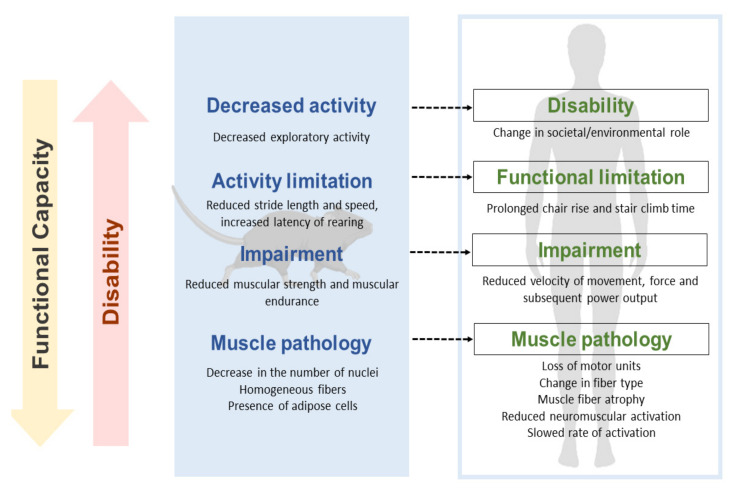
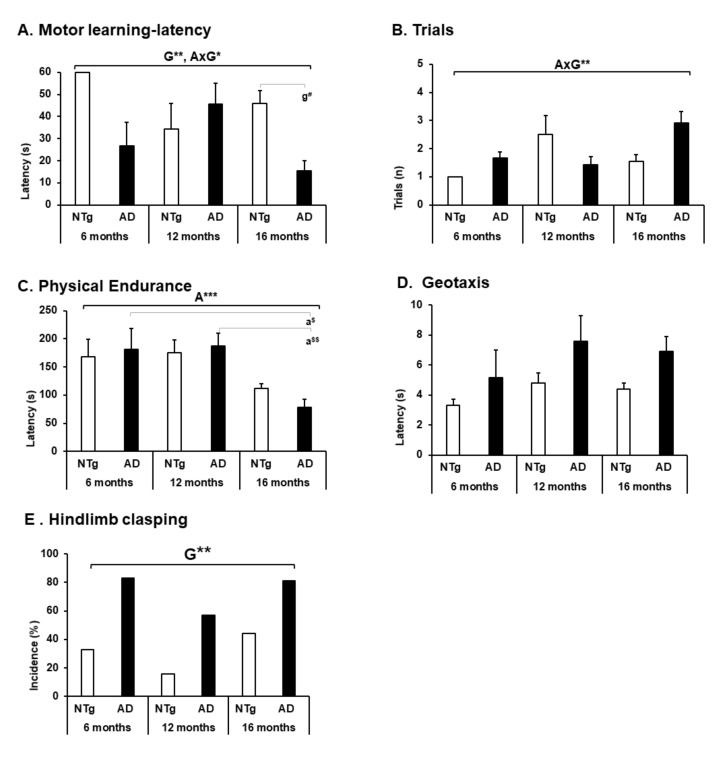
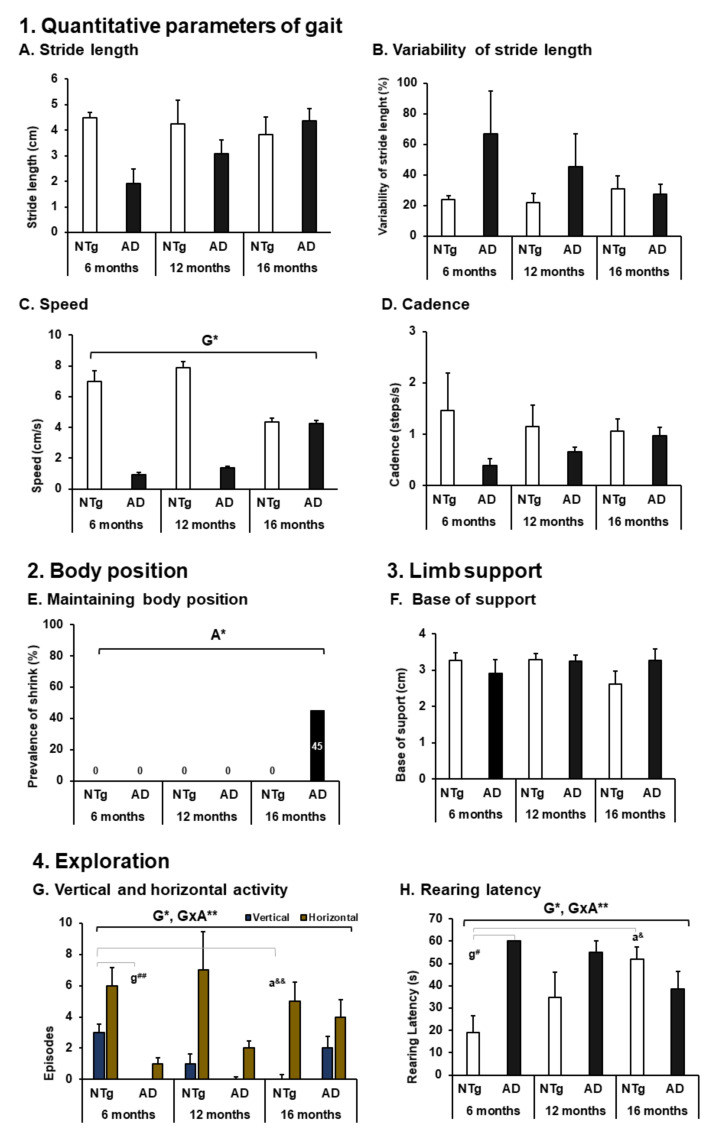
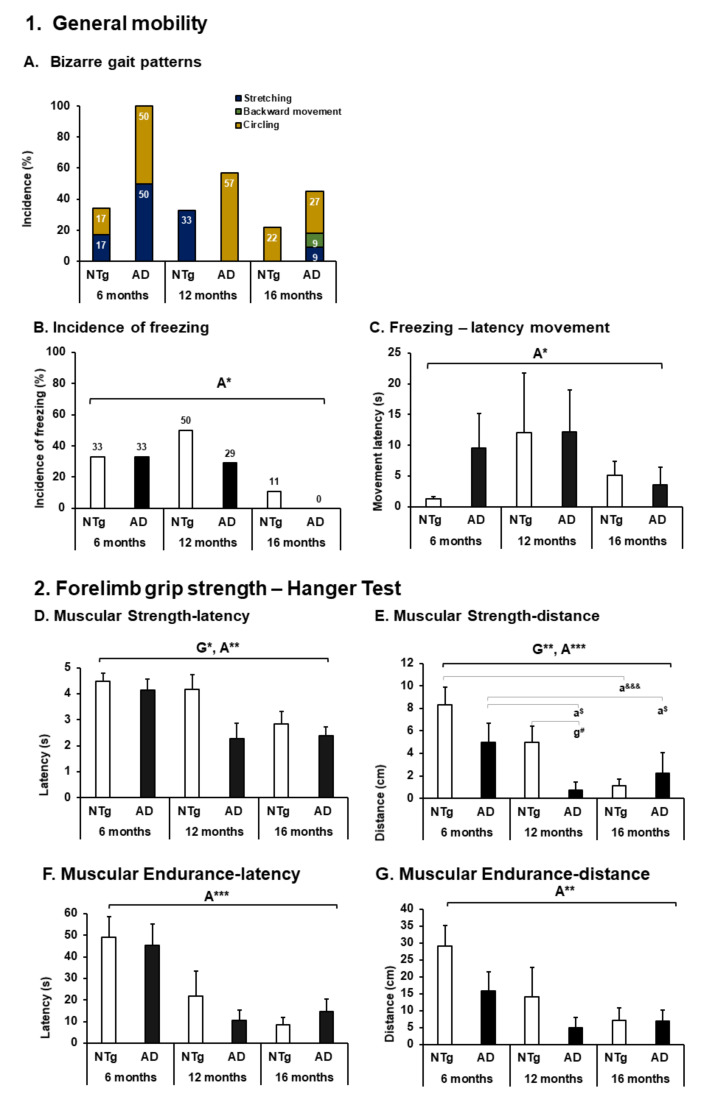
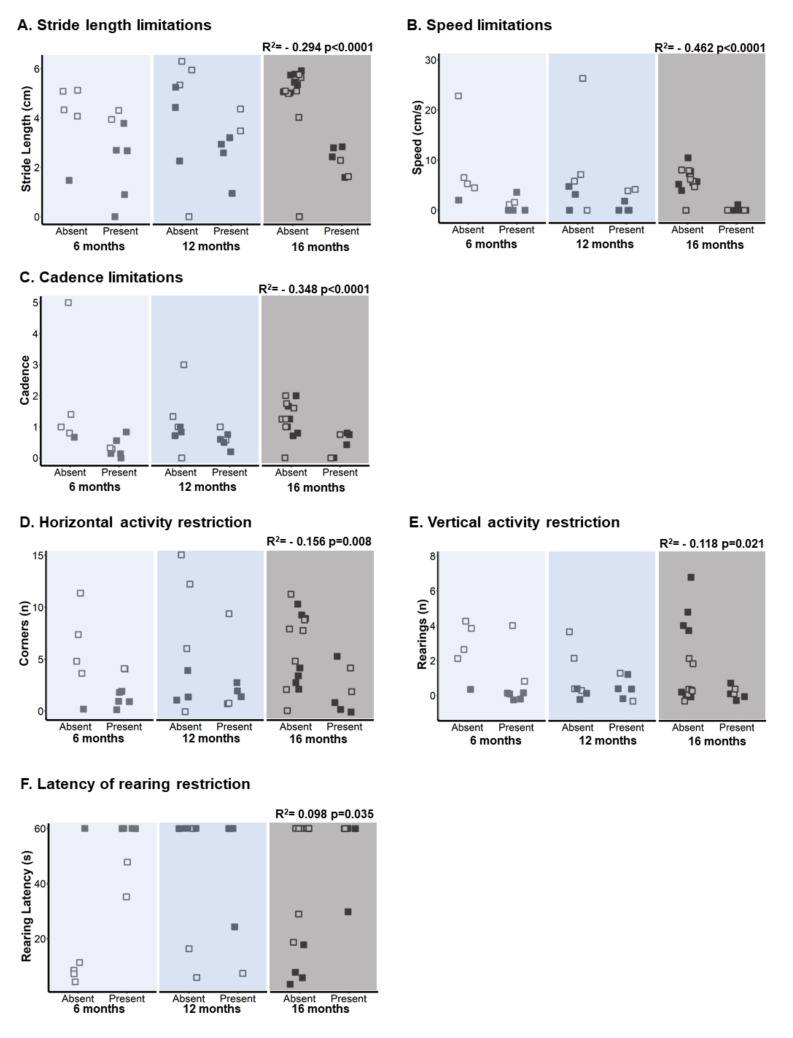
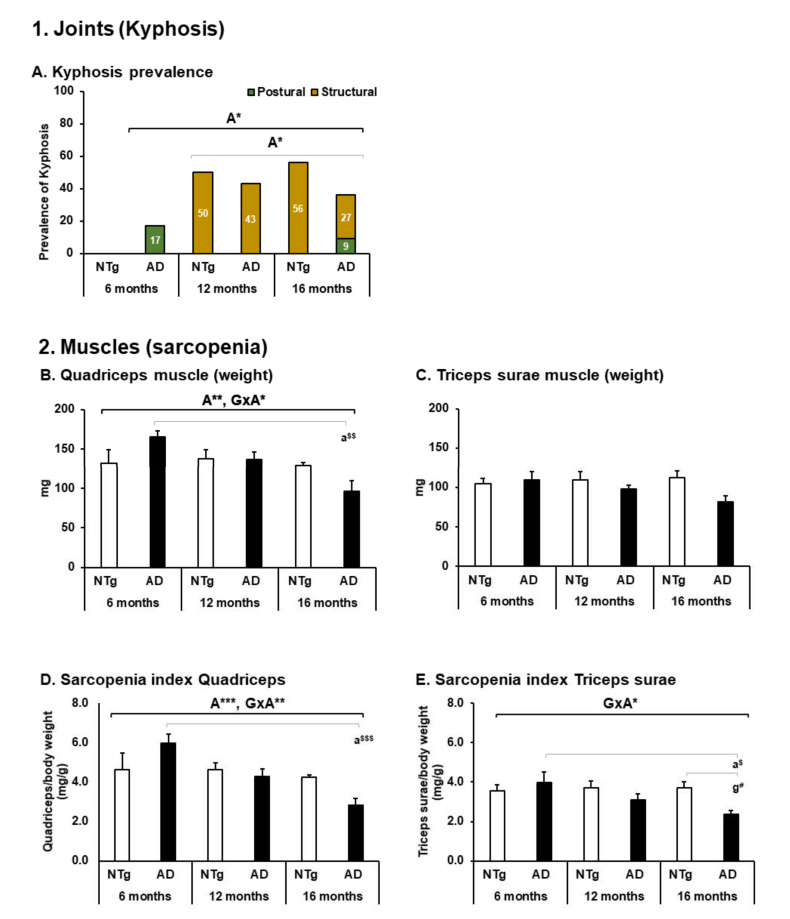
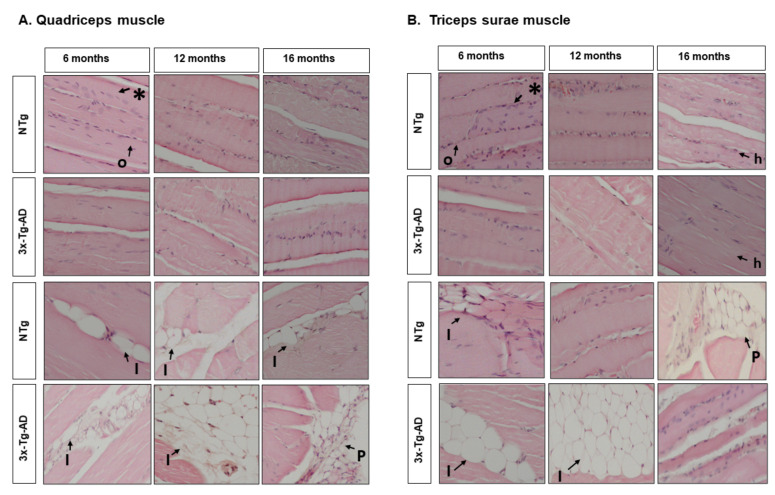
Gait impairments in Alzheimer's disease (AD) result from structural and functional deficiencies that generate limitations in the performance of activities and restrictions in individual's biopsychosocial participation. In a translational way, we have used the conceptual framework proposed by the International Classification of Disability and Health Functioning (ICF) to classify and describe the functioning and disability on gait and exploratory activity in the 3xTg-AD animal model. We developed a behavioral observation method that allows us to differentiate qualitative parameters of psychomotor performance in animals' gait, similar to the behavioral patterns observed in humans. The functional psychomotor evaluation allows measuring various dimensions of gait and exploratory activity at different stages of disease progression in dichotomy with aging. We included male 3xTg-AD mice and their non-transgenic counterpart (NTg) of 6, 12, and 16 months of age (n = 45). Here, we present the preliminary results. The 3xTg-AD mice show more significant functional impairment in gait and exploratory activity quantitative variables. The presence of movement limitations and muscle weakness mark the functional decline related to the disease severity stages that intensify with increasing age. Motor performance in 3xTg-AD is accompanied by a series of bizarre behaviors that interfere with the trajectory, which allows us to infer poor neurological control. Additionally, signs of physical frailty accompany the functional deterioration of these animals. The use of the ICF as a conceptual framework allows the functional status to be described, facilitating its interpretation and application in the rehabilitation of people with AD.
阿尔茨海默病(AD)中的步态障碍是由结构和功能缺陷导致的,这些缺陷会限制活动表现,并限制个体的生物心理社会参与。从转化医学的角度,我们采用了国际功能、残疾和健康分类(ICF)提出的概念框架,对3xTg-AD动物模型中步态和探索活动的功能及残疾情况进行分类和描述。我们开发了一种行为观察方法,该方法能让我们区分动物步态中精神运动表现的定性参数,类似于在人类中观察到的行为模式。功能性精神运动评估能够在与衰老相对比的疾病进展不同阶段,测量步态和探索活动的各个维度。我们纳入了6个月、12个月和16个月大的雄性3xTg-AD小鼠及其非转基因对照(NTg)小鼠(n = 45)。在此,我们展示初步结果。3xTg-AD小鼠在步态和探索活动的定量变量方面表现出更显著的功能损害。运动受限和肌肉无力的存在标志着与疾病严重程度阶段相关的功能下降,且随着年龄增长而加剧。3xTg-AD小鼠的运动表现伴随着一系列干扰轨迹的怪异行为,这使我们能够推断其神经控制较差。此外,身体虚弱的迹象伴随着这些动物的功能恶化。将ICF用作概念框架能够描述功能状态,便于在AD患者的康复中进行解释和应用。