Mentel Marek, Chovančíková Petra, Zeman Igor, Polčic Peter
Department of Biochemistry, Faculty of Natural Sciences, Comenius University in Bratislava, Mlynská dolina CH-1, Ilkovičova 6, 842 15 Bratislava, Slovakia.
Microorganisms. 2021 Sep 28;9(10):2044. doi: 10.3390/microorganisms9102044.
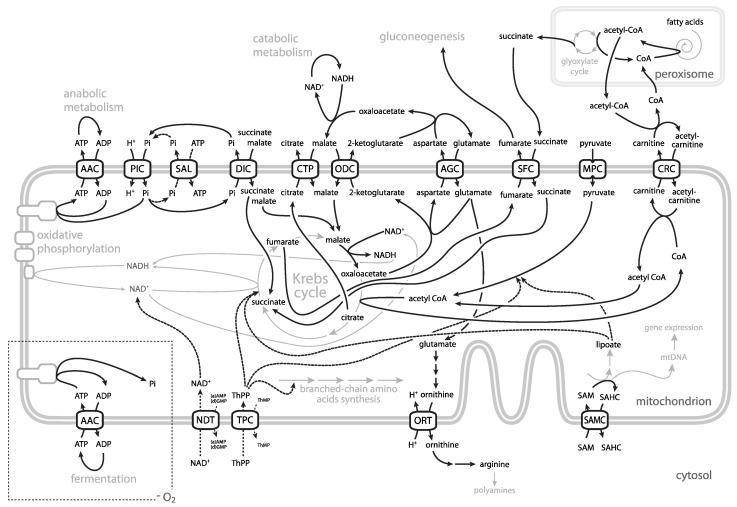
Mitochondria are organelles that play an important role in both energetic and synthetic metabolism of eukaryotic cells. The flow of metabolites between the cytosol and mitochondrial matrix is controlled by a set of highly selective carrier proteins localised in the inner mitochondrial membrane. As defects in the transport of these molecules may affect cell metabolism, mutations in genes encoding for mitochondrial carriers are involved in numerous human diseases. Yeast is a traditional model organism with unprecedented impact on our understanding of many fundamental processes in eukaryotic cells. As such, the yeast is also exceptionally well suited for investigation of mitochondrial carriers. This article reviews the advantages of using yeast to study mitochondrial carriers with the focus on addressing the involvement of these carriers in human diseases.
线粒体是在真核细胞的能量代谢和合成代谢中都发挥重要作用的细胞器。胞质溶胶和线粒体基质之间的代谢物流动由一组位于线粒体内膜的高度选择性载体蛋白控制。由于这些分子运输中的缺陷可能影响细胞代谢,编码线粒体载体的基因突变与许多人类疾病有关。酵母是一种传统的模式生物,对我们理解真核细胞中的许多基本过程产生了前所未有的影响。因此,酵母也特别适合用于研究线粒体载体。本文综述了利用酵母研究线粒体载体的优势,重点探讨了这些载体与人类疾病的关系。