Amato Antonella, Terzo Simona, Marchesa Pierenrico, Maffongelli Angela, Martorana Martina, Scoglio Stefano, Mulè Flavia
Department of Biological, Chemical and Pharmaceutical Sciences and Technologies (STEBICEF), University of Palermo, Viale delle Scienze, 90128 Palermo, Italy.
U.O. Oncology Hospital, A.R.N.A.S. Ospedali Civico Di Cristina Benfratelli, Palermo, Via Carmelo Lazzaro, 4, 90127 Palermo, Italy.
Nutrients. 2021 Sep 28;13(10):3445. doi: 10.3390/nu13103445.
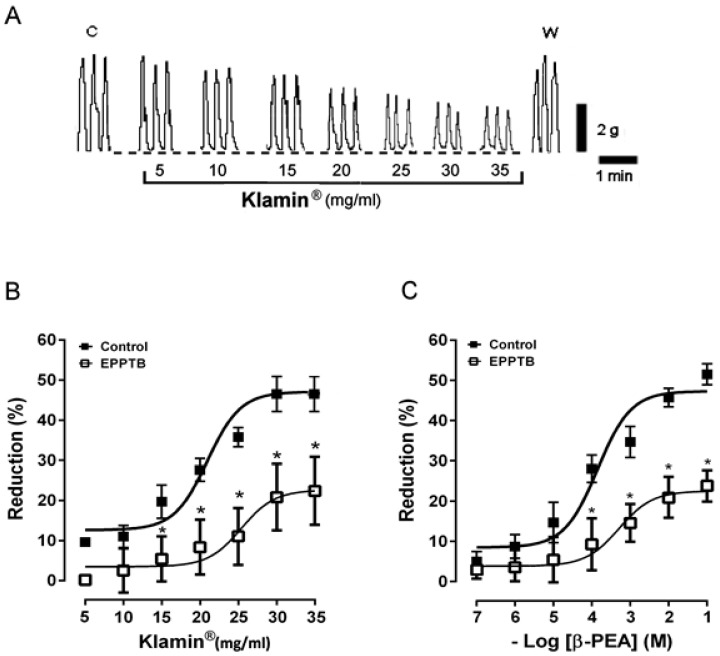
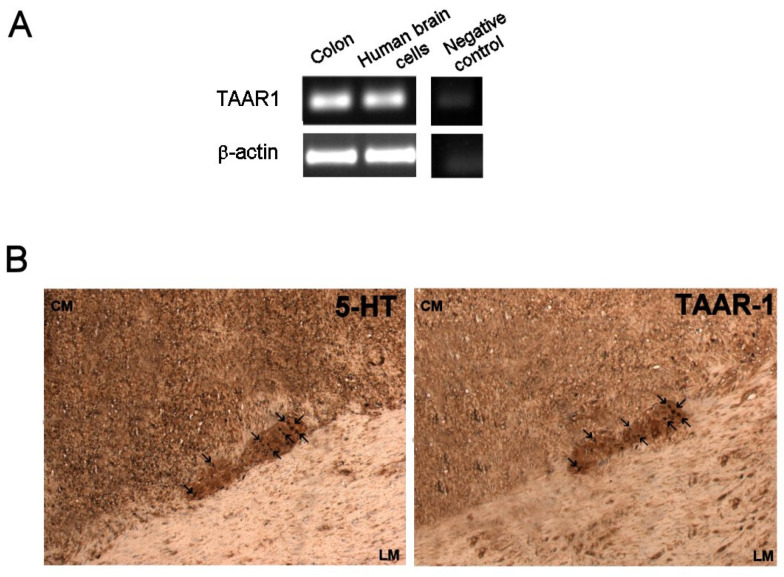
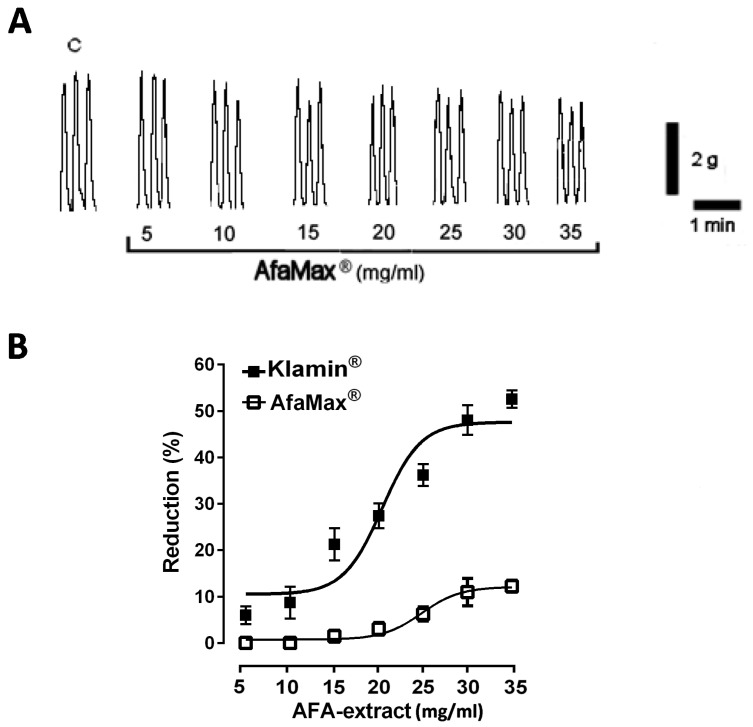
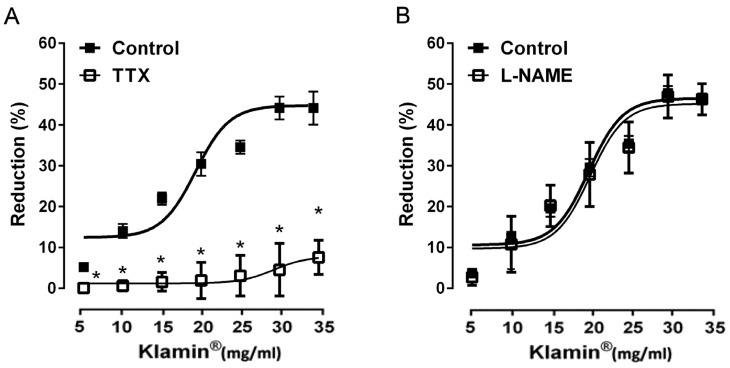
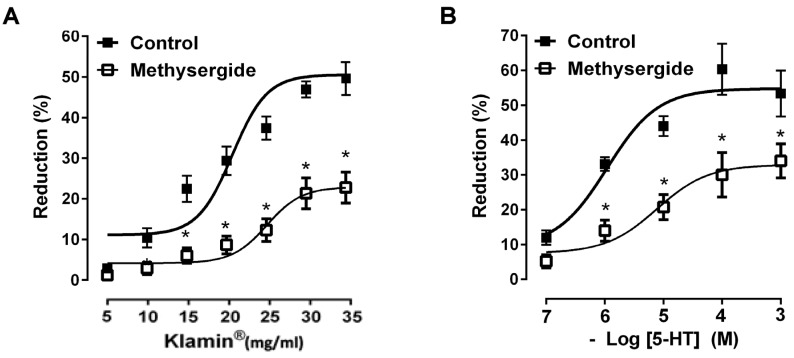
The blue-green algae Aphanizomenon flos aquae (AFA), rich in beneficial nutrients, exerts various beneficial effects, acting in different organs including the gut. Klamin is an AFA extract particularly rich in β-PEA, a trace-amine considered a neuromodulator in the central nervous system. To date, it is not clear if β-PEA exerts a role in the enteric nervous system. The aims of the present study were to investigate the effects induced by Klamin on the human distal colon mechanical activity, to analyze the mechanism of action, and to verify a β-PEA involvement. The organ bath technique, RT-PCR, and immunohistochemistry (IHC) were used. Klamin reduced, in a concentration-dependent manner, the amplitude of the spontaneous contractions. EPPTB, a trace-amine receptor (TAAR1) antagonist, significantly antagonized the inhibitory effects of both Klamin and exogenous β-PEA, suggesting a trace-amine involvement in the Klamin effects. Accordingly, AphaMax, an AFA extract containing lesser amount of β-PEA, failed to modify colon contractility. Moreover, the Klamin effects were abolished by tetrodotoxin, a neural blocker, but not by L-NAME, a nitric oxide-synthase inhibitor. On the contrary methysergide, a serotonin receptor antagonist, significantly antagonized the Klamin effects, as well as the contractility reduction induced by 5-HT. The RT-PCR analysis revealed TAAR1 gene expression in the colon and the IHC experiments showed that 5-HT-positive neurons are co-expressed with TAAR1 positive neurons. In conclusion, the results of this study suggest that Klamin exerts spasmolytic effects in human colon contractility through β-PEA, that, by activating neural TAAR1, induce serotonin release from serotoninergic neurons of the myenteric plexus.
蓝绿藻水华鱼腥藻(AFA)富含有益营养成分,具有多种有益作用,可作用于包括肠道在内的不同器官。Klamin是一种特别富含β-苯乙胺(β-PEA)的AFA提取物,β-苯乙胺是一种微量胺,被认为是中枢神经系统中的神经调节剂。迄今为止,尚不清楚β-PEA是否在肠神经系统中发挥作用。本研究的目的是研究Klamin对人远端结肠机械活动的影响,分析其作用机制,并验证β-PEA是否参与其中。采用器官浴技术、逆转录聚合酶链反应(RT-PCR)和免疫组织化学(IHC)方法。Klamin以浓度依赖的方式降低了自发收缩的幅度。微量胺受体(TAAR1)拮抗剂EPPTB显著拮抗了Klamin和外源性β-PEA的抑制作用,表明微量胺参与了Klamin的作用。因此,一种含较少β-PEA的AFA提取物AphaMax未能改变结肠收缩力。此外,Klamin的作用被神经阻滞剂河豚毒素消除,但未被一氧化氮合酶抑制剂L-NAME消除。相反,5-羟色胺受体拮抗剂甲基麦角新碱显著拮抗了Klamin的作用以及5-羟色胺诱导的收缩力降低。RT-PCR分析显示结肠中有TAAR1基因表达,IHC实验表明5-羟色胺阳性神经元与TAAR1阳性神经元共表达。总之,本研究结果表明,Klamin通过β-PEA对人结肠收缩力发挥解痉作用,β-PEA通过激活神经TAAR1,诱导肌间神经丛中5-羟色胺能神经元释放5-羟色胺。