Zakaria Radiah, Bawon Paiman, Lee Seng Hua, Salim Sabiha, Lum Wei Chen, Al-Edrus Syeed Saifulazry Osman, Ibrahim Zawawi
Faculty of Forestry and Environment, Universiti Putra Malaysia, Serdang 43400, Selangor, Malaysia.
Institute of Tropical Forestry and Forest Product (INTROP), Universiti Putra Malaysia, Serdang 43400, Selangor, Malaysia.
Polymers (Basel). 2021 Oct 12;13(20):3494. doi: 10.3390/polym13203494.
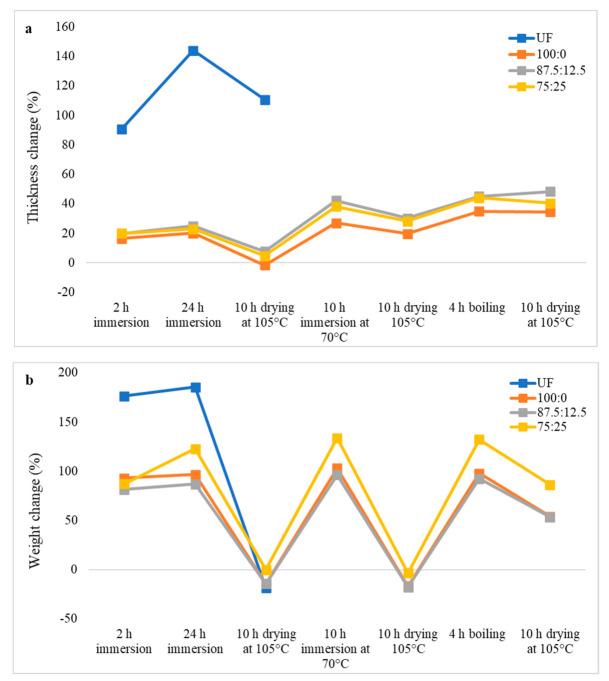
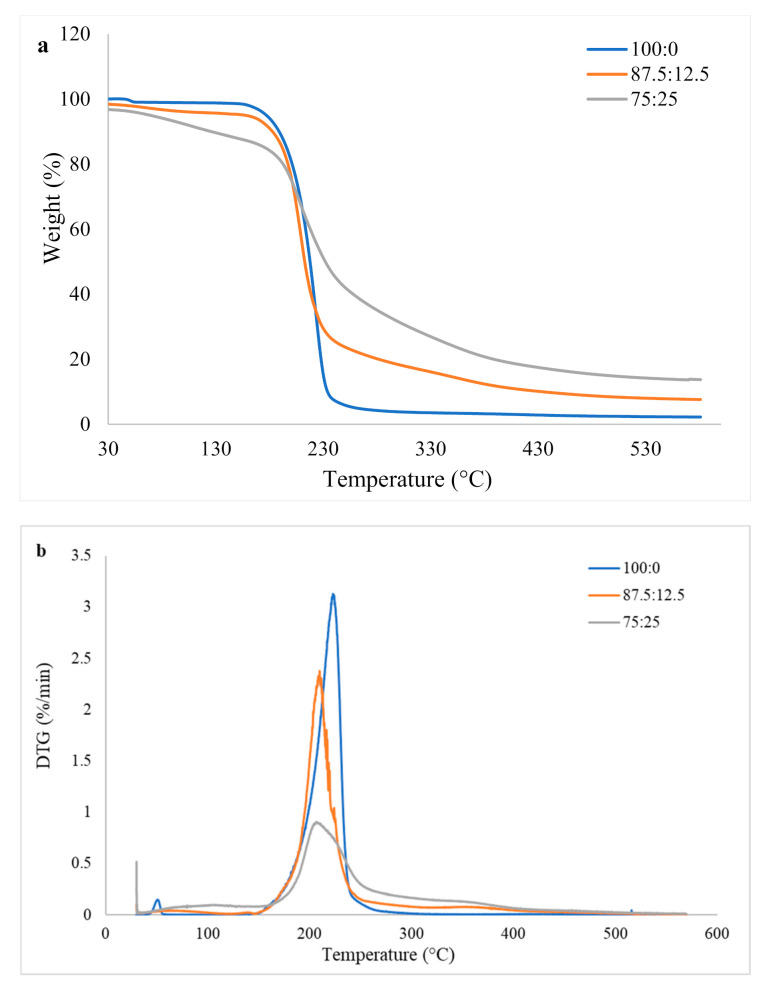
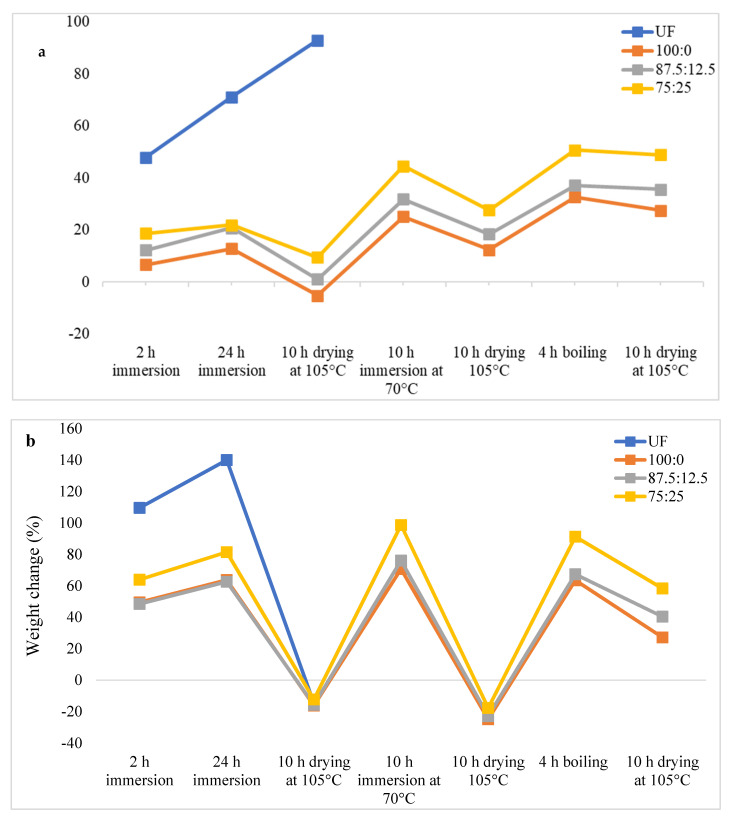
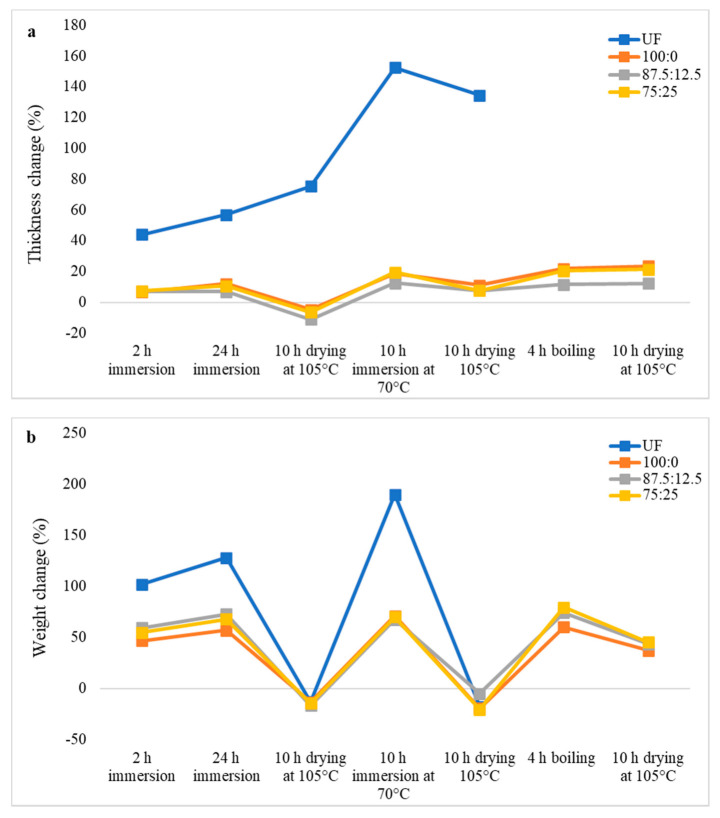
The study investigated the effects of the addition of starch on the properties of oil palm biomass particleboard bonded with citric acid. Three kinds of oil palm biomasses were used in this study for the fabrication of particleboard, namely, oil palm frond (OPF), oil palm trunk (OPT), and empty fruit bunch (EFB) particles. Citric acid and tapioca starch at the mixing ratios of 100:0, 87.5:12.5, and 75:25 were prepared at a 60% solid content. A 30% resin content based on the oven-dried weight of the oil palm biomass particles was used. The sprayed particles were pre-dried at 80 °C for 12 h before being hot-pressed at 180 °C and 4 MPa pressure for 10 min. The physical and mechanical properties of the particleboard were evaluated. The mixtures of citric acid and tapioca starch were characterized by thermogravimetric analysis (TGA). Thermal stability of citric acid was reduced after the addition of tapioca starch. The addition of 12.5% tapioca starch improved the bending strength of the particleboard but increased the thickness swelling slightly. All UF-bonded particleboard exhibited significantly inferior performance than that of citric-acid-bonded particleboard. Citric-acid-bonded particleboard maintained its original shape after being subjected to a cyclic-aging treatment, while the UF-bonded particleboard disintegrated half way through the treatment. The performance of EFB particleboard was significantly inferior to its OPT and OPF counterparts.
本研究调查了添加淀粉对用柠檬酸粘结的油棕生物质刨花板性能的影响。本研究使用了三种油棕生物质来制造刨花板,即油棕叶(OPF)、油棕树干(OPT)和空果串(EFB)颗粒。以100:0、87.5:12.5和75:25的混合比例制备了固含量为60%的柠檬酸和木薯淀粉。基于油棕生物质颗粒的烘干重量,使用了30%的树脂含量。喷雾后的颗粒在80℃下预干燥12小时,然后在180℃和4MPa压力下热压10分钟。对刨花板的物理和力学性能进行了评估。通过热重分析(TGA)对柠檬酸和木薯淀粉的混合物进行了表征。添加木薯淀粉后,柠檬酸的热稳定性降低。添加12.5%的木薯淀粉提高了刨花板的抗弯强度,但略微增加了厚度膨胀率。所有脲醛树脂粘结的刨花板的性能均明显低于柠檬酸粘结的刨花板。柠檬酸粘结的刨花板在经过循环老化处理后保持了其原始形状,而脲醛树脂粘结的刨花板在处理过程中中途解体。EFB刨花板的性能明显低于OPT和OPF刨花板。