Institute for Bioelectronic Medicine, The Feinstein Institutes for Medical Research, 350 Community Drive, Manhasset, NY 11030, USA.
Department of Women's and Children's Health, Karolinska Institute, Karolinska University Hospital, 17176 Stockholm, Sweden.
Cells. 2021 Oct 18;10(10):2791. doi: 10.3390/cells10102791.
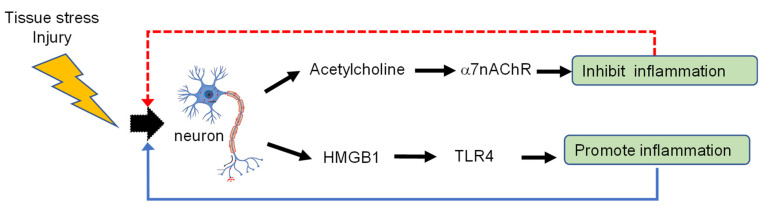
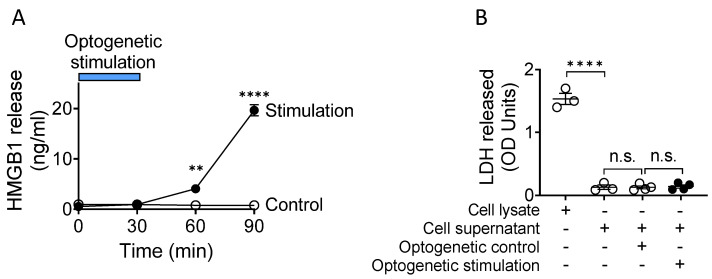
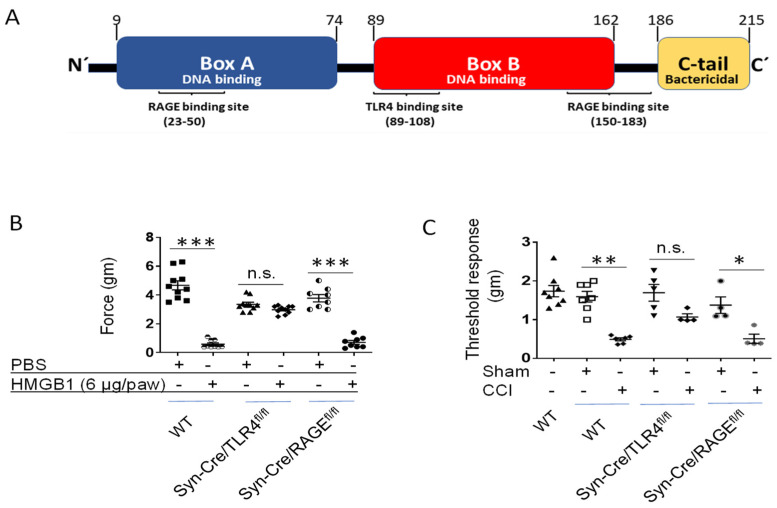
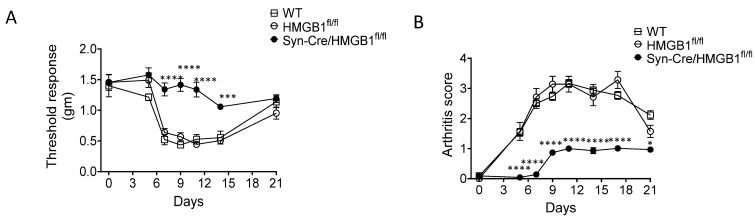
Recent data show that activation of nociceptive (sensory) nerves turns on localized inflammation within the innervated area in a retrograde manner (antidromically), even in the absence of tissue injury or molecular markers of foreign invaders. This neuroinflammatory process is activated and sustained by the release of neuronal products, such as neuropeptides, with the subsequent amplification via recruitment of immunocompetent cells, including macrophages and lymphocytes. High mobility group box 1 protein (HMGB1) is a highly conserved, well characterized damage-associated molecular pattern molecule expressed by many cells, including nociceptors and is a marker of inflammatory diseases. In this review, we summarize recent evidence showing that neuronal HMGB1 is required for the development of neuroinflammation, as knock out limited to neurons or its neutralization via antibodies ameliorate injury in models of nerve injury and of arthritis. Further, the results of study show that HMGB1 is actively released during neuronal depolarization and thus plays a previously unrecognized key etiologic role in the initiation and amplification of neuroinflammation. Direct targeting of HMGB1 is a promising approach for novel anti-inflammatory therapy.
最近的数据表明,伤害性(感觉)神经的激活以逆行的方式(顺行地)使受神经支配区域内的局部炎症发生,即使在没有组织损伤或外来入侵者的分子标志物的情况下也是如此。这种神经炎症过程是通过神经元产物的释放而被激活和维持的,这些产物包括神经肽,随后通过招募免疫活性细胞(包括巨噬细胞和淋巴细胞)进行放大。高迁移率族蛋白 B1(HMGB1)是一种高度保守、特征明确的损伤相关分子模式分子,许多细胞都表达这种分子,包括伤害感受器,是炎症性疾病的标志物。在这篇综述中,我们总结了最近的证据,表明神经元 HMGB1 是神经炎症发展所必需的,因为仅限于神经元的敲除或通过抗体中和其作用可改善神经损伤和关节炎模型中的损伤。此外,研究结果表明,HMGB1 在神经元去极化期间被主动释放,因此在神经炎症的起始和放大中发挥了以前未被认识到的关键病因作用。直接针对 HMGB1 的靶向治疗是一种有前途的新型抗炎治疗方法。