Eberle Raphael J, Olivier Danilo S, Amaral Marcos S, Willbold Dieter, Arni Raghuvir K, Coronado Monika A
Institute of Biological Information Processing (IBI-7: Structural Biochemistry), Forschungszentrum Jülich, 52428 Jülich, Germany.
Institut für Physikalische Biologie, Heinrich-Heine-Universität Düsseldorf, Universitätsstraße, 40225 Düsseldorf, Germany.
Plants (Basel). 2021 Oct 14;10(10):2183. doi: 10.3390/plants10102183.
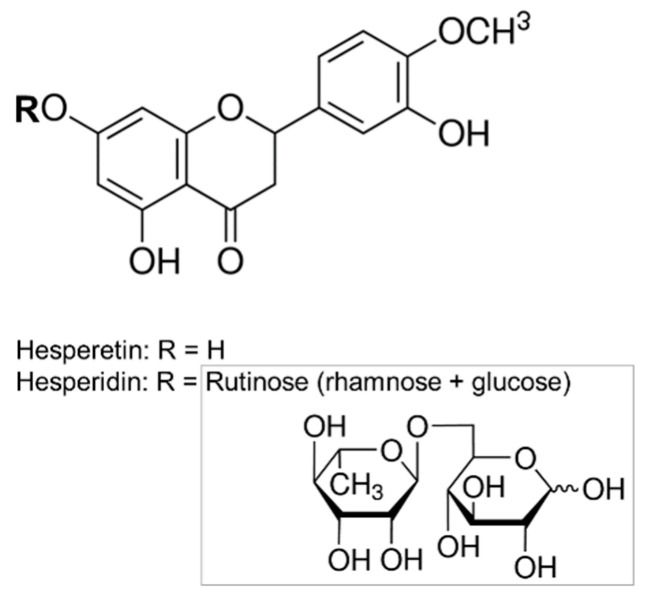
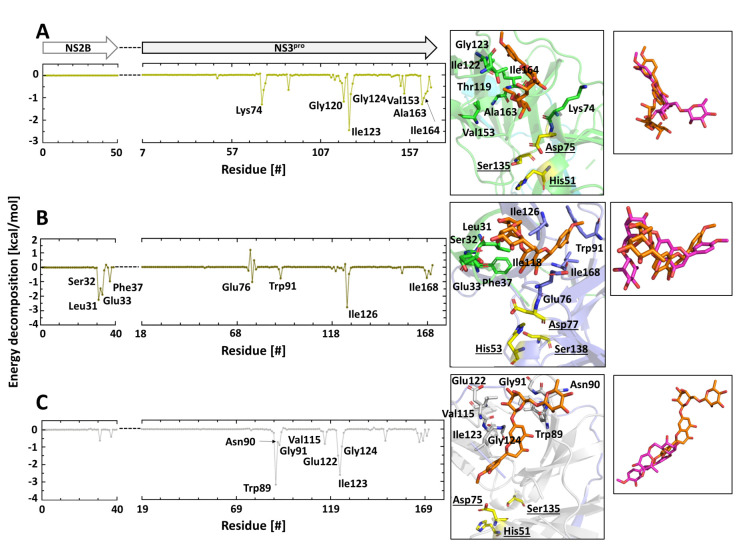
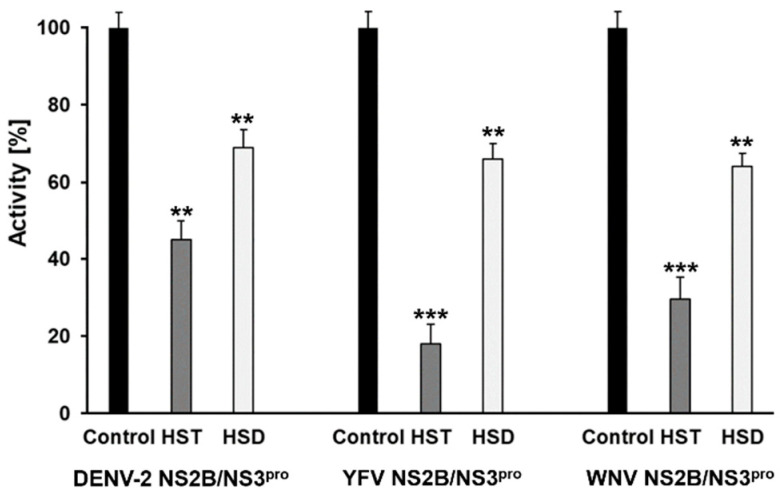
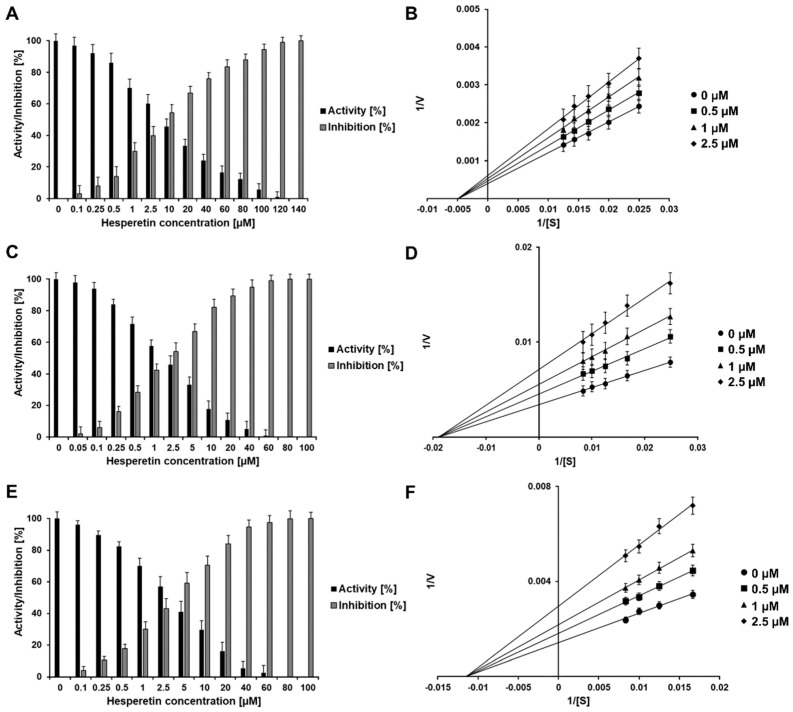
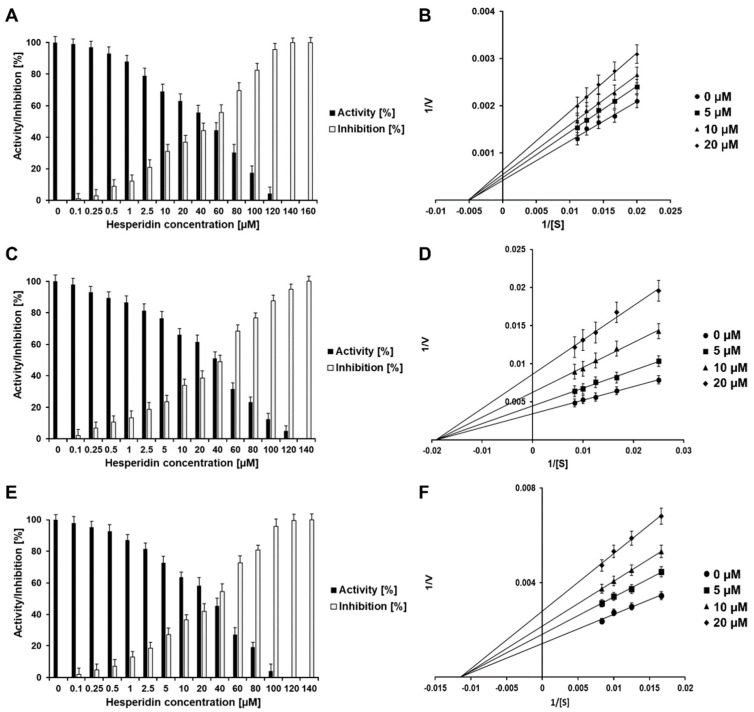
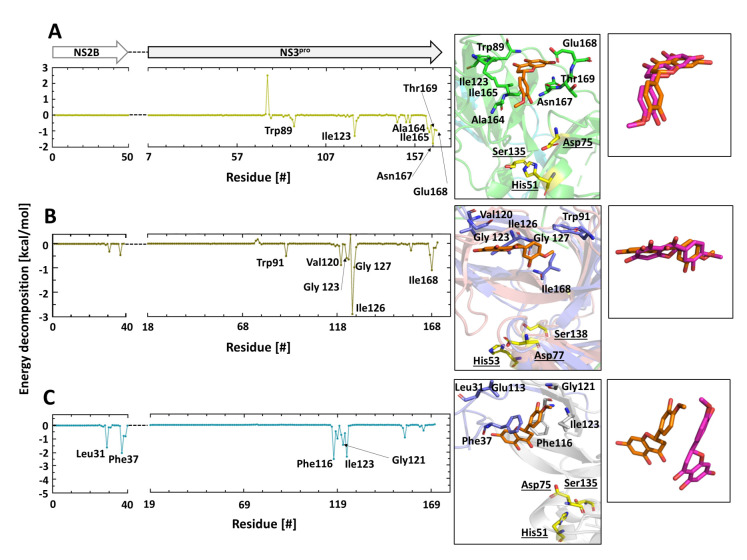
Ubiquitous in citrus plants, Hesperidin and Hesperetin flavanones possess several biological functions, including antiviral activity. Arbovirus infections pose an ever-increasing threat to global healthcare systems. Among the severe arboviral infections currently known are those caused by members of the Flavivirus genus, for example, Dengue Virus-DENV, Yellow Fever Virus-YFV, and West Nile Virus-WNV. In this study, we characterize the inhibitory effect of Hesperidin and Hesperetin against DENV2, YFV, and WNV NS2B/NS3 proteases. We report the noncompetitive inhibition of the NS2B/NS3 by the two bioflavonoids with half maximal inhibitory concentration (IC) values <5 µM for HST and <70 µM for HSD. The determined dissociation constants (K) of both flavonoids is significantly below the threshold value of 30 µM. Our findings demonstrate that a new generation of anti-flavivirus drugs could be developed based on selective optimization of both molecules.
橙皮苷和橙皮素黄烷酮在柑橘类植物中普遍存在,具有多种生物学功能,包括抗病毒活性。虫媒病毒感染对全球医疗系统构成的威胁日益增加。目前已知的严重虫媒病毒感染包括由黄病毒属成员引起的感染,例如登革热病毒(DENV)、黄热病毒(YFV)和西尼罗河病毒(WNV)。在本研究中,我们表征了橙皮苷和橙皮素对DENV2、YFV和WNV NS2B/NS3蛋白酶的抑制作用。我们报告了这两种生物类黄酮对NS2B/NS3的非竞争性抑制,橙皮苷(HST)的半数最大抑制浓度(IC)值<5 μM,橙皮素(HSD)的<70 μM。两种类黄酮的解离常数(K)均显著低于30 μM的阈值。我们的研究结果表明,可以基于对这两种分子的选择性优化开发新一代抗黄病毒药物。