The Department of Oncology, Beijing Mentougou District Hospital, Beijing, 102300, People's Republic of China.
Department of Oncology, Shanghai Pudong New Area Gongli Hospital, Shanghai, 200135, People's Republic of China.
World J Surg Oncol. 2021 Oct 23;19(1):311. doi: 10.1186/s12957-021-02417-w.
Gastric cancer (GC), a common malignancy of the human digestive system, represents the second leading cause of cancer-related deaths worldwide. Early detection of GC has a significant impact on clinical outcomes. The aim of this study was to identify potential GC biomarkers.
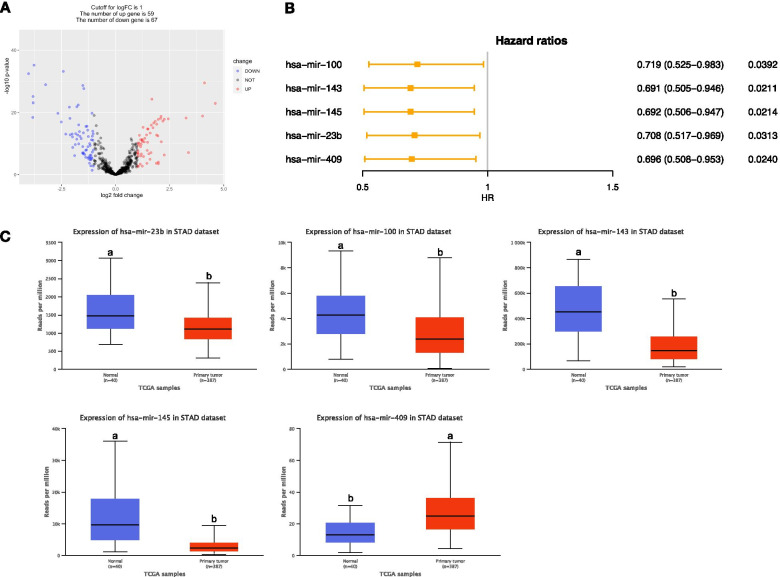
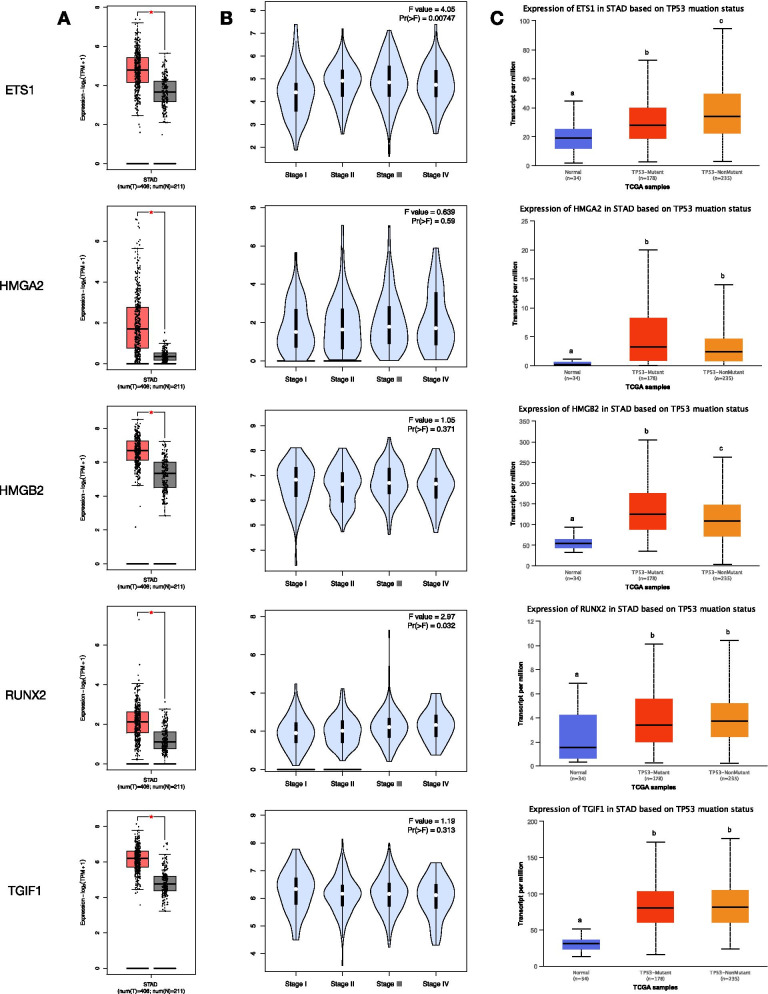
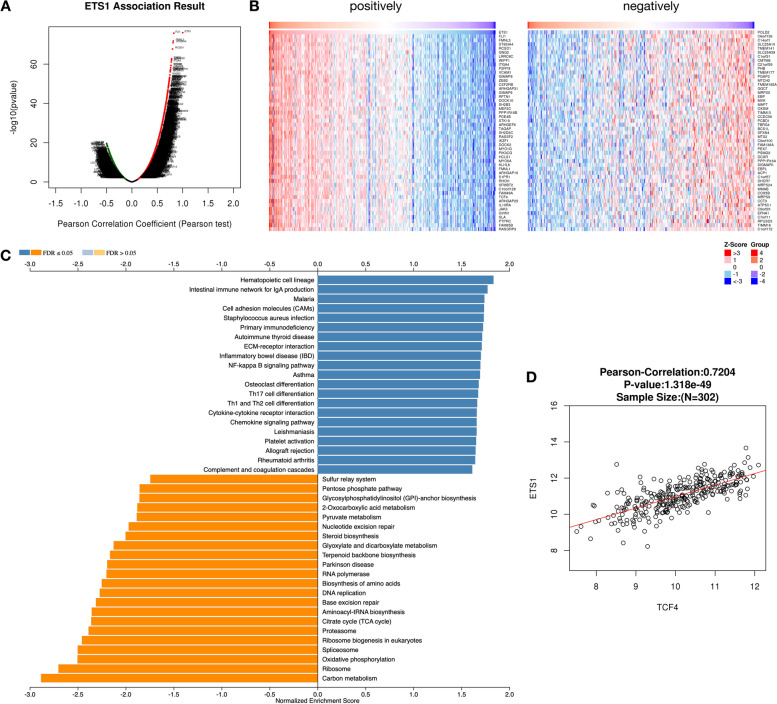
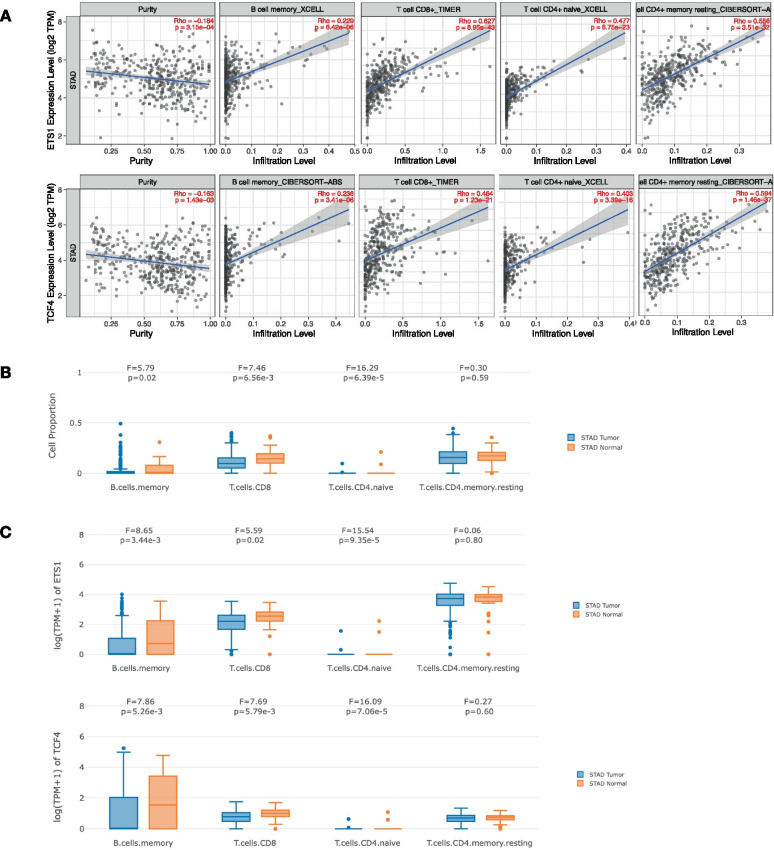
In this study, we conducted a multi-step analysis of expression profiles in GC clinical samples downloaded from TCGA database to identify differentially expressed miRNAs (DEMs) and differentially expressed mRNAs (DEGs). Potential prognostic biomarkers from the available DEMs were then established using the Cox regression method. Gene ontology and Kyoto Encyclopedia of Genes and Genomes (KEGG) enrichment analyses were performed to investigate the biological role of the predicted target genes of the miRNA biomarkers. Then, the prognostic DEM-mediated regulatory network was constructed based on transcription factor (TF)-miRNA-target interaction. Subsequently, the consensus genes were further determined based on the overlap between DEGs and these target genes of DEMs. Besides, expression profile, co-expression analysis, immunity, and prognostic values of these prognostic genes were also investigated to further explore the roles in the mechanism of GC tumorigenesis.
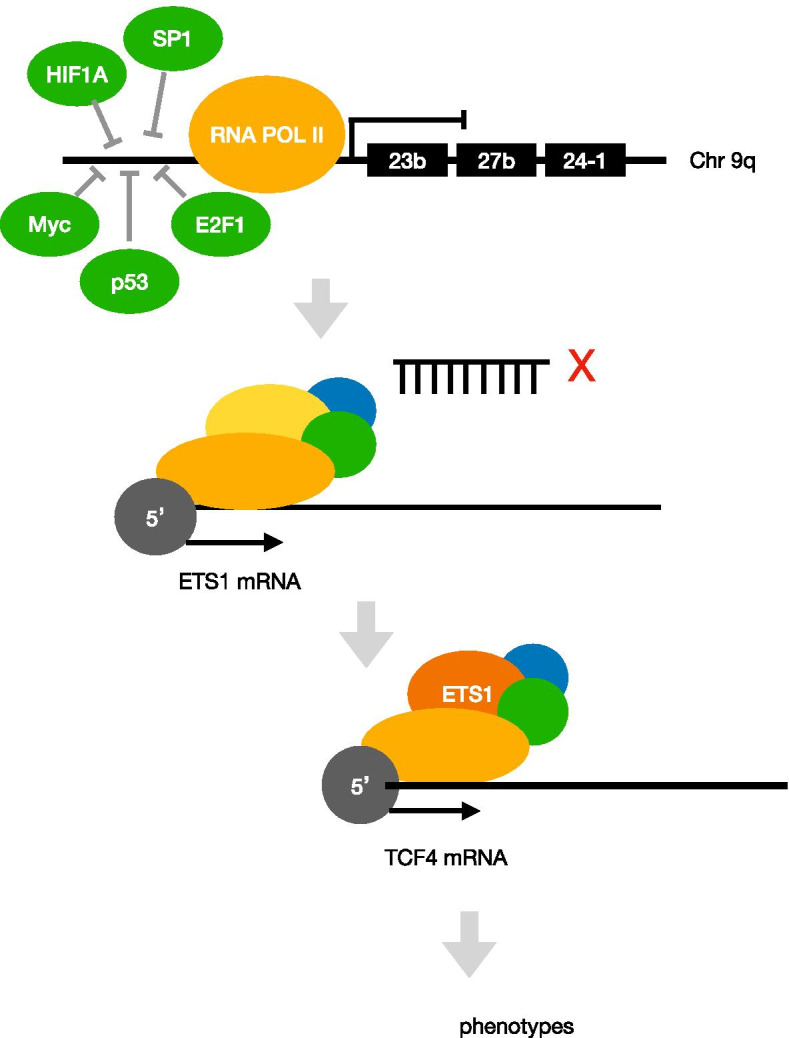
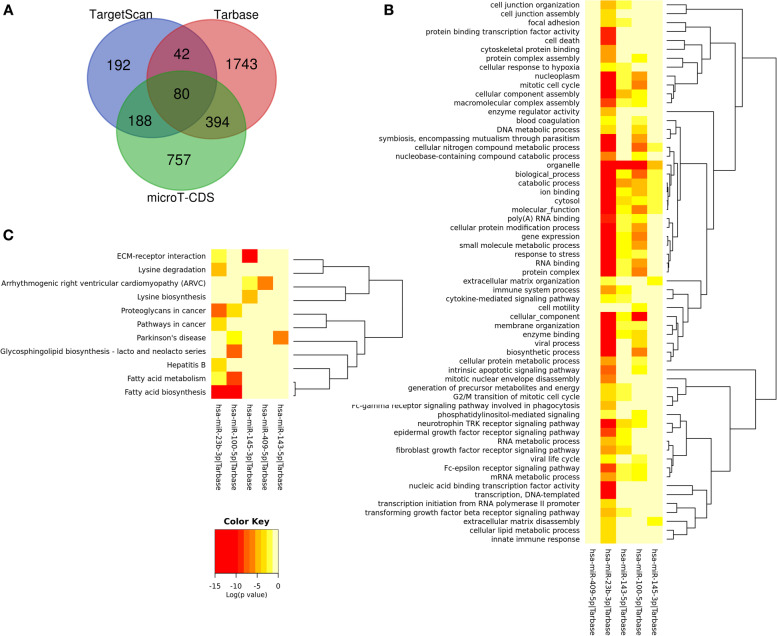
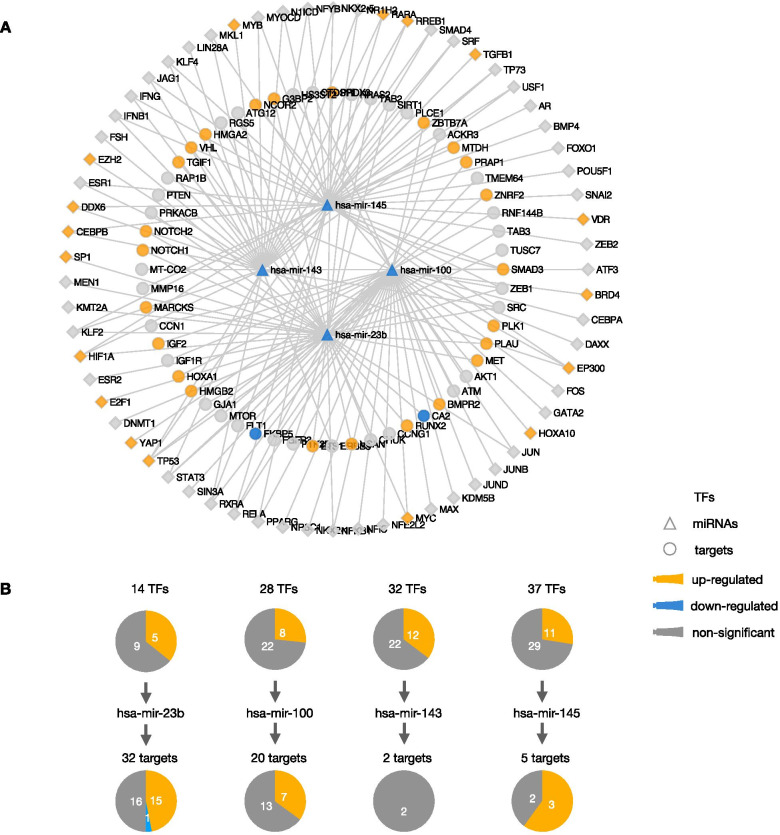
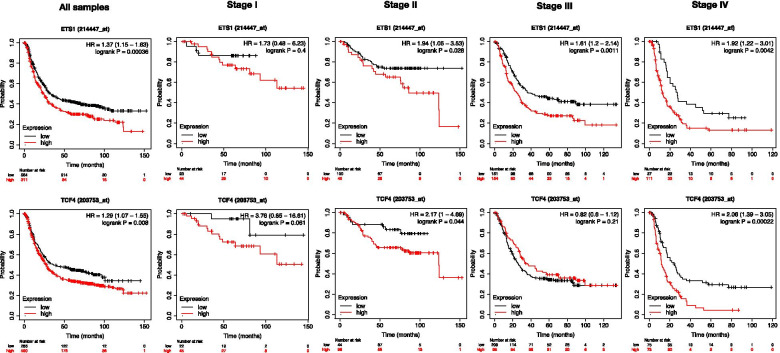
We got five miRNAs, including miR-23b, miR-100, miR-143, miR-145, and miR-409, which are associated with the overall survival of GC patients. Subsequently, enrichment analysis of the target genes of the miRNA biomarkers shown that the GO biological process terms were mainly enriched in mRNA catabolic process, nuclear chromatin, and RNA binding. In addition, the KEGG pathways were significantly enriched in fatty acid metabolism, extracellular matrix (ECM) receptor interaction, and proteoglycans in cancer pathways. The transcriptional regulatory network consisting of 68 TFs, 4 DEMs, and 58 targets was constructed based on the interaction of TFs, miRNAs, and targets. The downstream gene ETS1 of miR-23b and TCF4 regulated by ETS1 were obtained by the regulatory network construction and co-expression analysis. High expression of ETS1 and TCF4 indicated poor prognosis in GC patients, particularly in the advanced stages. The expression of ETS1 and TCF4 was correlated with CD4 T cells, CD8 T cells, and B cells.
miR-23b, ETS1, and TCF4 were identified as the prognostic biomarkers. ETS1 and TCF4 had potential immune function in GC, which provided a theoretical basis for molecular-targeted combined immunotherapy in the future.
胃癌(GC)是一种常见的人类消化系统恶性肿瘤,是全球癌症相关死亡的第二大主要原因。GC 的早期检测对临床结果有重大影响。本研究旨在鉴定潜在的 GC 生物标志物。
在这项研究中,我们对从 TCGA 数据库下载的 GC 临床样本的表达谱进行了多步分析,以鉴定差异表达的 microRNA(DEMs)和差异表达的 mRNA(DEGs)。然后,使用 Cox 回归方法从可用的 DEMs 中建立潜在的预后生物标志物。对预测 miRNA 生物标志物靶基因的功能进行了基因本体论和京都基因与基因组百科全书(KEGG)富集分析。然后,基于转录因子(TF)-miRNA-靶相互作用构建了预后 DEM 介导的调控网络。随后,根据 DEM 的靶基因与 DEGs 的重叠,进一步确定了共识基因。此外,还研究了这些预后基因的表达谱、共表达分析、免疫和预后值,以进一步探讨其在 GC 肿瘤发生机制中的作用。
我们得到了五个与 GC 患者总生存率相关的 miRNA,包括 miR-23b、miR-100、miR-143、miR-145 和 miR-409。随后,对 miRNA 生物标志物靶基因的富集分析表明,GO 生物过程术语主要富集于 mRNA 分解代谢、核染色质和 RNA 结合。此外,KEGG 途径在脂肪酸代谢、细胞外基质(ECM)受体相互作用和癌症途径中的蛋白聚糖中显著富集。基于 TF、miRNA 和靶标之间的相互作用,构建了由 68 个 TF、4 个 DEM 和 58 个靶标组成的转录调控网络。通过调控网络构建和共表达分析,获得了 miR-23b 的下游基因 ETS1 和受 ETS1 调控的 TCF4。GC 患者中 ETS1 和 TCF4 的高表达预示着预后不良,尤其是在晚期。ETS1 和 TCF4 的表达与 CD4 T 细胞、CD8 T 细胞和 B 细胞相关。
鉴定出 miR-23b、ETS1 和 TCF4 为预后生物标志物。ETS1 和 TCF4 在 GC 中具有潜在的免疫功能,为未来的分子靶向联合免疫治疗提供了理论依据。