Ma Ying, Wang Ruirui, Liao Jinzhuang, Guo Pengfei, Wang Qiang, Li Wei
Department of Radiology, The Third Xiangya Hospital of Central South University, Changsha, Hunan, People's Republic of China.
NHC key laboratory of translantional research on transplantation medicine, Department of Transplant Surgery, The Third Xiangya Hospital of Central South University, Changsha, Hunan, People's Republic of China.
Cell Death Discov. 2024 Oct 28;10(1):454. doi: 10.1038/s41420-024-02220-y.
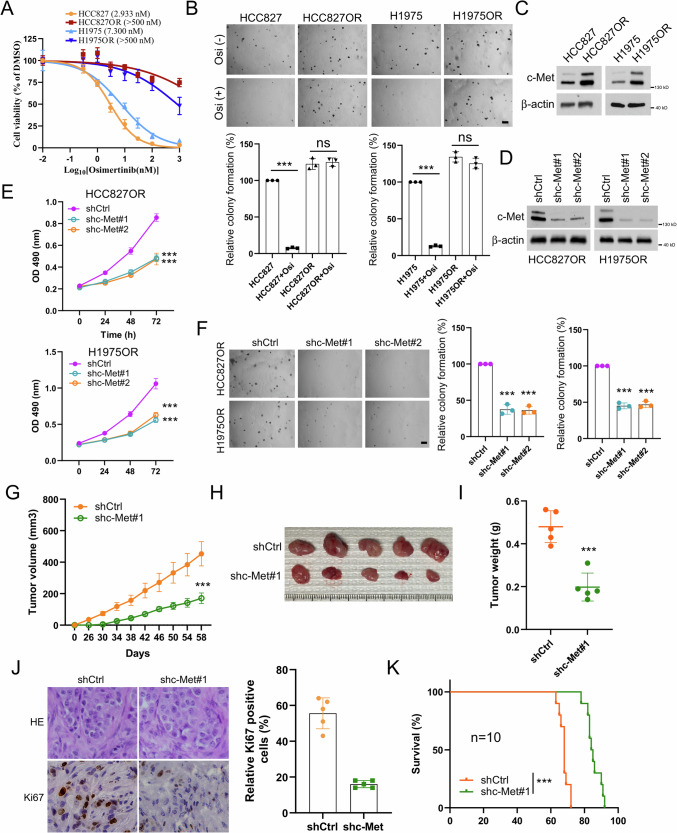
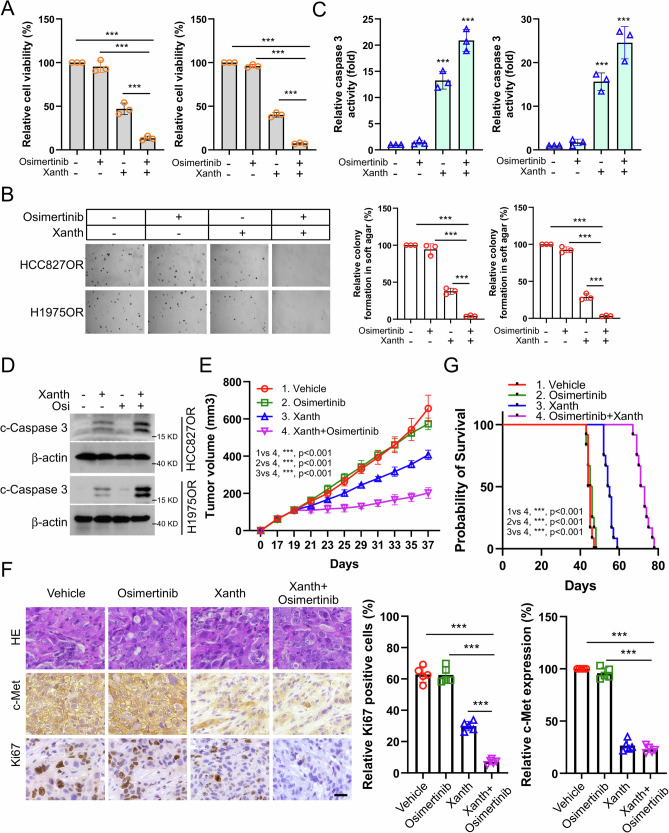
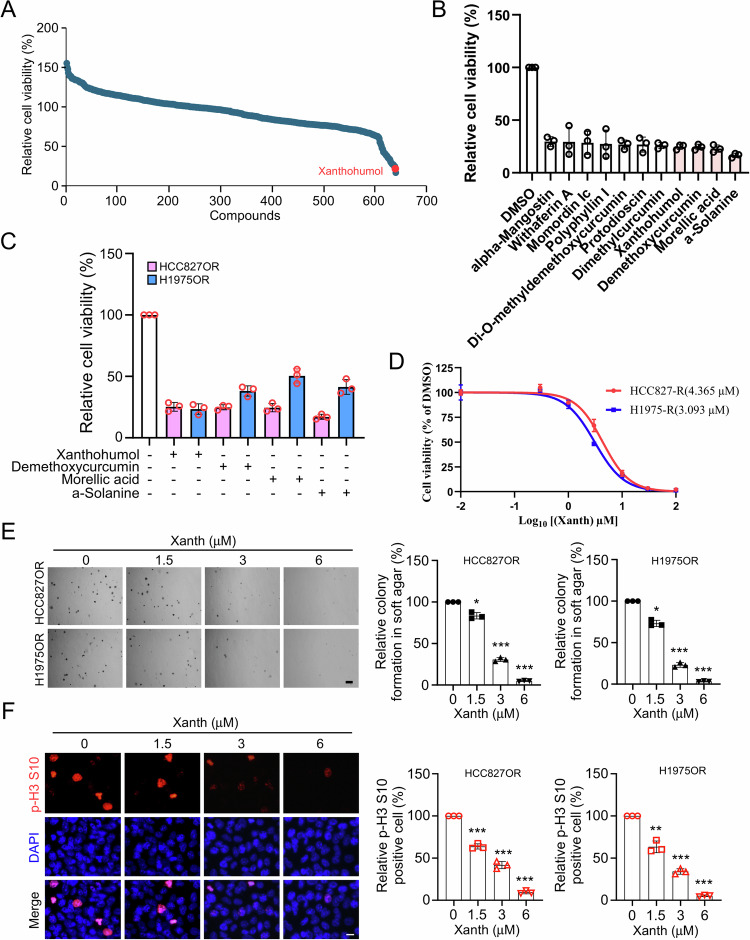
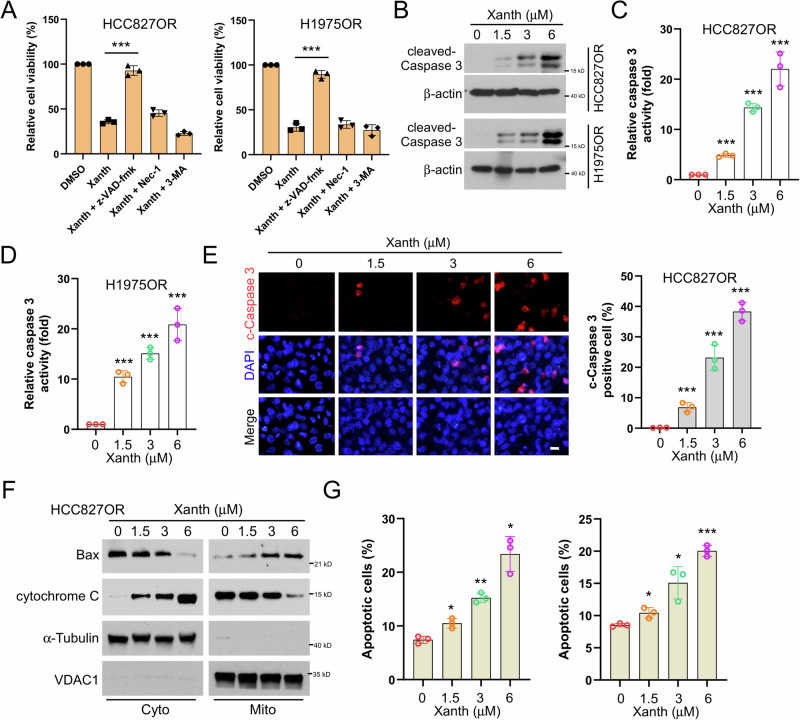
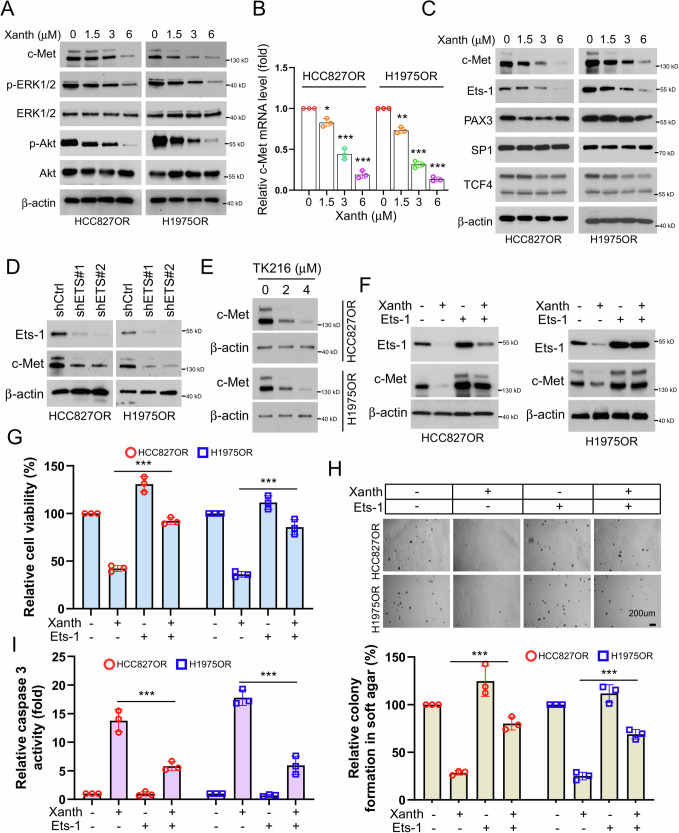
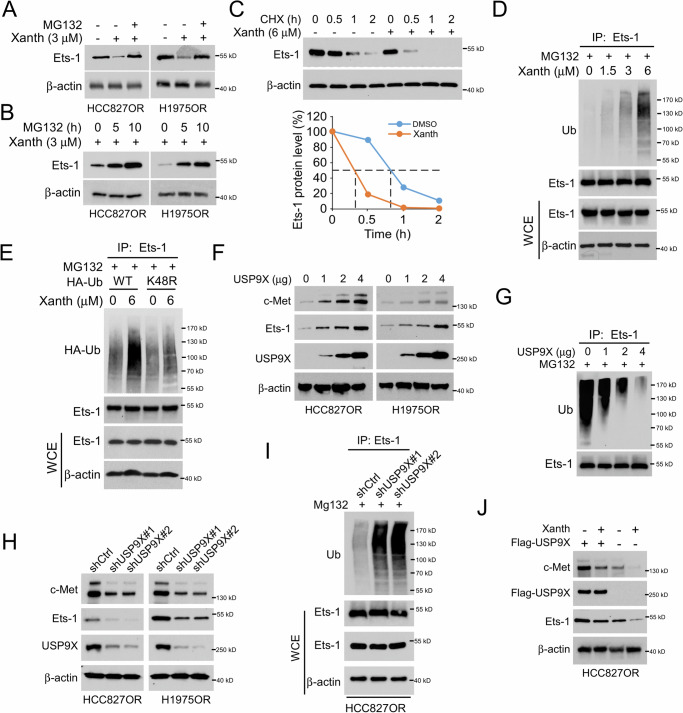
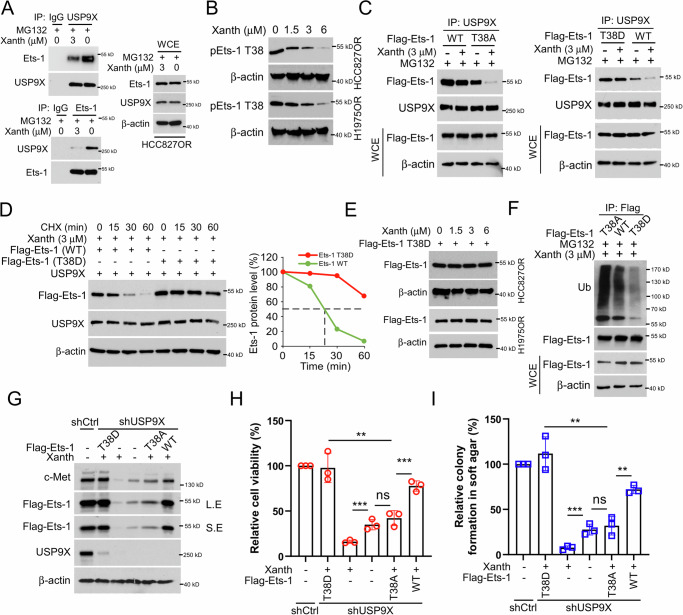
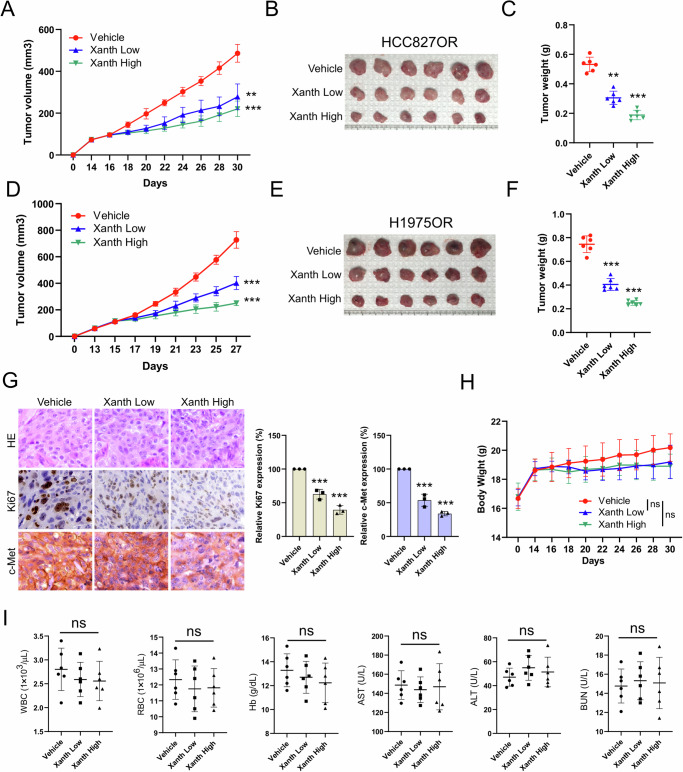
Non-small cell lung cancer (NSCLC) is a prevalent and fatal malignancy with a significant global impact. Recent advancements have introduced targeted therapies like tyrosine kinase inhibitors (TKIs) such as osimertinib, which have improved patient outcomes, particularly in those with EGFR mutations. Despite these advancements, acquired resistance to TKIs remains a significant challenge. Hence, one of the current research priorities is understanding the resistance mechanisms and identifying new therapeutic targets to improve therapeutic efficacy. Herein, we identified high expression of c-Met in osimertinib-resistant NSCLC cells, and depletion of c-Met significantly inhibited the proliferation of osimertinib-resistant cells and prolonged survival in mice, suggesting c-Met as an attractive therapeutic target. To identify effective anti-tumor agents targeting c-Met, we screened a compound library containing 641 natural products and found that only xanthohumol exhibited potent inhibitory effects against osimertinib-resistant NSCLC cells. Moreover, combination treatment with xanthohumol and osimertinib sensitized osimertinib-resistant NSCLC cells to osimertinib both in vitro and in vivo. Mechanistically, xanthohumol disrupted the interaction between USP9X and Ets-1, and inhibited the phosphorylation of Ets-1 at Thr38, promoting its degradation, thereby targeting the Ets-1/c-Met signaling axis and inducing intrinsic apoptosis in osimertinib-resistant NSCLC cells. Overall, the research highlights the critical role of targeting c-Met to address osimertinib resistance in NSCLC. By demonstrating the efficacy of xanthohumol in overcoming resistance and enhancing therapeutic outcomes, this study provides valuable insights and potential new strategies for improving the clinical management of NSCLC.
非小细胞肺癌(NSCLC)是一种常见且致命的恶性肿瘤,对全球有重大影响。最近的进展引入了靶向治疗,如酪氨酸激酶抑制剂(TKIs),如奥希替尼,这些药物改善了患者的预后,尤其是对那些具有表皮生长因子受体(EGFR)突变的患者。尽管有这些进展,但对TKIs的获得性耐药仍然是一个重大挑战。因此,当前的研究重点之一是了解耐药机制并确定新的治疗靶点,以提高治疗效果。在此,我们发现c-Met在奥希替尼耐药的NSCLC细胞中高表达,敲低c-Met可显著抑制奥希替尼耐药细胞的增殖并延长小鼠的生存期,提示c-Met是一个有吸引力的治疗靶点。为了确定靶向c-Met的有效抗肿瘤药物,我们筛选了一个包含641种天然产物的化合物库,发现只有黄腐酚对奥希替尼耐药的NSCLC细胞具有强效抑制作用。此外,黄腐酚与奥希替尼联合治疗在体外和体内均使奥希替尼耐药的NSCLC细胞对奥希替尼敏感。机制上,黄腐酚破坏了泛素特异性蛋白酶9X(USP9X)与Ets-1之间的相互作用,并抑制Ets-1在苏氨酸38处的磷酸化,促进其降解,从而靶向Ets-1/c-Met信号轴并诱导奥希替尼耐药的NSCLC细胞发生内源性凋亡。总体而言,该研究突出了靶向c-Met在解决NSCLC中奥希替尼耐药问题的关键作用。通过证明黄腐酚在克服耐药性和提高治疗效果方面的疗效,本研究为改善NSCLC的临床管理提供了有价值的见解和潜在的新策略。