Faculty of Agriculture, Setsunan University, Hirakata, Osaka, 573-0101, Japan.
Graduate School of Agricultural Science, Tohoku University, Sendai, Miyagi, 980-8572, Japan.
Sci Rep. 2021 Oct 22;11(1):20922. doi: 10.1038/s41598-021-00370-y.
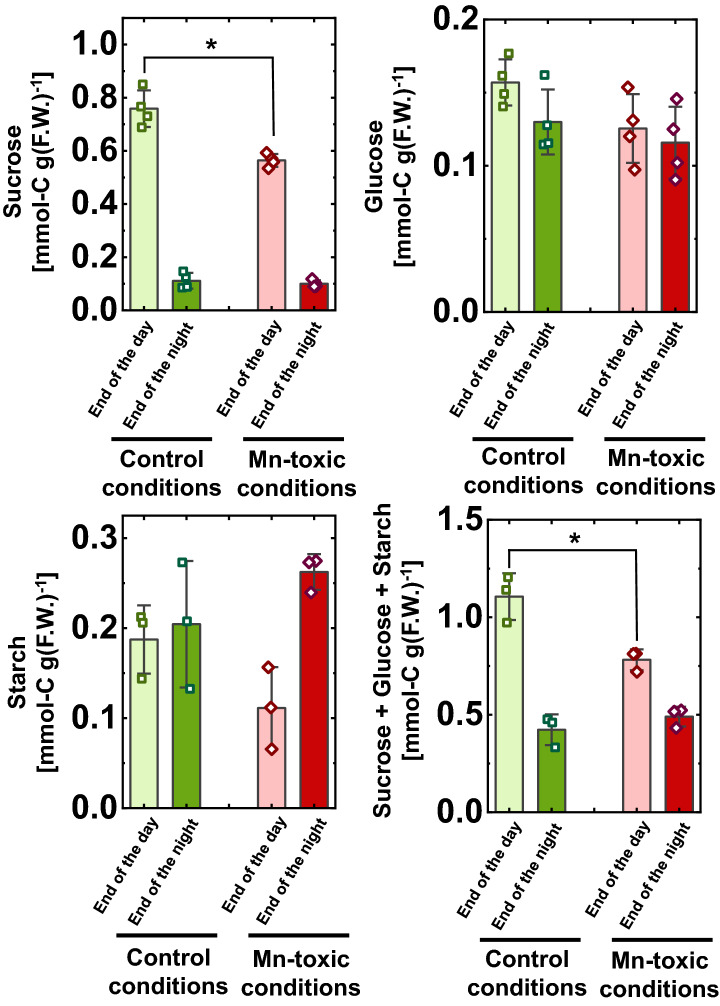
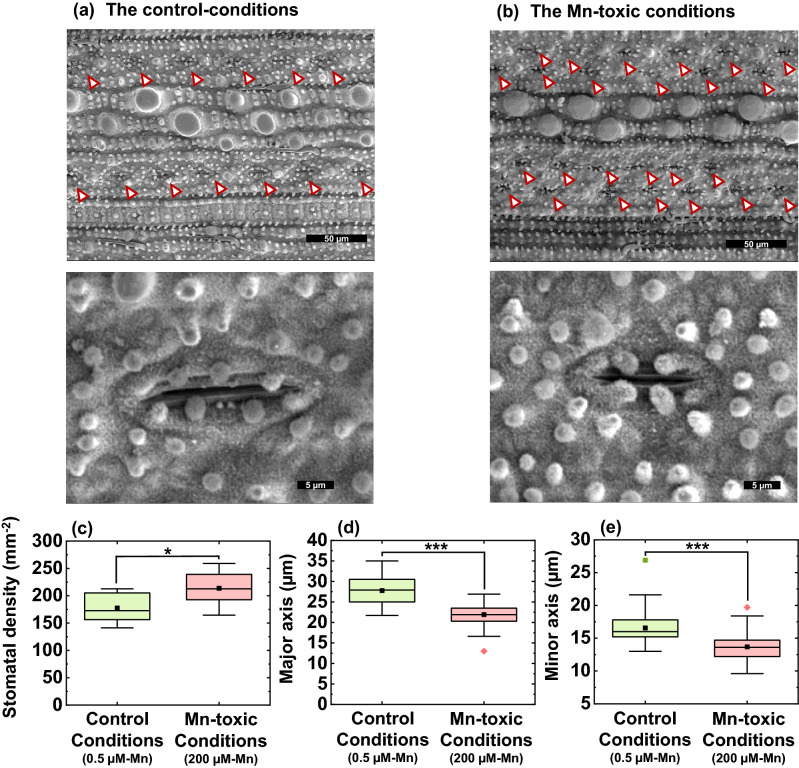
Despite the essentiality of Mn in terrestrial plants, its excessive accumulation in plant tissues can cause growth defects, known as Mn toxicity. Mn toxicity can be classified into apoplastic and symplastic types depending on its onset. Symplastic Mn toxicity is hypothesised to be more critical for growth defects. However, details of the relationship between growth defects and symplastic Mn toxicity remain elusive. In this study, we aimed to elucidate the molecular mechanisms underlying symplastic Mn toxicity in rice plants. We found that under excess Mn conditions, CO assimilation was inhibited by stomatal closure, and both carbon anabolic and catabolic activities were decreased. In addition to stomatal dysfunction, stomatal and leaf anatomical development were also altered by excess Mn accumulation. Furthermore, indole acetic acid (IAA) concentration was decreased, and auxin-responsive gene expression analyses showed IAA-deficient symptoms in leaves due to excess Mn accumulation. These results suggest that excessive Mn accumulation causes IAA deficiency, and low IAA concentrations suppress plant growth by suppressing stomatal opening and leaf anatomical development for efficient CO assimilation in leaves.
尽管锰对于陆生植物是必需的,但它在植物组织中的过量积累会导致生长缺陷,即锰毒性。根据发病机制的不同,锰毒性可分为质外体和共质体两种类型。共质体锰毒性被认为对生长缺陷更为关键。然而,生长缺陷与共质体锰毒性之间的关系的细节仍不清楚。在这项研究中,我们旨在阐明水稻植株中质体锰毒性的分子机制。我们发现,在过量锰条件下,CO 同化受到气孔关闭的抑制,碳合成和分解活性都降低了。除了气孔功能障碍外,过量锰积累还改变了气孔和叶片解剖结构的发育。此外,吲哚乙酸 (IAA) 浓度降低,生长素应答基因表达分析表明,由于过量锰积累,叶片出现 IAA 缺乏症状。这些结果表明,过量锰积累导致 IAA 缺乏,而低浓度的 IAA 通过抑制气孔开放和叶片解剖结构的发育来抑制植物生长,从而提高叶片中 CO 的同化效率。