• 文献检索
  • 文档翻译
  • 深度研究
  • 学术资讯
  • Suppr Zotero 插件Zotero 插件
  • 邀请有礼
  • 套餐&价格
  • 历史记录
应用&插件
Suppr Zotero 插件Zotero 插件浏览器插件Mac 客户端Windows 客户端微信小程序
定价
高级版会员购买积分包购买API积分包
服务
文献检索文档翻译深度研究API 文档MCP 服务
关于我们
关于 Suppr公司介绍联系我们用户协议隐私条款
关注我们

Suppr 超能文献

核心技术专利:CN118964589B侵权必究
粤ICP备2023148730 号-1Suppr @ 2026

文献检索

告别复杂PubMed语法,用中文像聊天一样搜索,搜遍4000万医学文献。AI智能推荐,让科研检索更轻松。

立即免费搜索

文件翻译

保留排版,准确专业,支持PDF/Word/PPT等文件格式,支持 12+语言互译。

免费翻译文档

深度研究

AI帮你快速写综述,25分钟生成高质量综述,智能提取关键信息,辅助科研写作。

立即免费体验

在新冠疫情期间从三个东南亚国家汲取的经验教训。

Lessons learned from three Southeast Asian countries during the COVID-19 pandemic.

作者信息

Khairulbahri Muhamad

机构信息

Bandung Institute of Technology, Postgraduate of Development Studies, Ganesha 10, Bandung, West Java, Indonesia.

出版信息

J Policy Model. 2021 Nov-Dec;43(6):1354-1364. doi: 10.1016/j.jpolmod.2021.09.002. Epub 2021 Oct 20.

DOI:10.1016/j.jpolmod.2021.09.002
PMID:34690384
原文链接:https://pmc.ncbi.nlm.nih.gov/articles/PMC8526120/
Abstract

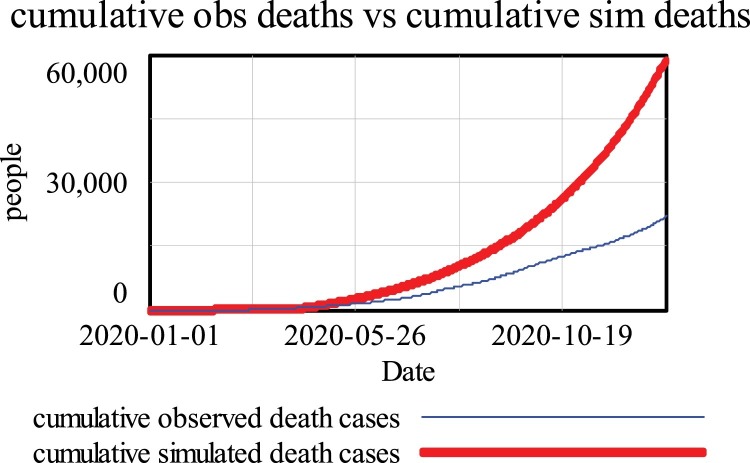
Several scholars have focused on the COVID-19 case studies in Europe and USA, leaving the people in Southeast Asia with little information about the lesson learned from their own case studies. This study aims to analyses case studies through the SEIR model in three Southeast Asia countries including Singapore, Malaysia, and Indonesia. The SEIR model incorporates two types measures including social behavior and lockdowns as well as hospital preparedness. The SEIR model reveals that Malaysia, despite its relatively low testing capacity but with the application of the national lockdown, can slash the coronavirus transmission while Indonesia has still struggled to contain the COVID-19 flow owing to partial lockdowns. Singapore, at one hand, can successfully contain the coronavirus due to the national lockdowns, and the better healthcare system. With this point in mind, it is not surprising that Singapore has very low fatality rates and significantly low cases after lockdowns. Better preparedness lockdowns, and sufficient testing capacity are keys to controlling the COVID-19 flow, especially if the development of vaccines or distribution of respective vaccines is under progress.

摘要

几位学者专注于欧美地区的新冠肺炎案例研究,使得东南亚民众对自身案例研究所得知之甚少。本研究旨在通过易感-暴露-感染-康复(SEIR)模型分析新加坡、马来西亚和印度尼西亚这三个东南亚国家的案例研究。SEIR模型纳入了两类措施,包括社会行为与封锁措施以及医院准备情况。SEIR模型显示,马来西亚尽管检测能力相对较低,但通过实施全国封锁,能够大幅减少新冠病毒传播,而印度尼西亚由于部分封锁,仍在努力控制新冠肺炎疫情传播。一方面,新加坡由于实施全国封锁以及拥有更好的医疗体系,能够成功控制新冠病毒传播。考虑到这一点,新加坡在封锁后死亡率极低且病例数显著减少也就不足为奇了。做好充分准备的封锁措施以及足够的检测能力是控制新冠肺炎疫情传播的关键,尤其是在疫苗研发或各自疫苗分发正在进行的情况下。

https://cdn.ncbi.nlm.nih.gov/pmc/blobs/d886/8526120/0c01b50eb0c8/gr3_lrg.jpg
https://cdn.ncbi.nlm.nih.gov/pmc/blobs/d886/8526120/caee61ce19c8/gr1_lrg.jpg
https://cdn.ncbi.nlm.nih.gov/pmc/blobs/d886/8526120/e9d7b2743ad4/gr2_lrg.jpg
https://cdn.ncbi.nlm.nih.gov/pmc/blobs/d886/8526120/0c01b50eb0c8/gr3_lrg.jpg
https://cdn.ncbi.nlm.nih.gov/pmc/blobs/d886/8526120/caee61ce19c8/gr1_lrg.jpg
https://cdn.ncbi.nlm.nih.gov/pmc/blobs/d886/8526120/e9d7b2743ad4/gr2_lrg.jpg
https://cdn.ncbi.nlm.nih.gov/pmc/blobs/d886/8526120/0c01b50eb0c8/gr3_lrg.jpg

相似文献

1
Lessons learned from three Southeast Asian countries during the COVID-19 pandemic.在新冠疫情期间从三个东南亚国家汲取的经验教训。
J Policy Model. 2021 Nov-Dec;43(6):1354-1364. doi: 10.1016/j.jpolmod.2021.09.002. Epub 2021 Oct 20.
2
The SEIR model incorporating asymptomatic cases, behavioral measures, and lockdowns: Lesson learned from the COVID-19 flow in Sweden.纳入无症状病例、行为措施和封锁措施的SEIR模型:从瑞典的新冠疫情中吸取的教训
Biomed Signal Process Control. 2023 Mar;81:104416. doi: 10.1016/j.bspc.2022.104416. Epub 2022 Nov 21.
3
Population policies in Southeast Asia and Australia: the international relevance of domestic affairs.东南亚和澳大利亚的人口政策:国内事务的国际关联
J Aust Popul Assoc. 1984 Spring;1:109-20. doi: 10.1007/BF03029405.
4
The epidemiology of COVID-19 in ten Southeast Asian countries.COVID-19 在十个东南亚国家的流行病学情况。
Med J Malaysia. 2021 Nov;76(6):783-791.
5
Factors Influencing Asia-Pacific Countries' Success Level in Curbing COVID-19: A Review Using a Social-Ecological System (SES) Framework.影响亚太国家遏制 COVID-19 成功水平的因素:基于社会生态系统(SES)框架的综述。
Int J Environ Res Public Health. 2021 Feb 10;18(4):1704. doi: 10.3390/ijerph18041704.
6
State of rare disease management in Southeast Asia.东南亚罕见病管理状况。
Orphanet J Rare Dis. 2016 Aug 2;11(1):107. doi: 10.1186/s13023-016-0460-9.
7
Financing old age in Southeast Asia: an overview.东南亚的老年保障:概述
Nanyang Wenti Yenchiu. 1996:72-98. doi: 10.1355/seaa96e.
8
Battling COVID-19 pandemic waves in six South-East Asian countries: A real-time consensus review.应对东南亚六个国家的新冠疫情浪潮:实时共识综述
Med J Malaysia. 2020 Nov;75(6):613-625.
9
AFES A.S.-O.N.E.: ASEAN Survey Of Needs in Endocrinology in the Time of the COVID-19 Pandemic.AFES A.S.-O.N.E.:新冠疫情期间东盟内分泌学需求调查
J ASEAN Fed Endocr Soc. 2020;35(1):5-13. doi: 10.15605/jafes.035.01.10. Epub 2020 May 29.
10
Comparative Studies on Patient Safety Culture to Strengthen Health Systems Among Southeast Asian Countries.比较研究患者安全文化,以加强东南亚国家的卫生系统。
Front Public Health. 2021 Jan 12;8:600216. doi: 10.3389/fpubh.2020.600216. eCollection 2020.

引用本文的文献

1
Perceptions of risk and coping strategies during the COVID-19 pandemic among women and older adults.COVID-19 大流行期间女性和老年人对风险的认知和应对策略。
PLoS One. 2024 Apr 17;19(4):e0301009. doi: 10.1371/journal.pone.0301009. eCollection 2024.
2
An appraisal of peer-reviewed published literature on Influenza, 2000-2021 from countries in South-East Asia Region.评估 2000-2021 年东南亚国家发表的关于流感的同行评议文献。
Front Public Health. 2023 Apr 17;11:1127891. doi: 10.3389/fpubh.2023.1127891. eCollection 2023.
3
The effect of self-esteem on the spread of a pandemic. A cross-country analysis of the role played by self-esteem in the spread of the COVID-19 pandemic.
自尊对大流行病传播的影响。一项关于自尊在 COVID-19 大流行传播中所扮演角色的跨国分析。
Soc Sci Med. 2023 May;324:115866. doi: 10.1016/j.socscimed.2023.115866. Epub 2023 Mar 22.
4
Assessing the effectiveness of the intervention measures of COVID-19 in China based on dynamical method.基于动态方法评估中国新冠疫情干预措施的有效性。
Infect Dis Model. 2023 Mar;8(1):159-171. doi: 10.1016/j.idm.2022.12.007. Epub 2023 Jan 5.
5
The SEIR model incorporating asymptomatic cases, behavioral measures, and lockdowns: Lesson learned from the COVID-19 flow in Sweden.纳入无症状病例、行为措施和封锁措施的SEIR模型:从瑞典的新冠疫情中吸取的教训
Biomed Signal Process Control. 2023 Mar;81:104416. doi: 10.1016/j.bspc.2022.104416. Epub 2022 Nov 21.
6
Investigating Linkages Between Spatiotemporal Patterns of the COVID-19 Delta Variant and Public Health Interventions in Southeast Asia: Prospective Space-Time Scan Statistical Analysis Method.调查 COVID-19 德尔塔变异株时空模式与东南亚公共卫生干预措施之间的关联:前瞻性时空扫描统计分析方法。
JMIR Public Health Surveill. 2022 Aug 9;8(8):e35840. doi: 10.2196/35840.
7
The optimality of age-based lockdown policies.基于年龄的封锁政策的最优性。
J Policy Model. 2022 May-Jun;44(3):722-738. doi: 10.1016/j.jpolmod.2022.05.001. Epub 2022 May 10.
8
Policy responses to COVID-19 pandemic waves: Cross-region and cross-sector economic impact.针对新冠疫情浪潮的政策应对措施:跨地区和跨部门的经济影响。
J Policy Model. 2022 Mar-Apr;44(2):252-279. doi: 10.1016/j.jpolmod.2022.03.009. Epub 2022 Apr 2.
9
Classification Schemes of COVID-19 High Risk Areas and Resulting Policies: A Rapid Review.新型冠状病毒肺炎高风险地区分类方案及相关政策:快速综述
Front Public Health. 2022 Feb 25;10:769174. doi: 10.3389/fpubh.2022.769174. eCollection 2022.
10
Fighting the COVID pandemic: National policy choices in non-pharmaceutical interventions.抗击新冠疫情:非药物干预措施中的国家政策选择
J Policy Model. 2022 Jan-Feb;44(1):22-40. doi: 10.1016/j.jpolmod.2021.11.003. Epub 2022 Jan 11.