Umviligihozo Gisele, Muok Erick, Nyirimihigo Gisa Emmanuel, Xu Rui, Dilernia Dario, Herard Kimberley, Song Heeyah, Qin Qianhong, Bizimana Jean, Farmer Paul, Hare Jonathan, Gilmour Jill, Allen Susan, Karita Etienne, Hunter Eric, Yue Ling
Centre for Family Health Research, Kigali, Rwanda.
Emory Vaccine Center at Yerkes National Primate Research Center, Atlanta, GA, United States.
Front Microbiol. 2021 Oct 7;12:734929. doi: 10.3389/fmicb.2021.734929. eCollection 2021.
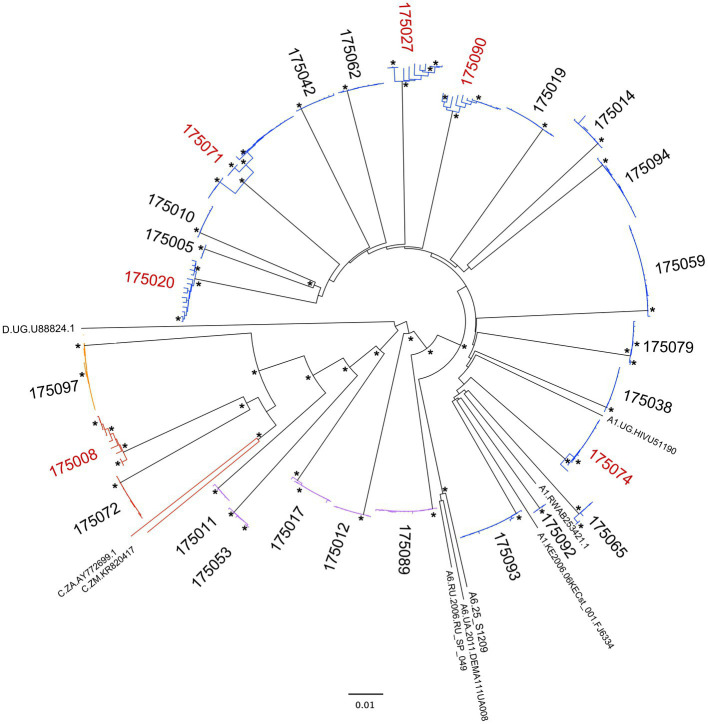
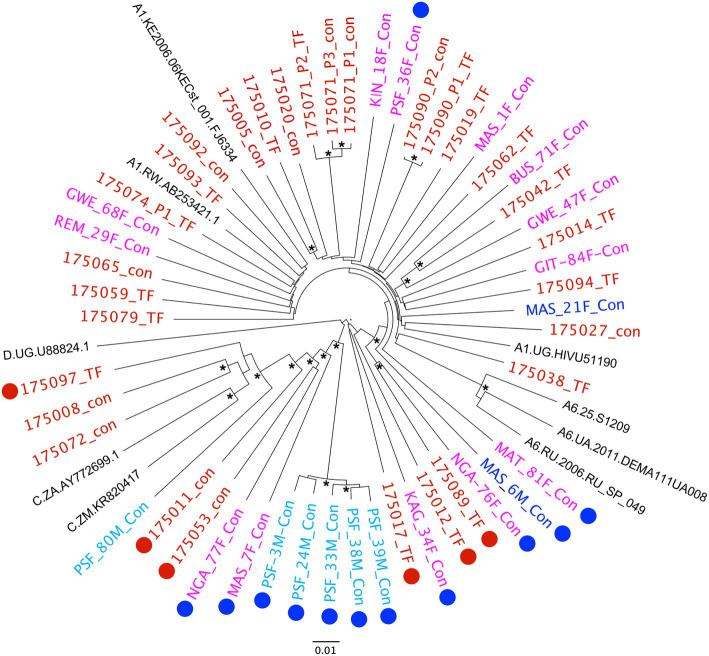
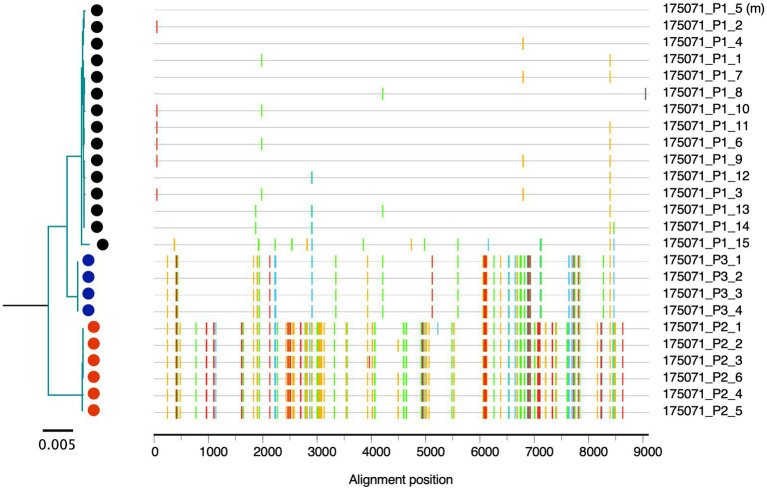
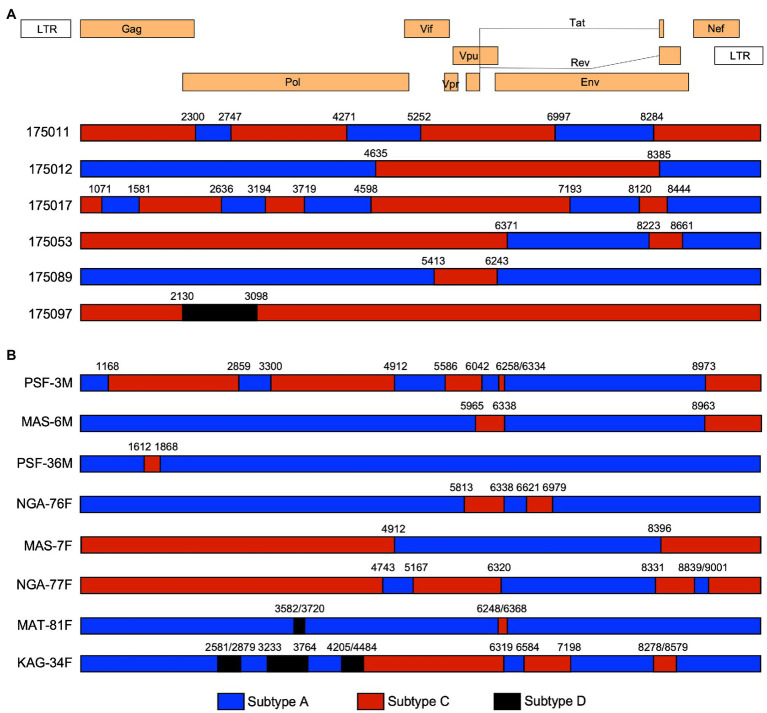
Most studies of HIV-1 transmission have focused on subtypes B and C. In this study, we determined the genomic sequences of the transmitted founder (TF) viruses from acutely infected individuals enrolled between 2005 and 2011 into IAVI protocol C in Rwanda and have compared these isolates to viruses from more recent (2016-2019) acute/early infections in three at risk populations - MSM, high risk women (HRW), and discordant couples (DC). For the Protocol C samples, we utilized near full-length single genome (NFLG) amplification to generate 288 HIV-1 amplicons from 26 acutely infected seroconverters (SC), while for the 21 recent seroconverter samples (13 from HRW, two from DC, and six from MSM), we PCR amplified overlapping half-genomes. Using PacBio SMRT technology combined with the MDPseq workflow, we performed multiplex sequencing to obtain high accuracy sequences for each amplicon. Phylogenetic analyses indicated that the majority of recent transmitted viruses from DC and HRW clustered within those of the earlier Protocol C cohort. However, five of six sequences from the MSM cohort branched together and were greater than 97% identical. Recombination analyses revealed a high frequency (6/26; 23%) of unique inter-subtype recombination in Protocol C with 19% AC and 4% CD recombinant viruses, which contrasted with only 6.5% of recombinants defined by sequencing of the gene previously. The frequency of recombinants was significantly higher (12/21; 57%) in the more recent isolates, although, the five related viruses from the MSM cohort had identical recombination break points. While major drug resistance mutations were absent from Protocol C viruses, 4/21 of recent isolates exhibited transmitted nevirapine resistance. These results demonstrate the ongoing evolution and increased prevalence of recombinant and drug resistant transmitted viruses in Rwanda and highlight the importance of defining NFLG sequences to fully understand the nature of TF viruses and in particular the prevalence of unique recombinant forms (URFs) in transmission cohorts.
大多数关于HIV-1传播的研究都集中在B和C亚型上。在本研究中,我们确定了2005年至2011年间在卢旺达纳入IAVI方案C的急性感染个体中传播奠基者(TF)病毒的基因组序列,并将这些分离株与来自三个高危人群——男男性行为者(MSM)、高危女性(HRW)和不一致伴侣(DC)的近期(2016 - 2019年)急性/早期感染病毒进行了比较。对于方案C的样本,我们利用近全长单基因组(NFLG)扩增技术,从26名急性感染的血清转化者(SC)中生成了288个HIV-1扩增子,而对于21个近期血清转化者样本(13个来自HRW,2个来自DC,6个来自MSM),我们通过PCR扩增重叠的半基因组。使用PacBio SMRT技术结合MDPseq工作流程,我们进行了多重测序以获得每个扩增子的高精度序列。系统发育分析表明,近期来自DC和HRW的大多数传播病毒聚集在早期方案C队列的病毒中。然而,MSM队列的六个序列中有五个一起分支,且序列同一性大于97%。重组分析显示,方案C中独特的亚型间重组频率很高(6/26;23%),其中19%为AC重组病毒,4%为CD重组病毒,这与之前通过基因测序定义的重组体仅6.5%形成对比。在近期分离株中,重组体的频率显著更高(12/21;57%),不过,来自MSM队列的五个相关病毒具有相同的重组断点。虽然方案C病毒中不存在主要的耐药突变,但近期分离株中有4/21表现出传播的奈韦拉平耐药性。这些结果表明,卢旺达的重组和耐药传播病毒正在不断演变且流行率增加,并强调了定义NFLG序列对于全面了解TF病毒的性质,特别是对于了解传播队列中独特重组形式(URF)流行率的重要性。