Cui Yanli, Ge Qun, Zhao Pei, Chen Wei, Sang Xiaohui, Zhao Yunlei, Chen Quanjia, Wang Hongmei
Engineering Research Centre of Cotton, Ministry of Education, Xinjiang Agricultural University, Ürümqi, China.
State Key Laboratory of Cotton Biology, Institute of Cotton Research, Chinese Academy of Agricultural Sciences, Anyang, China.
Front Plant Sci. 2021 Oct 8;12:703011. doi: 10.3389/fpls.2021.703011. eCollection 2021.
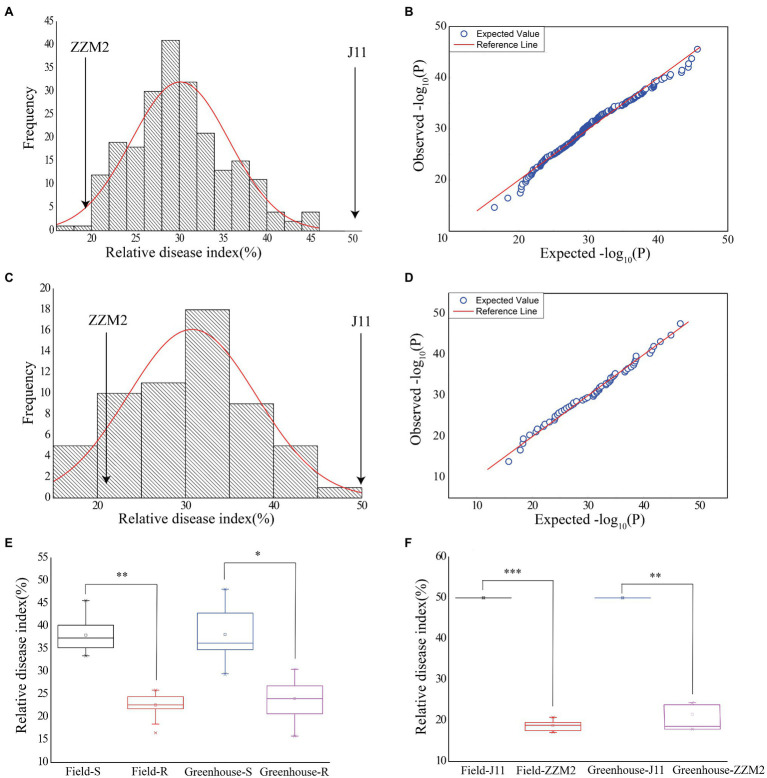
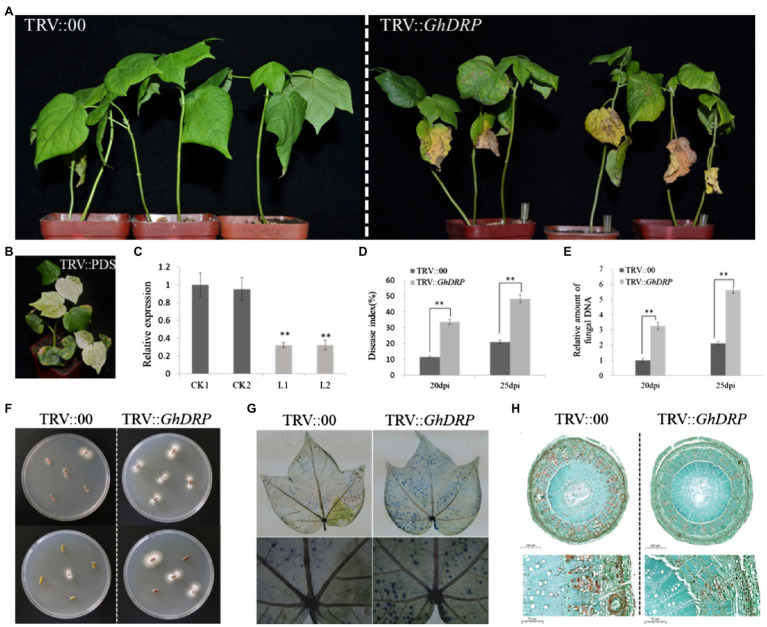
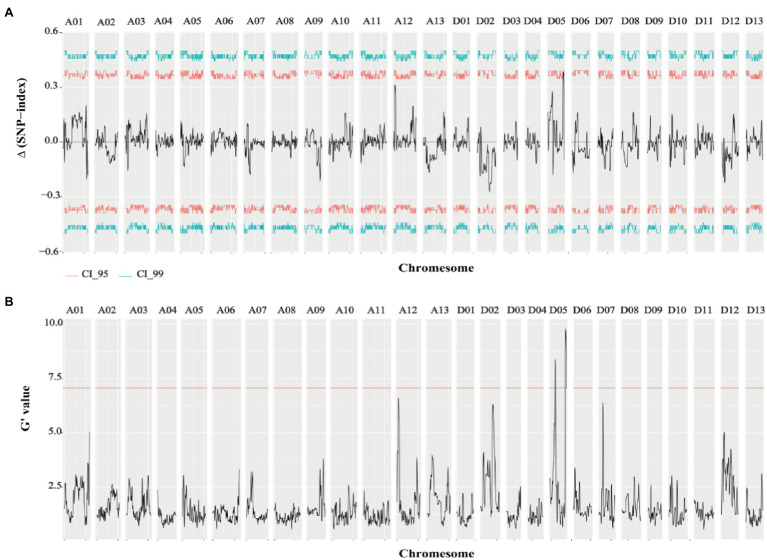
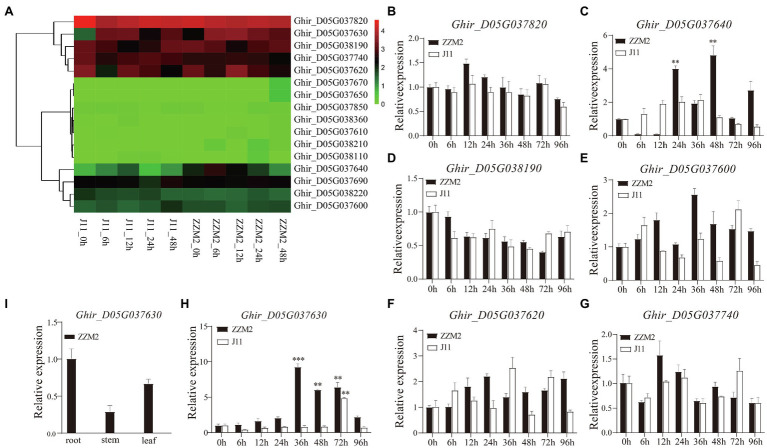
Cotton is a globally important cash crop. Verticillium wilt (VW) is commonly known as "cancer" of cotton and causes serious loss of yield and fiber quality in cotton production around the world. Here, we performed a BSA-seq analysis using an F segregation population to identify the candidate loci involved in VW resistance. Two QTLs (qvw-D05-1 and qvw-D05-2) related to VW resistance in cotton were identified using two resistant/susceptible bulks from the F segregation population constructed by crossing the resistant cultivar ZZM2 with the susceptible cultivar J11. A total of 30stop-lost SNPs and 42 stop-gained SNPs, which included 17 genes, were screened in the qvw-D05-2 region by SnpEff analysis. Further analysis of the transcriptome data and qRT-PCR revealed that the expression level of (designated as ) varied significantly at certain time points after infection with . The virus-induced gene silencing of resulted in higher susceptibility of the plants to than the control, suggesting that is involved in the resistance to infection. This study provides a method for rapid mining of quantitative trait loci and screening of candidate genes, as well as enriches the genomic information and gene resources for the molecular breeding of disease resistance in cotton.
棉花是一种全球重要的经济作物。黄萎病通常被称为棉花的“癌症”,在全球棉花生产中导致产量和纤维品质严重损失。在此,我们利用一个F2分离群体进行了BSA-seq分析,以鉴定参与黄萎病抗性的候选位点。通过将抗病品种ZZM2与感病品种J11杂交构建的F2分离群体中的两个抗病/感病混合池,鉴定出了两个与棉花黄萎病抗性相关的QTL(qvw-D05-1和qvw-D05-2)。通过SnpEff分析,在qvw-D05-2区域筛选出了总共30个无义突变SNP和42个错义突变SNP,其中包括17个基因。对转录组数据和qRT-PCR的进一步分析表明,(命名为)在感染后特定时间点的表达水平有显著变化。对进行病毒诱导的基因沉默导致植株比对照对更易感,表明参与了对感染的抗性。本研究提供了一种快速挖掘数量性状位点和筛选候选基因的方法,同时丰富了棉花抗病分子育种的基因组信息和基因资源。