Xiao Cunde, Du Zhiheng, Handley Mike J, Mayewski Paul A, Cao Junji, Schüpbach Simon, Zhang Tong, Petit Jean-Robert, Li Chuanjin, Han Yeongcheol, Li Yuefang, Ren Jiawen
State Key Laboratory of Earth Surface Processes and Resource Ecology, Beijing Normal University, Beijing 100875, China.
State Key Laboratory of Cryospheric Science, Northwest Institute of Eco-Environment and Resources, Chinese Academy of Sciences, Lanzhou 730000, China.
Natl Sci Rev. 2020 Jun 26;8(7):nwaa144. doi: 10.1093/nsr/nwaa144. eCollection 2021 Jul.
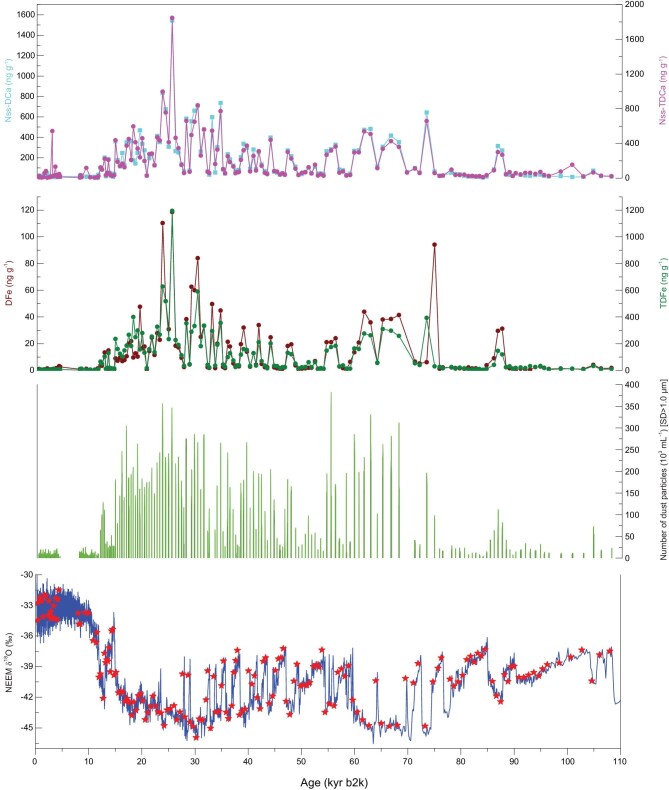
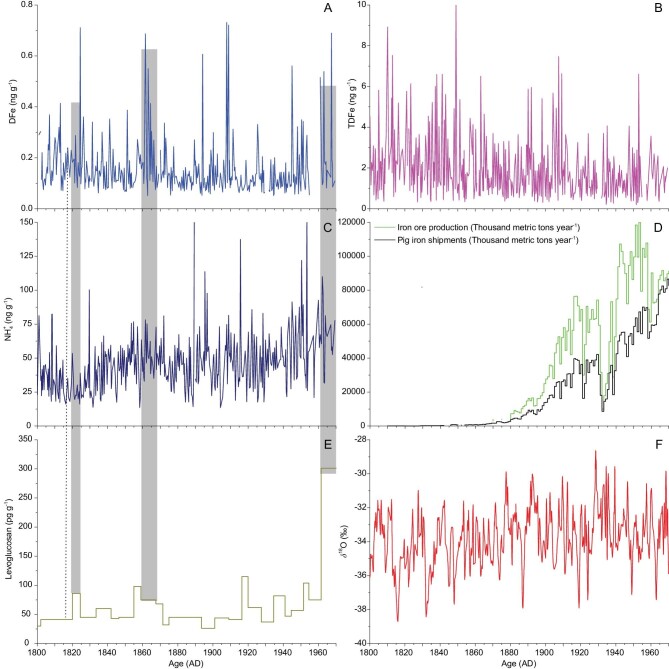
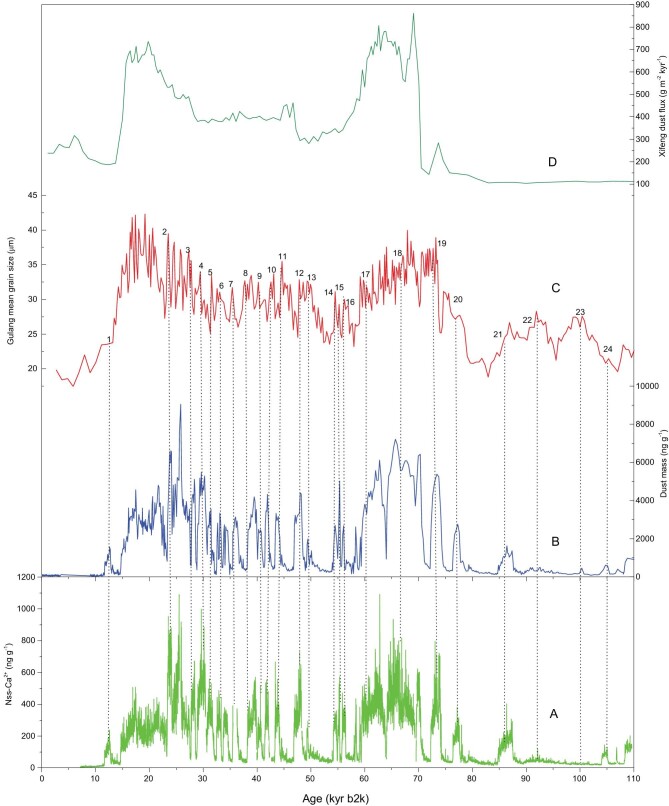
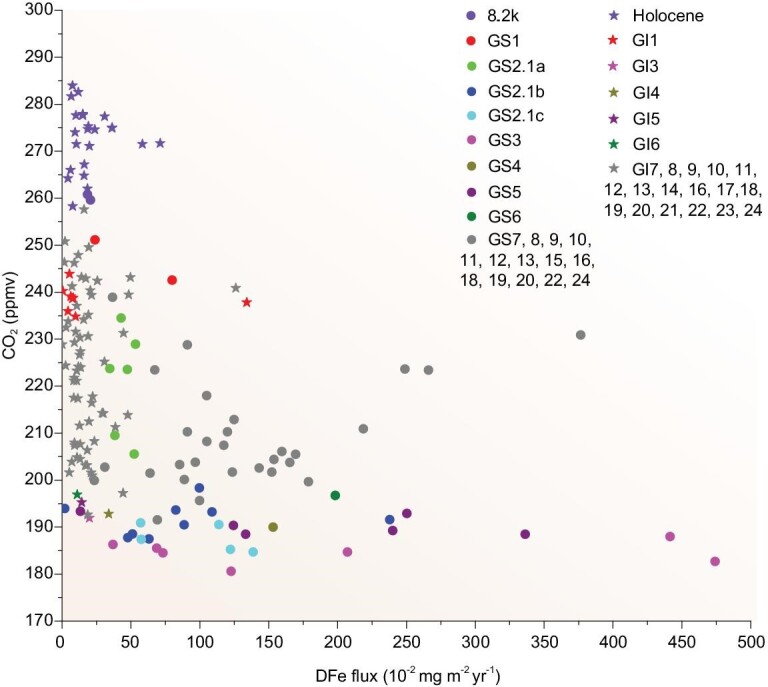
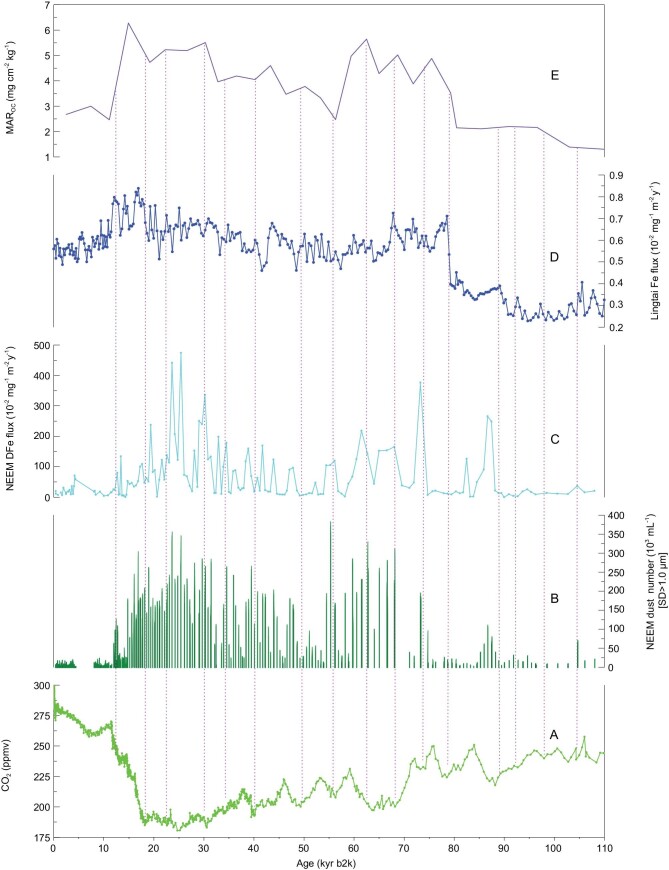
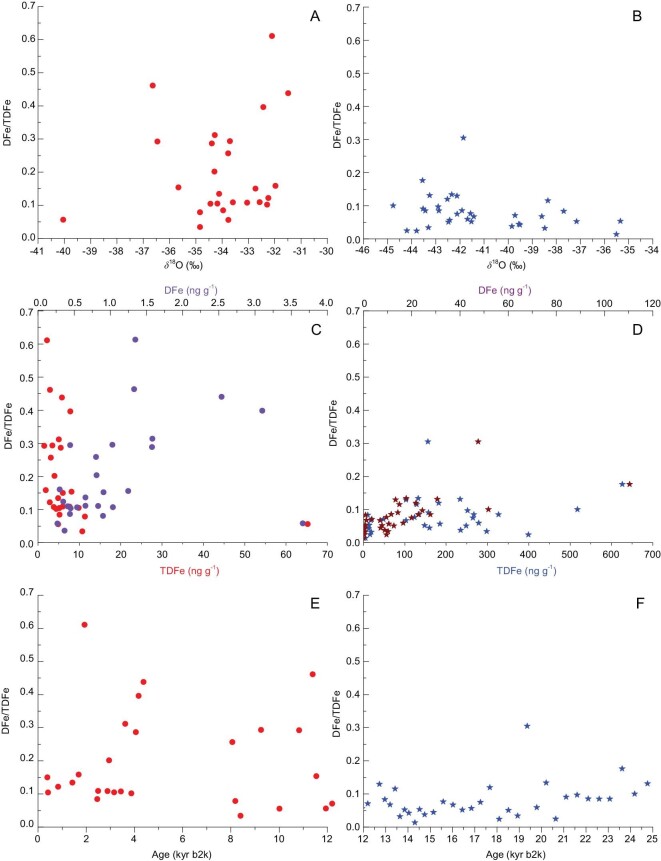
Mineral dust can indirectly affect the climate by supplying bioavailable iron (Fe) to the ocean. Here, we present the records of dissolved Fe (DFe) and total Fe (TDFe) in North Greenland Eemian Ice Drilling (NEEM) ice core over the past 110 kyr BP. The Fe records are significantly negatively correlated with the carbon-dioxide (CO) concentrations during cold periods. The results suggest that the changes in Fe fluxes over the past 110 kyr BP in the NEEM ice core are consistent with those in Chinese loess records because the mineral-dust distribution is controlled by the East Asian deserts. Furthermore, the variations in the dust input on a global scale are most likely driven by changes in solar radiation during the last glacial-interglacial cycle in response to Earth's orbital cycles. In the last glacial-interglacial cycle, the DFe/TDFe ratios were higher during the warm periods (following the post-Industrial Revolution and during the Holocene and last interglacial period) than during the main cold period (i.e. the last glacial maximum (LGM)), indicating that the aeolian input of iron and the iron fertilization effect on the oceans have a non-linear relationship during different periods. Although the burning of biomass aerosols has released large amounts of DFe since the Industrial Revolution, no significant responses are observed in the DFe and TDFe variations during this period, indicating that severe anthropogenic contamination has no significant effect on the DFe (TDFe) release in the NEEM ice core.
矿物尘埃可通过向海洋提供生物可利用铁(Fe)间接影响气候。在此,我们展示了过去11万年BP期间北格陵兰伊米亚冰芯钻探(NEEM)冰芯中溶解铁(DFe)和总铁(TDFe)的记录。在寒冷时期,铁记录与二氧化碳(CO)浓度显著负相关。结果表明,过去11万年BP期间NEEM冰芯中铁通量的变化与中国黄土记录中的变化一致,因为矿物尘埃分布受东亚沙漠控制。此外,全球范围内尘埃输入的变化很可能是由末次冰期 - 间冰期循环期间太阳辐射的变化驱动的,这是对地球轨道周期的响应。在末次冰期 - 间冰期循环中,温暖时期(工业革命后、全新世和末次间冰期)的DFe/TDFe比值高于主要寒冷时期(即末次盛冰期(LGM)),这表明不同时期风成铁输入与海洋铁施肥效应呈非线性关系。尽管自工业革命以来生物质气溶胶燃烧释放了大量DFe,但在此期间DFe和TDFe变化未观察到显著响应,这表明严重的人为污染对NEEM冰芯中DFe(TDFe)释放没有显著影响。