Talebian Fatemeh, Yu Jianyu, Lynch Kimberly, Liu Jin-Qing, Carson William E, Bai Xue-Feng
Department of Pathology, College of Medicine, The Ohio State University, Columbus, OH, United States.
Division of Surgical Oncology, Department of Surgery, Comprehensive Cancer Center, The Ohio State University, Columbus, OH, United States.
Front Cell Dev Biol. 2021 Oct 8;9:739816. doi: 10.3389/fcell.2021.739816. eCollection 2021.
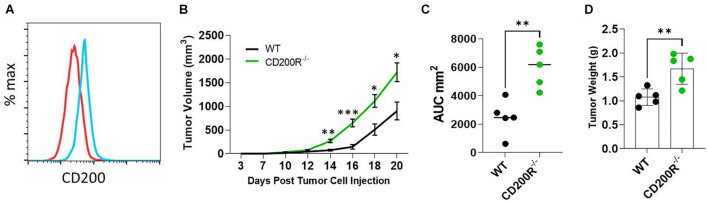
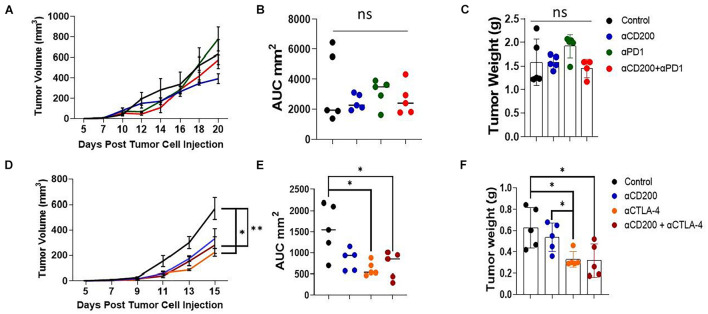
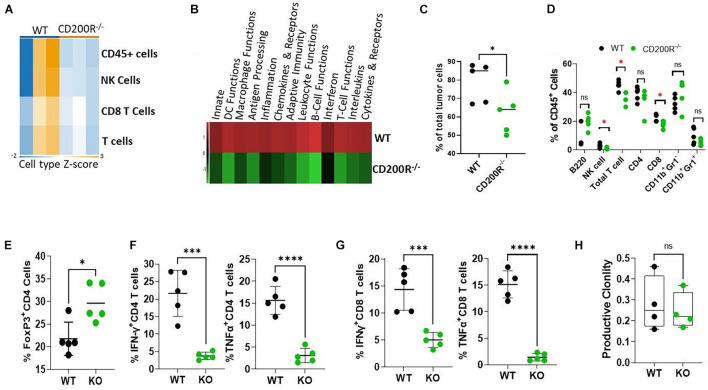
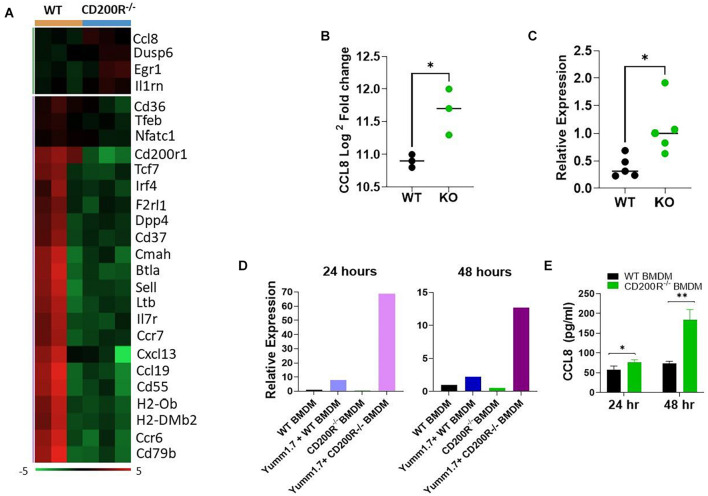
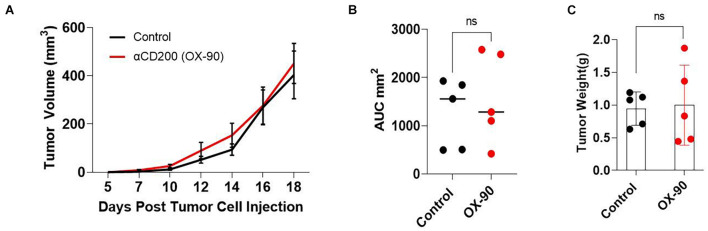
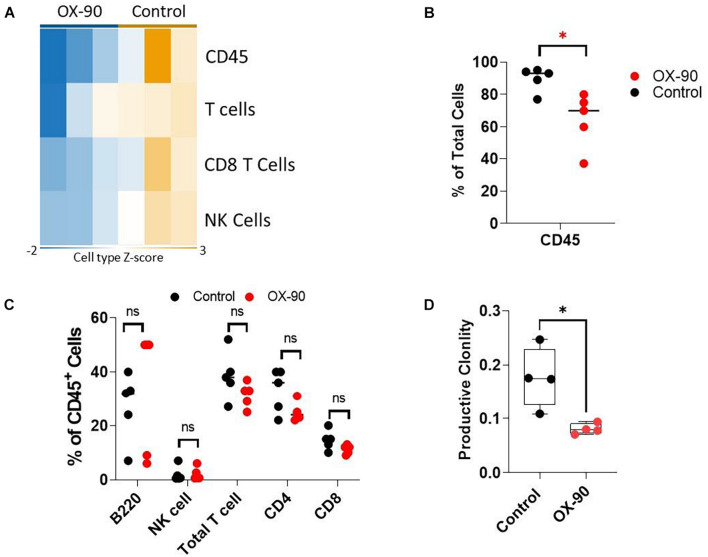
CD200-CD200R pathway regulates immune responses and has been implicated in the pathogenesis of a number of cancer types. CD200 blockade is considered a strategy for immunotherapy of CD200-positive cancers such as melanoma. Thus, it is critical to understand the potential impacts of CD200 blockade in a more human relevant tumor model. In this study, we evaluated these issues using the CD200 Yumm1.7 mouse melanoma model. Yumm1.7 cells bear Braf/Pten mutations resembling human melanoma. We found that Yumm1.7 tumors grow significantly faster in CD200R mice compared to wild type mice. Analysis of tumor immune microenvironment (TIME) revealed that tumors from CD200R or anti-CD200 treated mice had downregulated immune cell contents and reduced TCR clonality compared to tumors from untreated wild type mice. T cells also showed impaired effector functions, as reflected by reduced numbers of IFN-γ and TNF-α T cells. Mechanistically, we found upregulation of the CCL8 gene in CD200R tumors. co-culture experiments using Yumm1.7 tumor cells with bone marrow derived macrophages (BMDM) from WT and CD200R mice confirmed upregulation of macrophage CCL8 in the absence of CD200-CD200R interaction. Finally, we found that anti-CD200 therapy failed to show efficacy either alone or in combination with checkpoint inhibitors such as anti-PD-1 or anti-CTLA4 in inhibiting Yumm1.7 tumor growth. Given that CD200R-deficiency or anti-CD200 treatment leads to reduced T cell responses in TME, using blockade of CD200 as an immunotherapy for cancers such as melanoma should be practiced with caution.
CD200-CD200R通路调节免疫反应,并与多种癌症类型的发病机制有关。CD200阻断被认为是治疗CD200阳性癌症(如黑色素瘤)的免疫治疗策略。因此,了解CD200阻断在更接近人类的肿瘤模型中的潜在影响至关重要。在本研究中,我们使用CD200 Yumm1.7小鼠黑色素瘤模型评估了这些问题。Yumm1.7细胞携带类似于人类黑色素瘤的Braf/Pten突变。我们发现,与野生型小鼠相比,Yumm1.7肿瘤在CD200R小鼠中生长明显更快。对肿瘤免疫微环境(TIME)的分析表明,与未处理的野生型小鼠的肿瘤相比,来自CD200R或抗CD200处理小鼠的肿瘤免疫细胞含量下调,TCR克隆性降低。T细胞的效应功能也受损,表现为IFN-γ和TNF-α T细胞数量减少。从机制上讲,我们发现CD200R肿瘤中CCL8基因上调。使用Yumm1.7肿瘤细胞与来自野生型和CD200R小鼠的骨髓来源巨噬细胞(BMDM)进行共培养实验证实,在不存在CD200-CD200R相互作用的情况下,巨噬细胞CCL8上调。最后,我们发现抗CD200疗法单独或与抗PD-1或抗CTLA4等检查点抑制剂联合使用时,均未能显示出抑制Yumm1.7肿瘤生长的疗效。鉴于CD200R缺陷或抗CD200治疗会导致肿瘤微环境中T细胞反应降低,将CD200阻断用作黑色素瘤等癌症的免疫疗法时应谨慎行事。