Hong Lei, Zha Yingjie, Wang Chen, Qiao Shigang, An Jianzhong
Institute of Clinical Medicine Research, Affiliated Suzhou Science and Technology Town Hospital of Nanjing Medical University, Suzhou, China.
Department of Anesthesiology, Affiliated Suzhou Science and Technology Town Hospital of Nanjing Medical University, Suzhou, China.
Front Mol Biosci. 2021 Oct 7;8:698698. doi: 10.3389/fmolb.2021.698698. eCollection 2021.
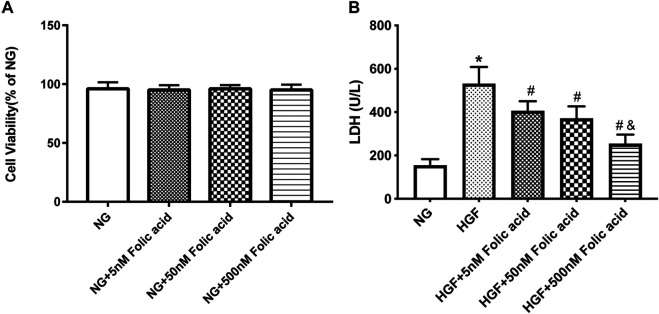
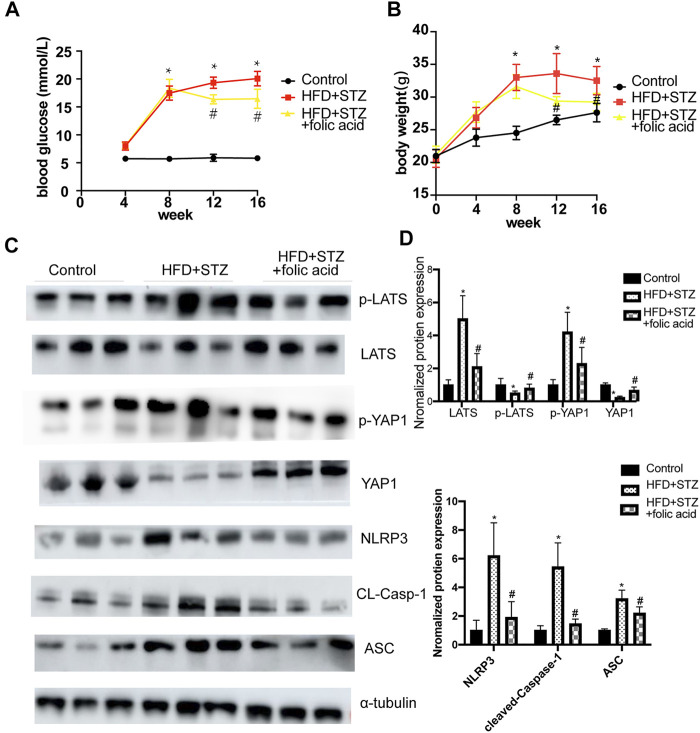
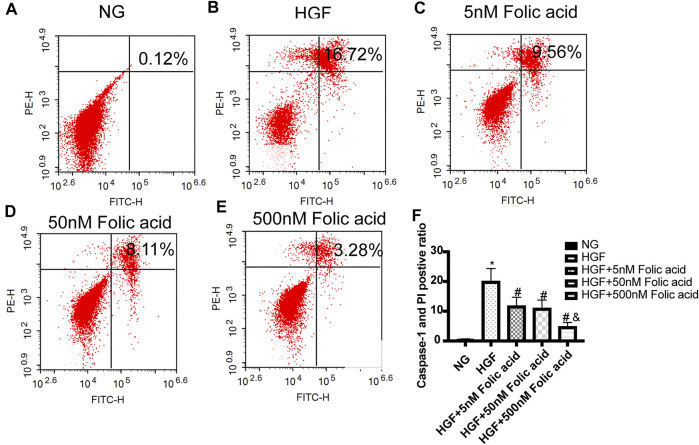
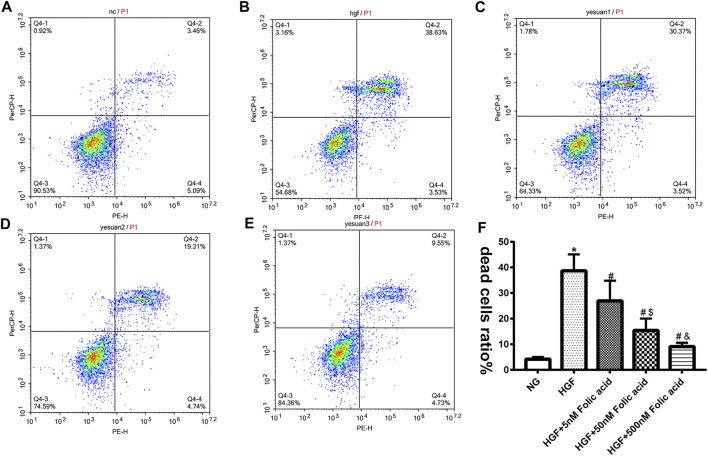
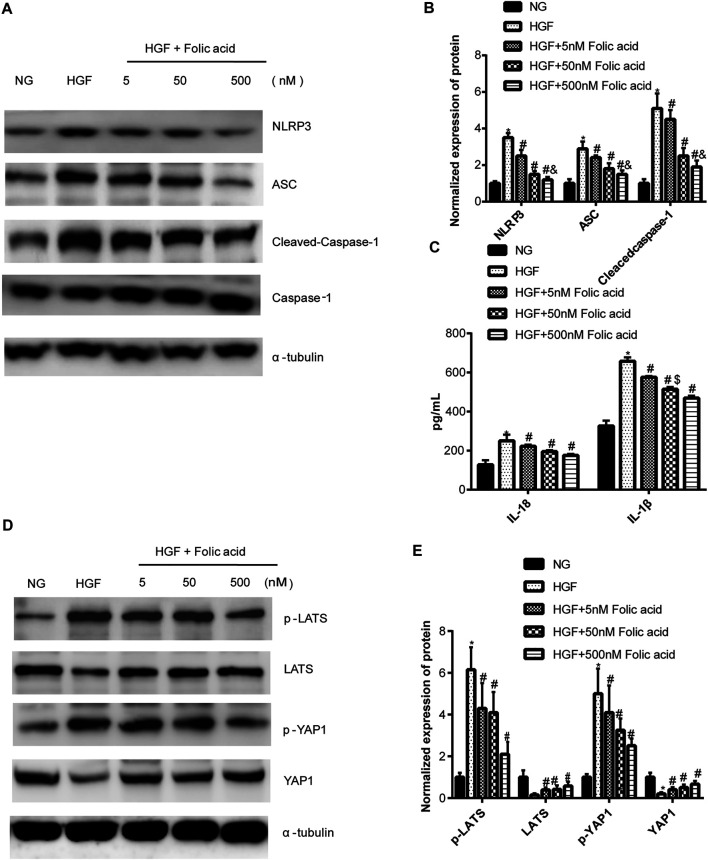
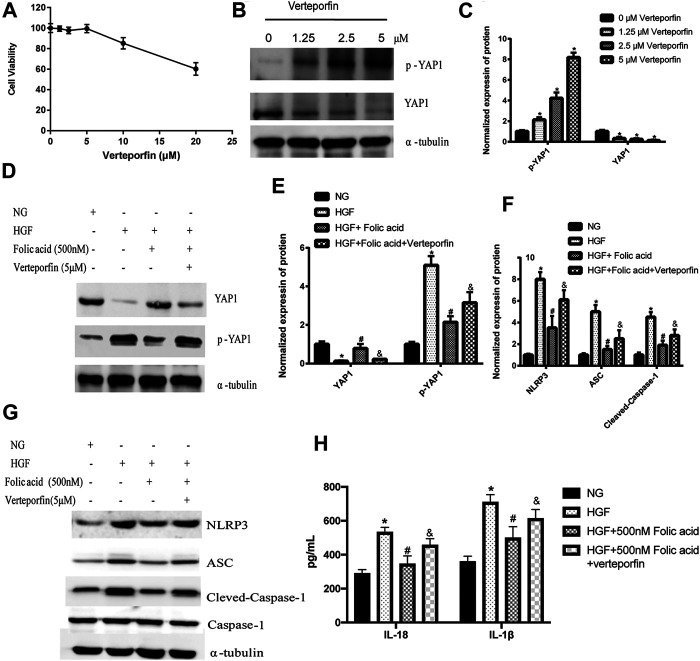
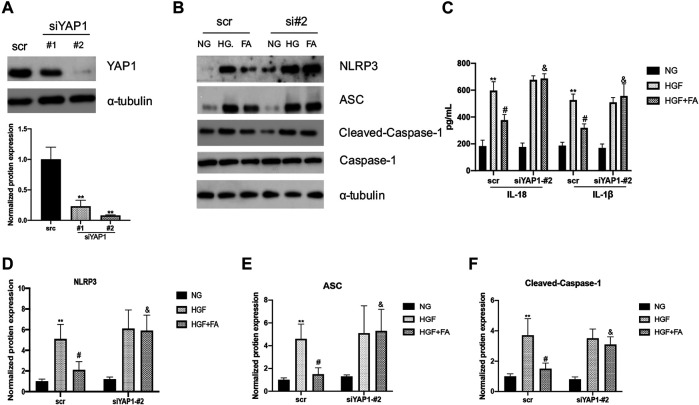
Diabetic cardiomyopathy (DCM) is the leading cause of death in diabetic patients. Folic acid has a protective effect on diabetes-induced cardiomyocyte damage. The aim of this study was to explore the effects of folic acid on cardiomyocytes cultured under high glucose and fat (HGF) conditions and type 2 diabetes mellitus (T2DM) mice, and elucidate the underlying mechanisms. Bioinformatics analysis was used to identify the potential drugs through the Drug-Gene Interaction database. H9C2 cardiomyocytes were cultured with 30 mM glucose and 500 nM palmitic acid in the presence or absence of folic acid or YAP1 inhibitor (verteporfin) or YAP1 siRNA. The cell viability and lactate dehydrogenase (LDH) release were measured using specific assay kits. Pyroptosis was detected by flow cytometry. The concentrations of IL-1β and IL-18 in the supernatants were measured by ELISA. The NLRP3, ASC and caspase-1 mRNA levels were detected by qRT-PCR and that the proteins expression of NLRP3, ASC, cleaved caspase-1 (p10), caspase-1, YAP1, p-YAP1, LATS1 and P-LATS1 were detected by Western blotting. C57BL/6 mice were fed with high fat diet (HFD) combined with streptozotocin (STZ) intraperitoneally to establish a T2DM model, folic acid or PBS treatment for 8 weeks by oral gavage, blood glucose and body weight were measured every 4 weeks, mouse heart tissue was used to detect pyroptosis and hippo signaling pathway related protein expression. We identified 427 differentially expressed genes in the cardiac tissues of high fat diet + streptozotocin mice, among the 30 most significantly DEGs, folic acid was predicted to be the most likely therapeutic drug. Folic acid alleviated HGF-induced cell damage and by decreasing activation of the Hippo pathway, as indicated by lower LDH release and increased cell viability, and decreased expression of NLRP3, ASC, cleaved caspase-1, IL-1β, IL-18, p-YAP and p-LATS. Verteporfin or YAP1 siRNA neutralized the protective effect of folic acid by reversing YAP1-induced pyroptosis. Folic acid reduced NLRP3 inflammasome-mediated pyroptosis by down-regulating the Hippo signaling pathway, thereby effectively reducing T2DM-induced damage in H9C2 cells and animals.
糖尿病性心肌病(DCM)是糖尿病患者的主要死因。叶酸对糖尿病诱导的心肌细胞损伤具有保护作用。本研究旨在探讨叶酸对在高糖高脂(HGF)条件下培养的心肌细胞和2型糖尿病(T2DM)小鼠的影响,并阐明其潜在机制。利用生物信息学分析通过药物-基因相互作用数据库鉴定潜在药物。在有或没有叶酸、YAP1抑制剂(维替泊芬)或YAP1小干扰RNA(siRNA)的情况下,用30 mM葡萄糖和500 nM棕榈酸培养H9C2心肌细胞。使用特定检测试剂盒测量细胞活力和乳酸脱氢酶(LDH)释放。通过流式细胞术检测细胞焦亡。用酶联免疫吸附测定(ELISA)法测量上清液中白细胞介素-1β(IL-1β)和白细胞介素-18(IL-18)的浓度。通过定量逆转录聚合酶链反应(qRT-PCR)检测NLRP3、凋亡相关斑点样蛋白(ASC)和半胱天冬酶-1(caspase-1)的mRNA水平,通过蛋白质免疫印迹法检测NLRP3、ASC、切割的半胱天冬酶-1(p10)、半胱天冬酶-1、YAP1、磷酸化YAP1(p-YAP1)、大肿瘤抑制因子1(LATS1)和磷酸化LATS1(P-LATS1)的蛋白表达。给C57BL/6小鼠喂食高脂饮食(HFD)并腹腔注射链脲佐菌素(STZ)以建立T2DM模型,通过灌胃给予叶酸或磷酸盐缓冲液(PBS)治疗8周,每4周测量血糖和体重,取小鼠心脏组织检测细胞焦亡和河马信号通路相关蛋白表达。我们在高脂饮食+链脲佐菌素小鼠的心脏组织中鉴定出427个差异表达基因,在30个最显著的差异表达基因中,叶酸被预测为最有可能的治疗药物。叶酸减轻了HGF诱导的细胞损伤,降低了LDH释放,提高了细胞活力,降低了NLRP3、ASC、切割的半胱天冬酶-1、IL-1β、IL-18、p-YAP和p-LATS的表达,表明叶酸通过降低河马信号通路的激活发挥作用。维替泊芬或YAP1 siRNA通过逆转YAP1诱导的细胞焦亡抵消了叶酸的保护作用。叶酸通过下调河马信号通路减少NLRP3炎性小体介导的细胞焦亡,从而有效减轻T2DM对H9C2细胞和动物的损伤。