Gamal Hany, Abdelaal Ahmed, Elkatatny Salaheldin
College of Petroleum Engineering & Geosciences, King Fahd University of Petroleum & Minerals, Dhahran 31261, Saudi Arabia.
ACS Omega. 2021 Oct 5;6(41):27430-27442. doi: 10.1021/acsomega.1c04363. eCollection 2021 Oct 19.
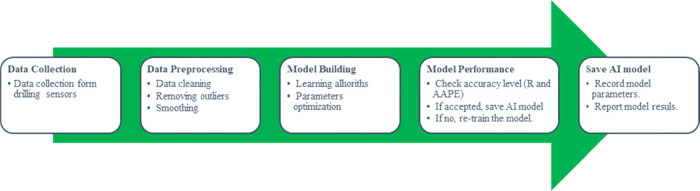
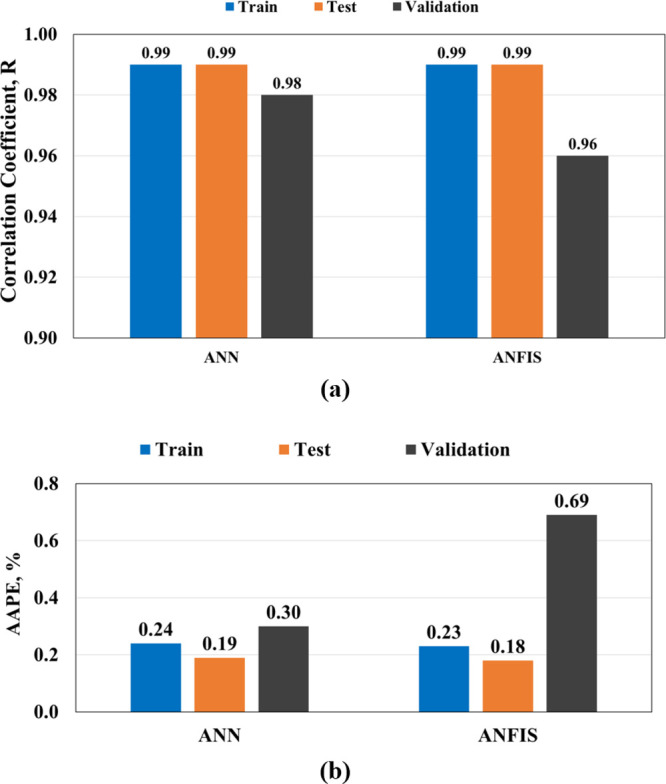
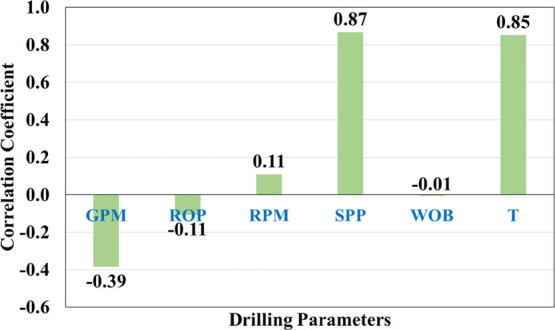
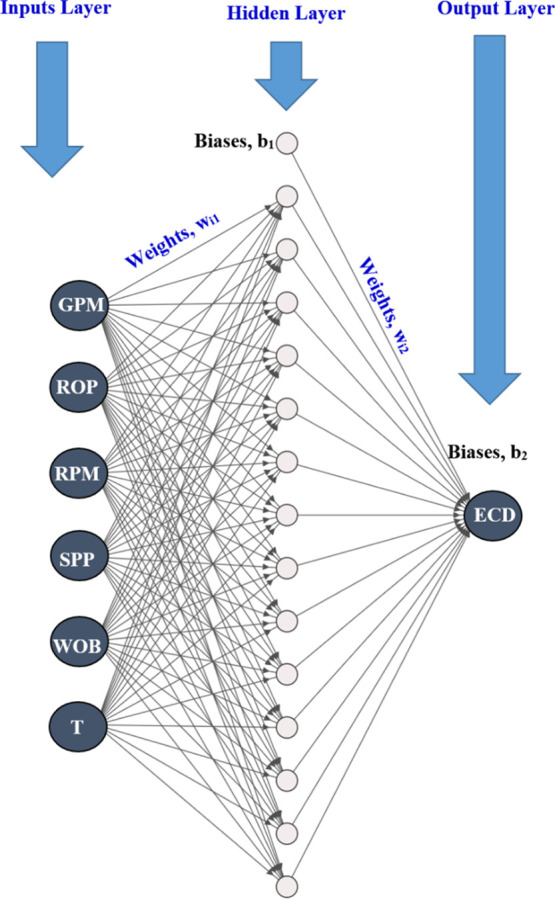
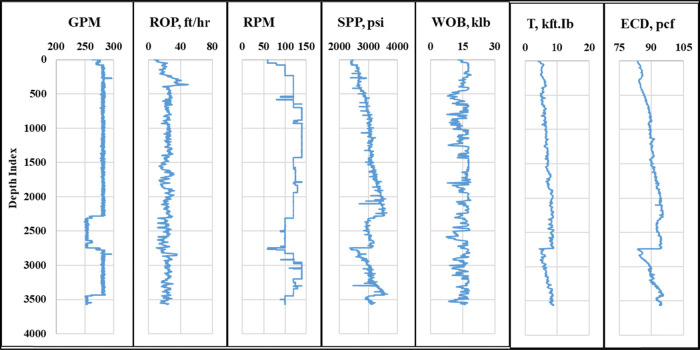
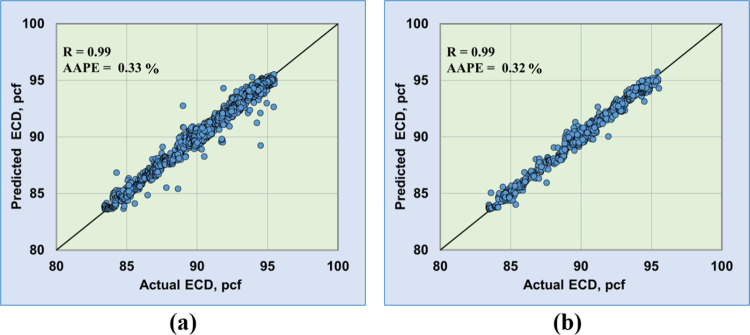
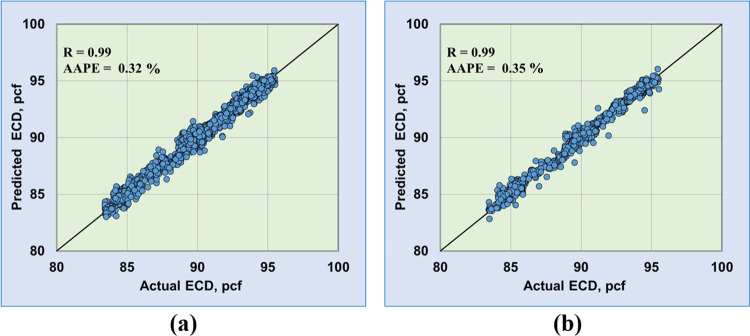
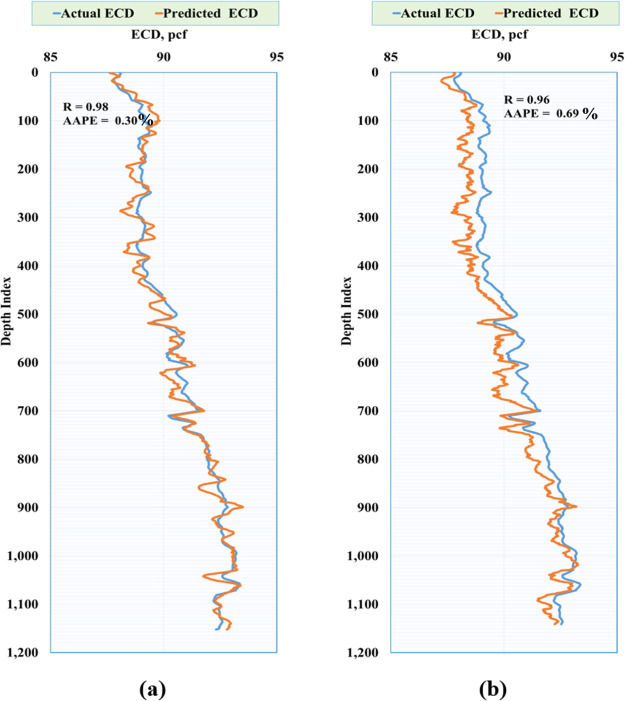
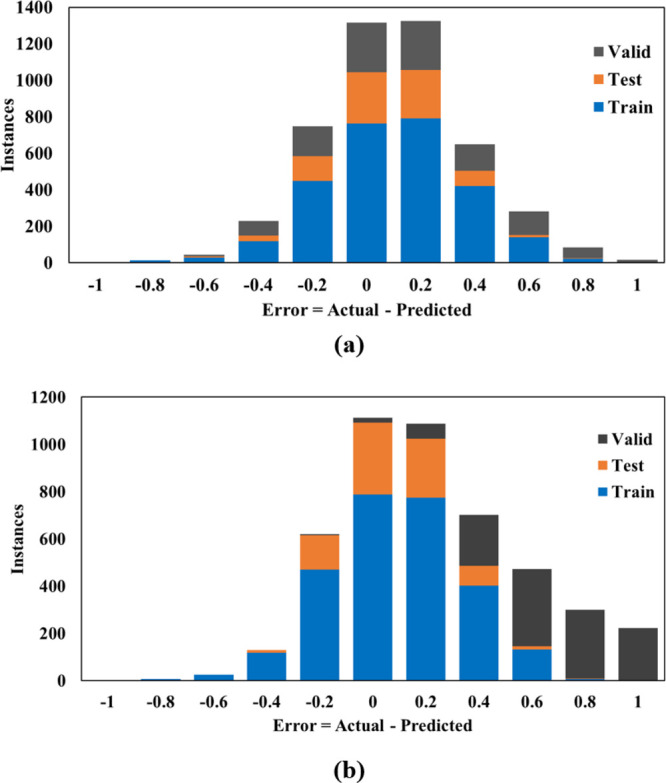
Equivalent circulating density (ECD) is considered a critical parameter during the drilling operation, as it could lead to severe problems related to the well control such as fracturing the drilled formation and circulation loss. The conventional way to determine the ECD is either by carrying out the downhole tool measurements or by using mathematical models. The downhole measurement is costly and has some limitations with the practical operations, while the mathematical models do not provide a high level of accuracy. Determination of the ECD should have a high level of accuracy, and therefore, the objective of this study is to employ machine learning techniques such as artificial neural networks (ANNs) and adaptive network-based fuzzy inference systems (ANFISs) to predict the ECD from only the drilling data with a high accuracy level. The study utilized drilling data from a horizontal drilling section that includes drilling parameters (penetration rate, rotating speed, torque, weight on bit, pumping rate, and pressure of standpipe). The models were built and tested from a data set that has 3570 data points, and another data set of 1130 measurements was employed for validating the models. The accuracy of the models was determined by key performance indices, which are the coefficient of correlation () and the average absolute percentage error (AAPE). The results showed the strong prediction capability for ECD from the two models through training, testing, and validation processes with greater than 0.98 and a very low error of 0.3% for the ANN model, while ANFIS recorded of 0.96 and AAPE of 0.7, and hence, the two models showed great performance for ECD estimation application. Also, the study introduces a newly developed equation for ECD determination from drilling data in real time.
当量循环密度(ECD)被认为是钻井作业中的一个关键参数,因为它可能导致与井控相关的严重问题,如压裂已钻地层和漏失循环。确定ECD的传统方法要么是进行井下工具测量,要么是使用数学模型。井下测量成本高昂,且在实际操作中有一些局限性,而数学模型的准确性不高。ECD的确定应该具有较高的准确性,因此,本研究的目的是采用机器学习技术,如人工神经网络(ANN)和自适应网络模糊推理系统(ANFIS),仅从钻井数据中高精度地预测ECD。该研究利用了一个水平钻井段的钻井数据,其中包括钻井参数(钻速、转速、扭矩、钻压、泵速和立管压力)。这些模型是基于一个有3570个数据点的数据集构建和测试的,另一个包含1130次测量的数据集用于验证这些模型。模型的准确性由关键性能指标决定,即相关系数()和平均绝对百分比误差(AAPE)。结果表明,通过训练、测试和验证过程,这两个模型对ECD具有很强的预测能力,ANN模型的相关系数大于0.98,误差非常低,为0.3%,而ANFIS的相关系数为0.96,AAPE为0.7,因此,这两个模型在ECD估计应用中表现出色。此外,该研究还介绍了一个新开发的用于从钻井数据实时确定ECD的方程。