Sustainable Agricultural Systems Laboratory, United States Department of Agriculture, Agricultural Research Service, Henry A. Wallace Beltsville Agricultural Research Center, Beltsville, MD, 20705-2350, USA.
Bioinformatics-North East Area Office, United States Department of Agriculture, Agricultural Research Service, Henry A. Wallace Beltsville Agricultural Research Center, Beltsville, MD, 20705-2350, USA.
Planta. 2021 Oct 25;254(5):108. doi: 10.1007/s00425-021-03755-5.
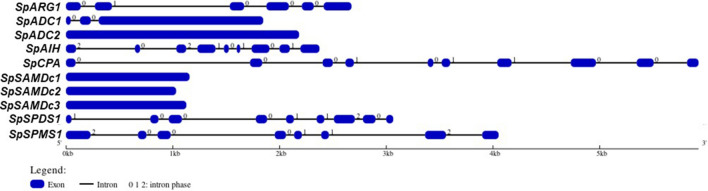
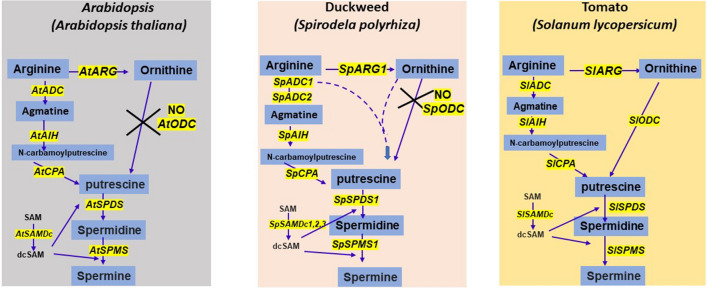
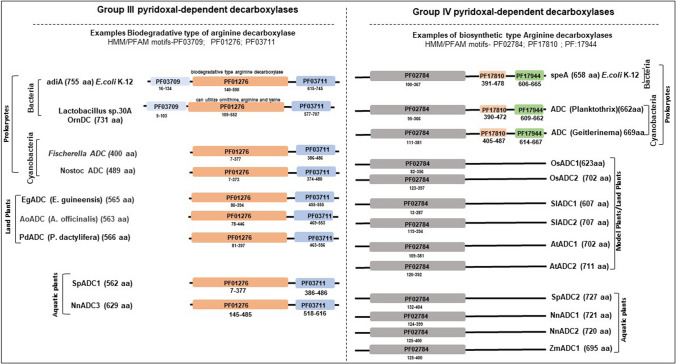
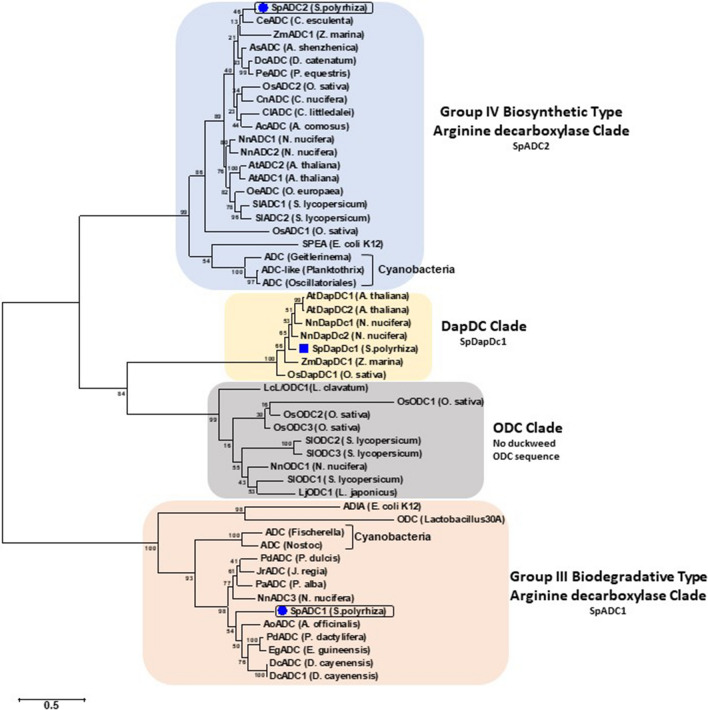
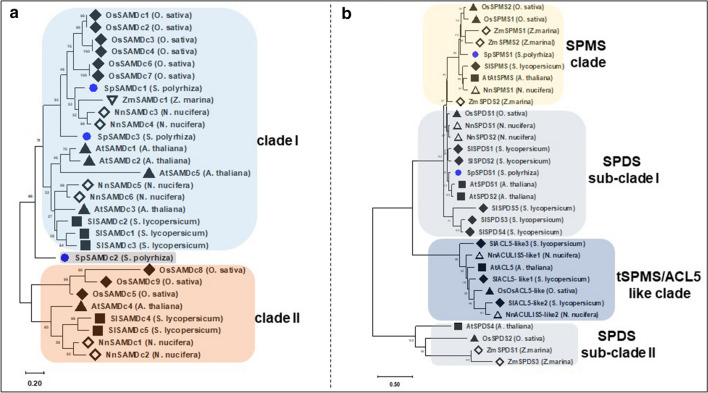
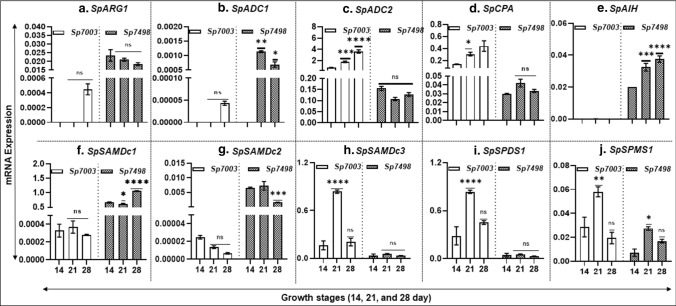
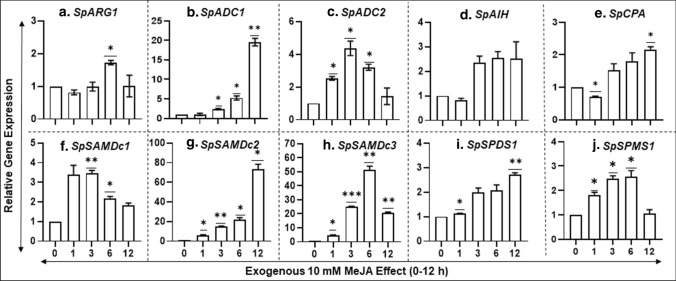
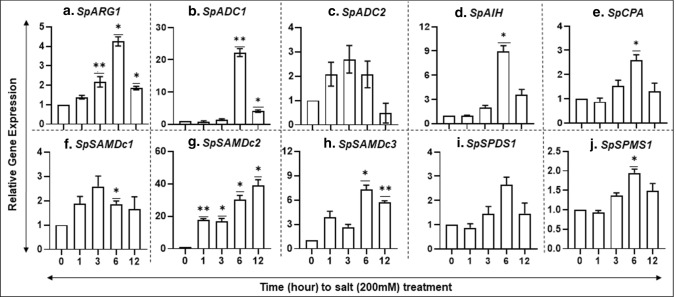
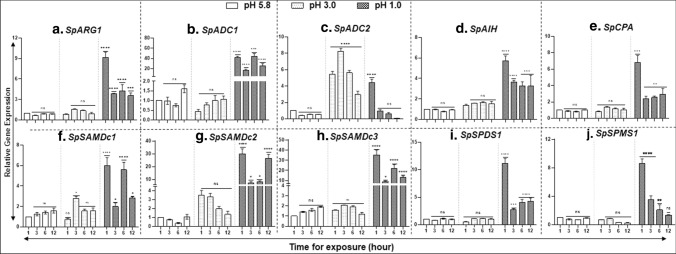
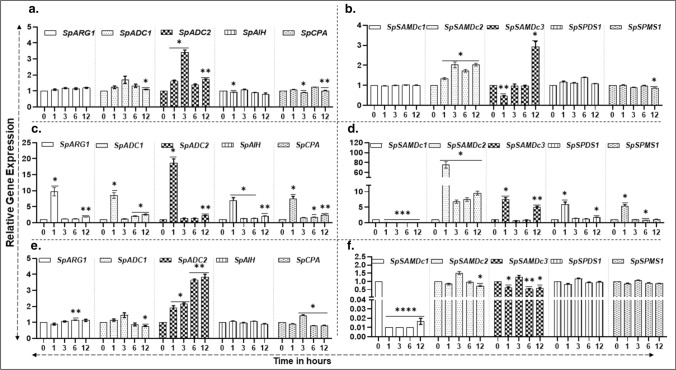
Identification of the polyamine biosynthetic pathway genes in duckweed S. polyrhiza reveals presence of prokaryotic as well as land plant-type ADC pathway but absence of ODC encoding genes. Their differential gene expression and transcript abundance is shown modulated by exogenous methyl jasmonate, salinity, and acidic pH. Genetic components encoding for polyamine (PA) biosynthetic pathway are known in several land plant species; however, little is known about them in aquatic plants. We utilized recently sequenced three duckweed (Spirodela polyrhiza) genome assemblies to map PA biosynthetic pathway genes in S. polyrhiza. PA biosynthesis in most higher plants except for Arabidopsis involves two pathways, via arginine decarboxylase (ADC) and ornithine decarboxylase (ODC). ADC-mediated PA biosynthetic pathway genes, namely, one arginase (SpARG1), two arginine decarboxylases (SpADC1, SpADC2), one agmatine iminohydrolase/deiminase (SpAIH), one N-carbamoyl putrescine amidase (SpCPA), three S-adenosylmethionine decarboxylases (SpSAMDc1, 2, 3), one spermidine synthase (SpSPDS1) and one spermine synthase (SpSPMS1) in S. polyrhiza genome were identified here. However, no locus was found for ODC pathway genes in this duckweed. Hidden Markov Model protein domain analysis established that SpADC1 is a prokaryotic/biodegradative type ADC and its molecular phylogenic classification fell in a separate prokaryotic origin ADC clade with SpADC2 as a biosynthetic type of arginine decarboxylase. However, thermospermine synthase (t-SPMS)/Aculis5 genes were not found present. Instead, one of the annotated SPDS may also function as SPMS, since it was found associated with the SPMS phylogenetic clade along with known SPMS genes. Moreover, we demonstrate that S. polyrhiza PA biosynthetic gene transcripts are differentially expressed in response to unfavorable conditions, such as exogenously added salt, methyl jasmonate, or acidic pH environment as well as in extreme temperature regimes. Thus, S. polyrhiza genome encodes for complete polyamine biosynthesis pathway and the genes are transcriptionally active in response to changing environmental conditions suggesting an important role of polyamines in this aquatic plant.
浮萍 S. polyrhiza 多胺生物合成途径基因的鉴定揭示了原核生物和陆地植物型 ADC 途径的存在,但缺乏 ODC 编码基因。它们的差异基因表达和转录丰度显示受到外源茉莉酸甲酯、盐度和酸性 pH 的调节。多胺 (PA) 生物合成途径的遗传成分在几种陆地植物物种中是已知的;然而,水生植物的情况知之甚少。我们利用最近测序的三个浮萍 (Spirodela polyrhiza) 基因组组装来映射 S. polyrhiza 中的 PA 生物合成途径基因。除拟南芥外,大多数高等植物中的 PA 生物合成涉及两条途径,即通过精氨酸脱羧酶 (ADC) 和鸟氨酸脱羧酶 (ODC)。在此鉴定了浮萍基因组中 ADC 介导的 PA 生物合成途径基因,即 1 种精氨酸酶 (SpARG1)、2 种精氨酸脱羧酶 (SpADC1、SpADC2)、1 种胍丁胺亚精氨酸水解酶/脱氨酶 (SpAIH)、1 种 N-碳氨丙氨酸精脒酰胺酶 (SpCPA)、3 种 S-腺苷甲硫氨酸脱羧酶 (SpSAMDc1、2、3)、1 种亚精胺合酶 (SpSPDS1) 和 1 种精脒合酶 (SpSPMS1)。然而,在这种浮萍中没有发现 ODC 途径基因的基因座。隐马尔可夫模型蛋白结构域分析表明,SpADC1 是一种原核/生物降解型 ADC,其分子系统发育分类属于与 SpADC2 分离的原核起源 ADC 分支,作为精氨酸脱羧酶的生物合成类型。然而,没有发现热亚精胺合酶 (t-SPMS)/Aculis5 基因存在。相反,注释的 SPDS 之一也可能具有 SPMS 功能,因为它与已知的 SPMS 基因一起与 SPMS 系统发育分支相关。此外,我们证明浮萍 S. polyrhiza 的 PA 生物合成基因转录物在应对不利条件(如外加盐、茉莉酸甲酯或酸性 pH 环境以及极端温度条件)时表现出差异表达。因此,S. polyrhiza 基因组编码完整的多胺生物合成途径,并且基因在转录上对环境变化做出反应,表明多胺在这种水生植物中具有重要作用。