Departments of Radiology, Washington University School of Medicine, St Louis, MO, 63110, USA.
Division of Rheumatology, Washington University School of Medicine, St Louis, MO, 63110, USA.
Arthritis Res Ther. 2021 Oct 25;23(1):265. doi: 10.1186/s13075-021-02643-3.
The development and optimization of therapies for rheumatoid arthritis (RA) is currently hindered by a lack of methods for early non-invasive monitoring of treatment response. Annexin A2, an inflammation-associated protein whose presence and phosphorylation levels are upregulated in RA, represents a potential molecular target for tracking RA treatment response.
LS301, a near-infrared dye-peptide conjugate that selectively targets tyrosine 23-phosphorylated annexin A2 (pANXA2), was evaluated for its utility in monitoring disease progression, remission, and early response to drug treatment in mouse models of RA by fluorescence imaging. The intraarticular distribution and localization of LS301 relative to pANXA2 was determined by histological and immunohistochemical methods.
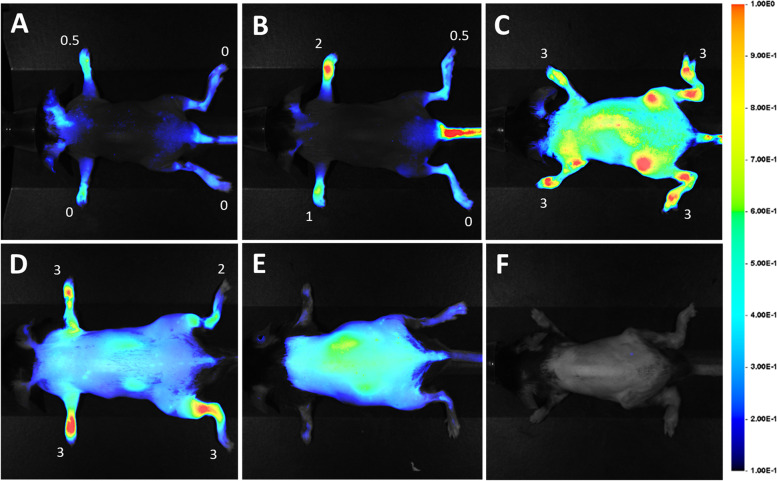
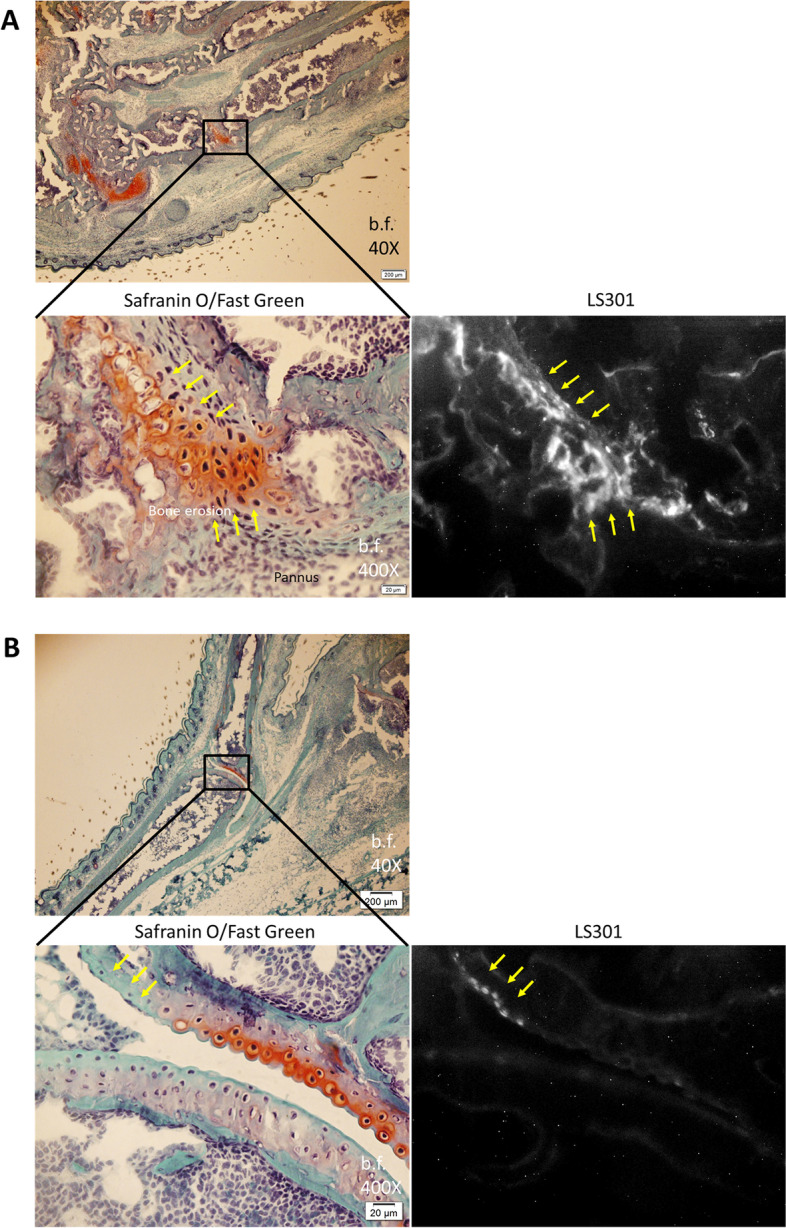
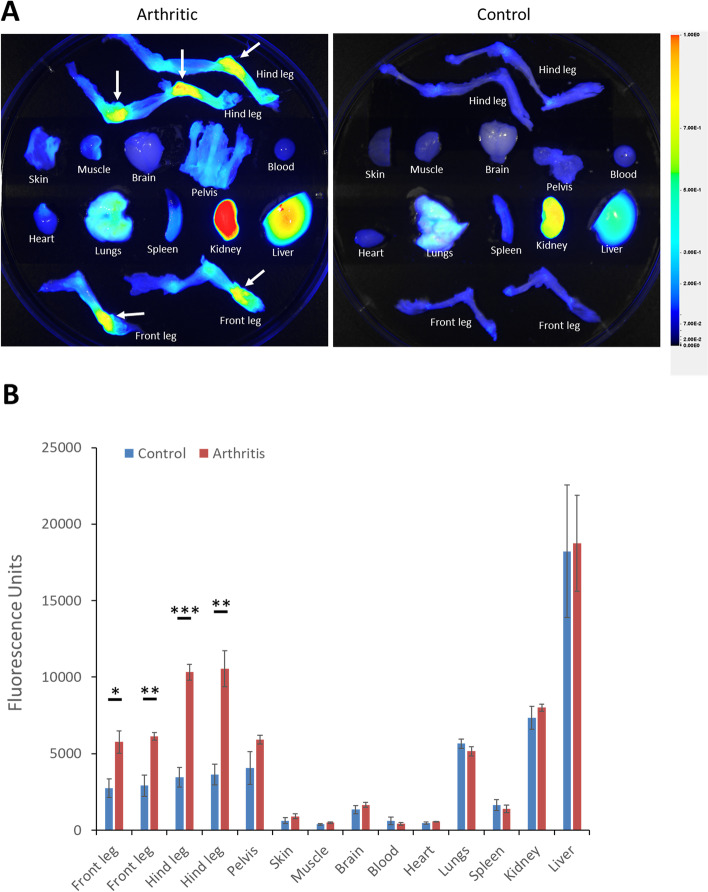
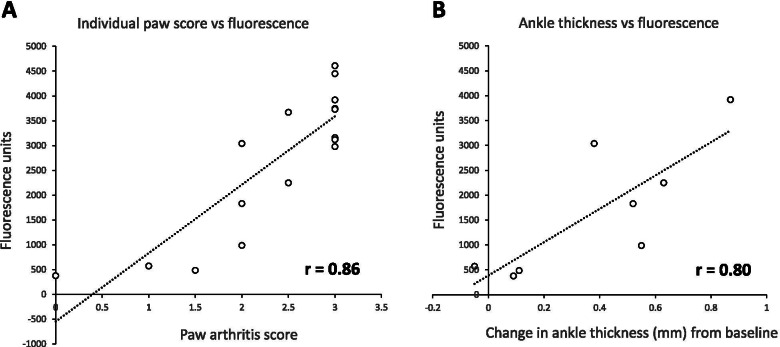
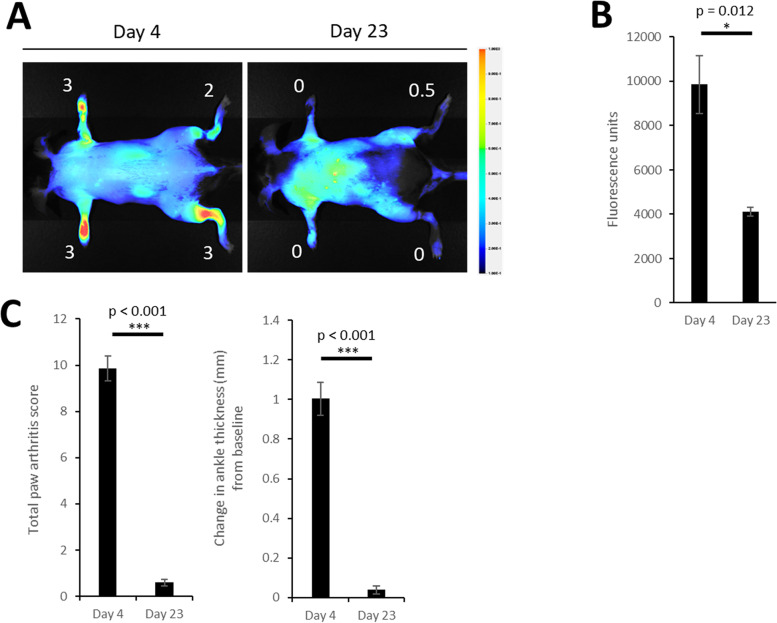
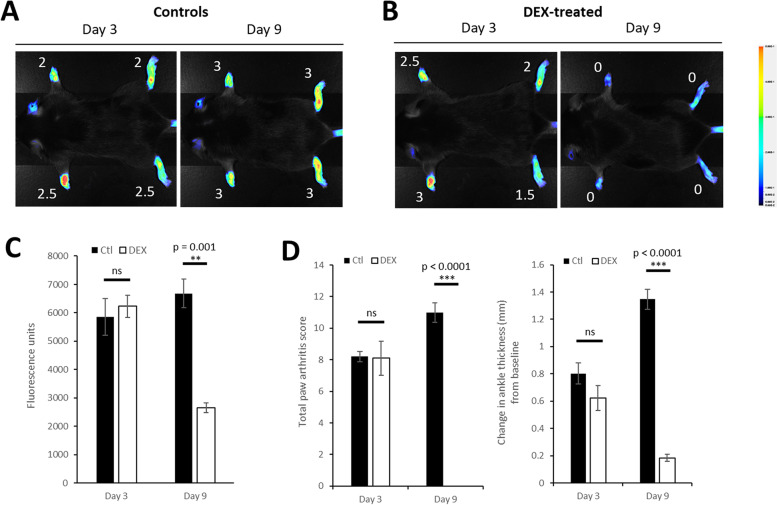
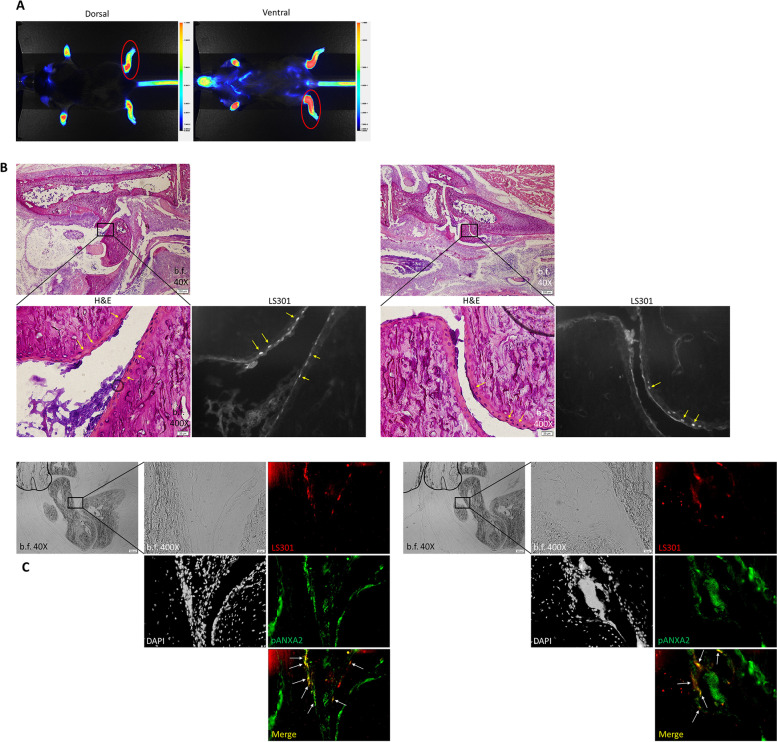
In mouse models of spontaneous and serum transfer-induced inflammatory arthritis, intravenously administered LS301 showed selective accumulation in regions of joint pathology including paws, ankles, and knees with positive correlation between fluorescent signal and disease severity by clinical scoring. Whole-body near-infrared imaging with LS301 allowed tracking of spontaneous disease remission and the therapeutic response after dexamethasone treatment. Histological analysis showed preferential accumulation of LS301 within the chondrocytes and articular cartilage in arthritic mice, and colocalization was observed between LS301 and pANXA2 in the joint tissue.
We demonstrate that fluorescence imaging with LS301 can be used to monitor the progression, remission, and early response to drug treatment in mouse models of RA. Given the ease of detecting LS301 with portable optical imaging devices, the agent may become a useful early treatment response reporter for arthritis diagnosis and drug evaluation.
类风湿关节炎 (RA) 的治疗方法的开发和优化目前受到缺乏早期非侵入性监测治疗反应的方法的阻碍。膜联蛋白 A2 是一种与炎症相关的蛋白质,其在 RA 中存在和磷酸化水平上调,代表了跟踪 RA 治疗反应的潜在分子靶标。
LS301 是一种近红外染料-肽缀合物,可特异性靶向酪氨酸 23 磷酸化的膜联蛋白 A2 (pANXA2),通过荧光成像评估其在监测疾病进展、缓解和对 RA 小鼠模型中药物治疗的早期反应方面的应用。通过组织学和免疫组织化学方法确定 LS301 相对于 pANXA2 的关节内分布和定位。
在自发性和血清转移诱导的炎性关节炎小鼠模型中,静脉注射的 LS301 选择性地积聚在关节病理学区域,包括爪子、脚踝和膝盖,荧光信号与临床评分的疾病严重程度呈正相关。使用 LS301 进行全身近红外成像可跟踪自发性疾病缓解和地塞米松治疗后的治疗反应。组织学分析显示 LS301 在关节炎小鼠的软骨细胞和关节软骨中优先积聚,并且在关节组织中观察到 LS301 与 pANXA2 之间的共定位。
我们证明,使用 LS301 进行荧光成像可用于监测 RA 小鼠模型的进展、缓解和对药物治疗的早期反应。鉴于使用便携式光学成像设备检测 LS301 非常容易,该试剂可能成为关节炎诊断和药物评估的有用的早期治疗反应报告器。