Shen Jianyao, Ma Hailiang, Wang Chaoquan
Department of Cardiology, The Central Hospital Affiliated to Shaoxing University, Shaoxing 312030, China.
Korean J Physiol Pharmacol. 2021 Nov 1;25(6):533-543. doi: 10.4196/kjpp.2021.25.6.533.
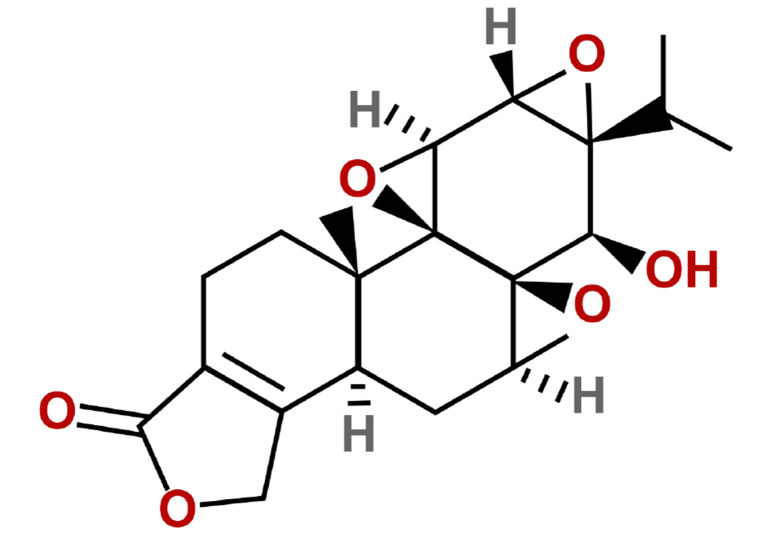
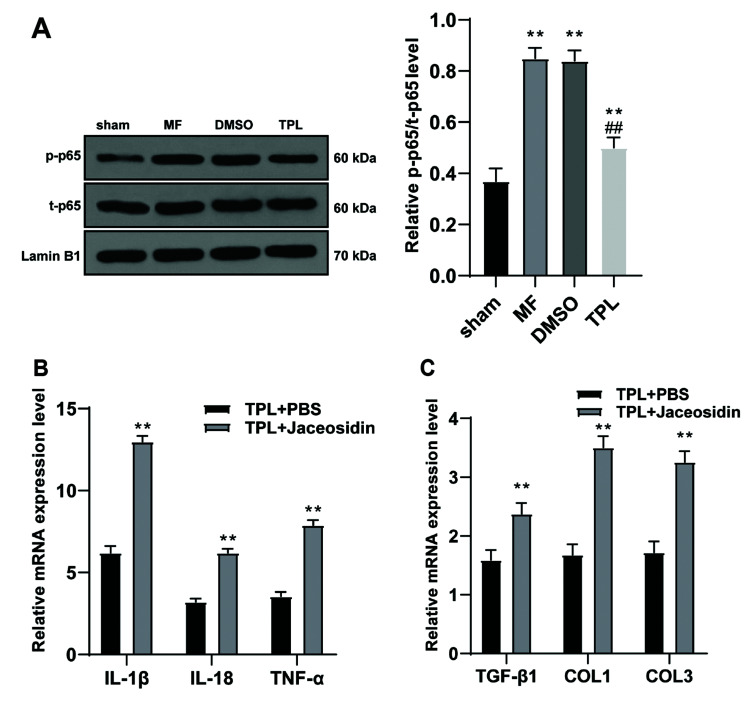
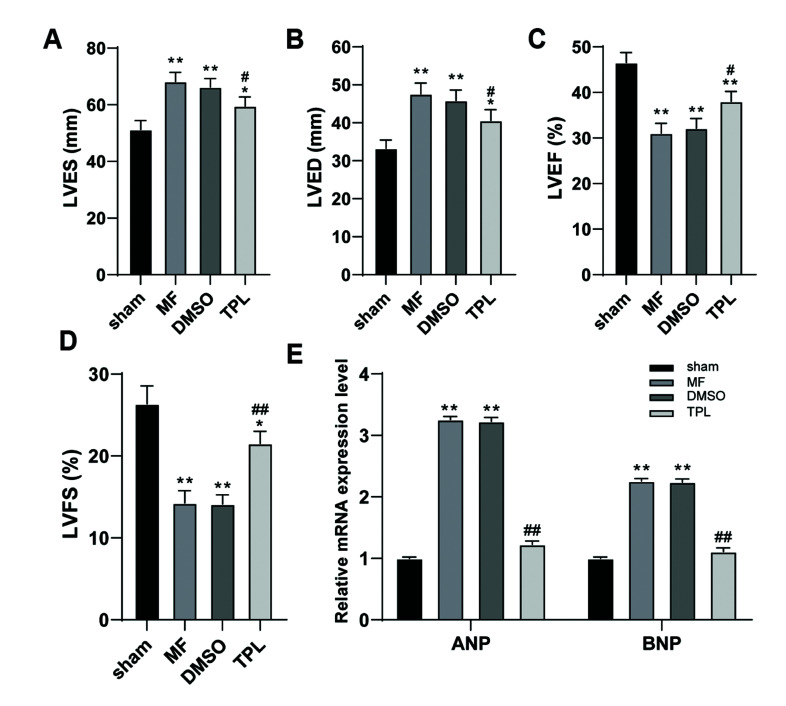
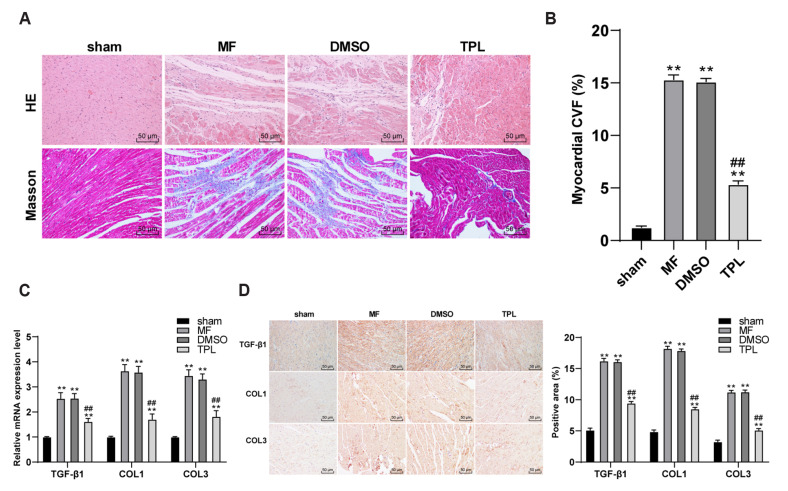
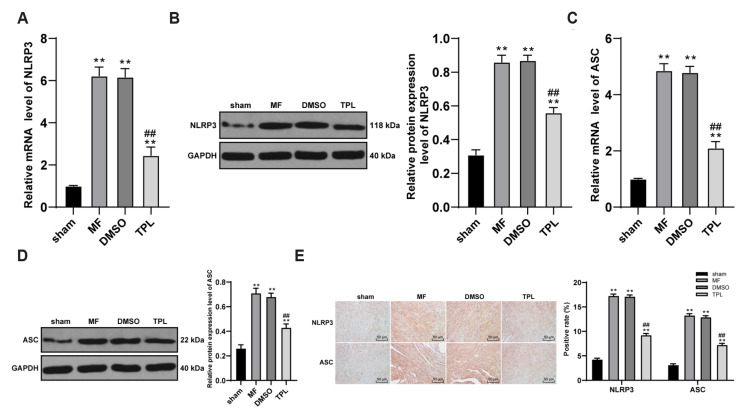
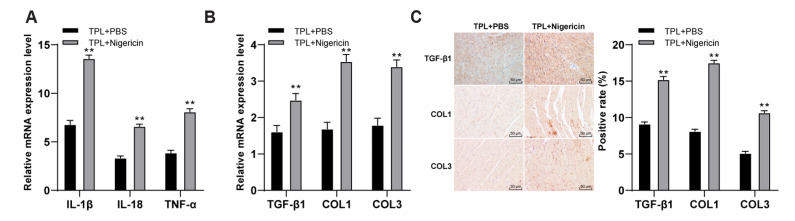
Myocardial fibrosis (MF) is the result of persistent and repeated aggravation of myocardial ischemia and hypoxia, leading to the gradual development of heart failure of chronic ischemic heart disease. Triptolide (TPL) is identified to be involved in the treatment for MF. This study aims to explore the mechanism of TPL in the treatment of MF. The MF rat model was established, subcutaneously injected with isoproterenol and treated by subcutaneous injection of TPL. The cardiac function of each group was evaluated, including LVEF, LVFS, LVES, and LVED. The expressions of ANP, BNP, inflammatory related factors (IL-1β, IL-18, TNF-α, MCP-1, VCAM-1), NLRP3 inflammasome factors (NLRP3, ASC) and fibrosis related factors (TGF-β1, COL1, and COL3) in rats were dete cted. H&E staining and Masson staining were used to observe myocardial cell inflammation and fibrosis of rats. Western blot was used to detect the p-P65 and t-P65 levels in nucleoprotein of rat myocardial tissues. LVED and LVES of MF group were significantly upregulated, LVEF and LVFS were significantly downregulated, while TPL treatment reversed these trends; TPL treatment downregulated the tissue injury and improved the pathological damage of MF rats. TPL treatment downregulated the levels of inflammatory factors and fibrosis factors, and inhibited the activation of NLRP3 inflammasome. Activation of NLRP3 inflammasome or NF-κB pathway reversed the effect of TPL on MF. Collectively, TPL inhibited the activation of NLRP3 inflammasome by inhibiting NF-κB pathway, and improved MF in MF rats.
心肌纤维化(MF)是心肌缺血缺氧持续反复加重的结果,导致慢性缺血性心脏病心力衰竭逐渐发展。雷公藤甲素(TPL)被证实参与MF的治疗。本研究旨在探讨TPL治疗MF的机制。建立MF大鼠模型,皮下注射异丙肾上腺素并皮下注射TPL进行治疗。评估每组的心脏功能,包括左心室射血分数(LVEF)、左心室短轴缩短率(LVFS)、左心室舒张末期内径(LVES)和左心室收缩末期内径(LVED)。检测大鼠中心房钠尿肽(ANP)、脑钠肽(BNP)、炎症相关因子(白细胞介素-1β、白细胞介素-18、肿瘤坏死因子-α、单核细胞趋化蛋白-1、血管细胞黏附分子-1)、NLRP3炎性小体因子(NLRP3、凋亡相关斑点样蛋白(ASC))和纤维化相关因子(转化生长因子-β1、I型胶原蛋白(COL1)和III型胶原蛋白(COL3))的表达。采用苏木精-伊红(H&E)染色和Masson染色观察大鼠心肌细胞炎症和纤维化情况。采用蛋白质免疫印迹法检测大鼠心肌组织核蛋白中磷酸化P65(p-P65)和总P65(t-P65)水平。MF组的LVED和LVES显著上调,LVEF和LVFS显著下调,而TPL治疗逆转了这些趋势;TPL治疗下调了组织损伤并改善了MF大鼠的病理损伤。TPL治疗下调了炎症因子和纤维化因子水平,并抑制了NLRP3炎性小体的激活。NLRP3炎性小体或核因子-κB(NF-κB)通路的激活逆转了TPL对MF的作用。总体而言,TPL通过抑制NF-κB通路抑制NLRP3炎性小体的激活,并改善MF大鼠的MF。