Department of Veterinary Medicine, College of Agriculture, YanBian University, YanJi, JiLin, China.
Laboratory of Veterinary Internal Medicine, Department of Veterinary Clinical Science, College of Veterinary Medicine, Seoul National University, Seoul, 08826, Republic of Korea.
BMC Vet Res. 2021 Oct 26;17(1):338. doi: 10.1186/s12917-021-03026-1.
Rivoceranib, a novel tyrosine kinase inhibitor, exhibits anti-tumour effects by selectively blocking vascular endothelial growth factor receptor-2 (VEGFR2) in cancer cells. Recently, the therapeutic effects of rivoceranib on solid tumours have been elucidated in human patients. However, the anti-tumour effects of rivoceranib against canine cancer remain unclear. Here, we investigated the anti-tumour effects of rivoceranib using in vitro and in vivo mouse xenograft models.
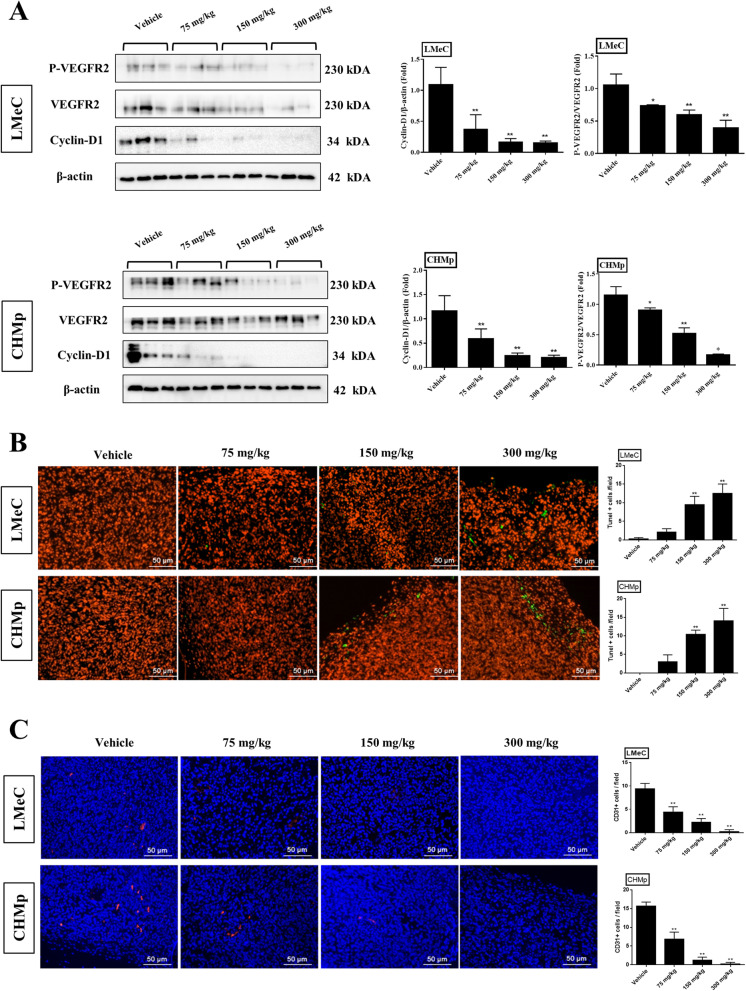
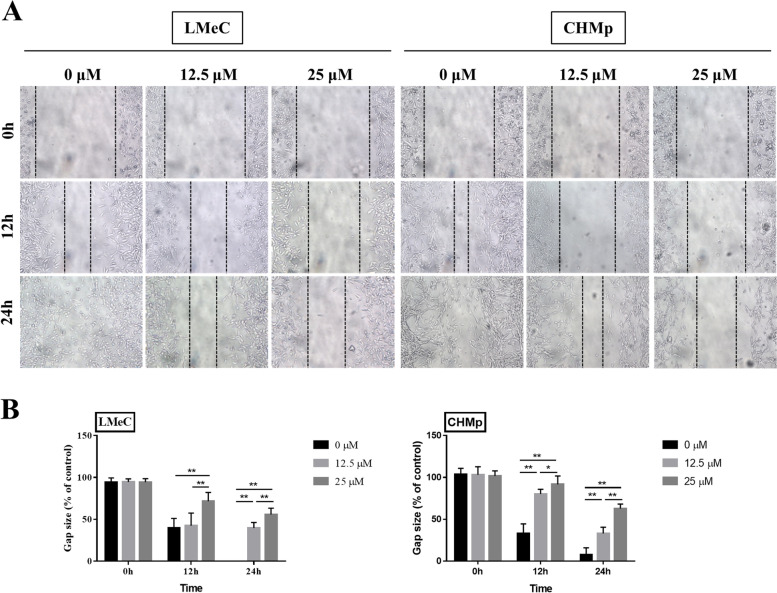
We performed cell proliferation, cell cycle, and migration assays to determine the effects of rivoceranib on canine solid tumour cell lines in vitro. Furthermore, apoptosis and angiogenesis in tumour tissues were examined using a TUNEL assay and immunohistochemistry methods with an anti-cluster of differentiation-31 antibody, respectively. Additionally, the expression levels of cyclin-D1 and VEGFR2 activity were determined using western blot analysis.
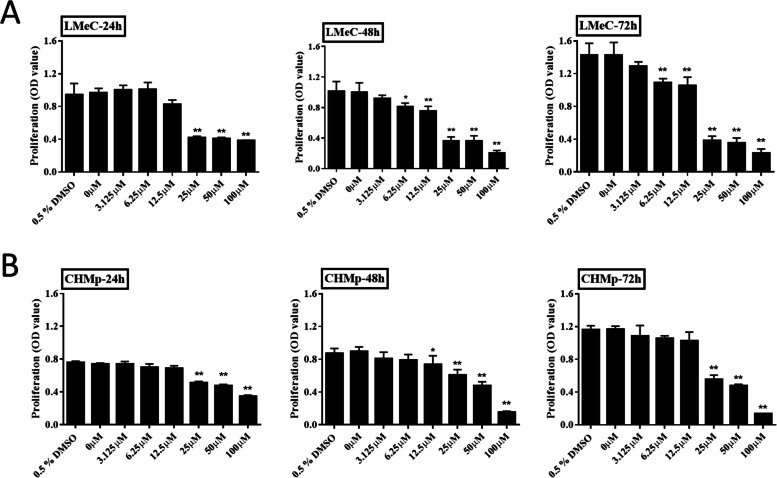
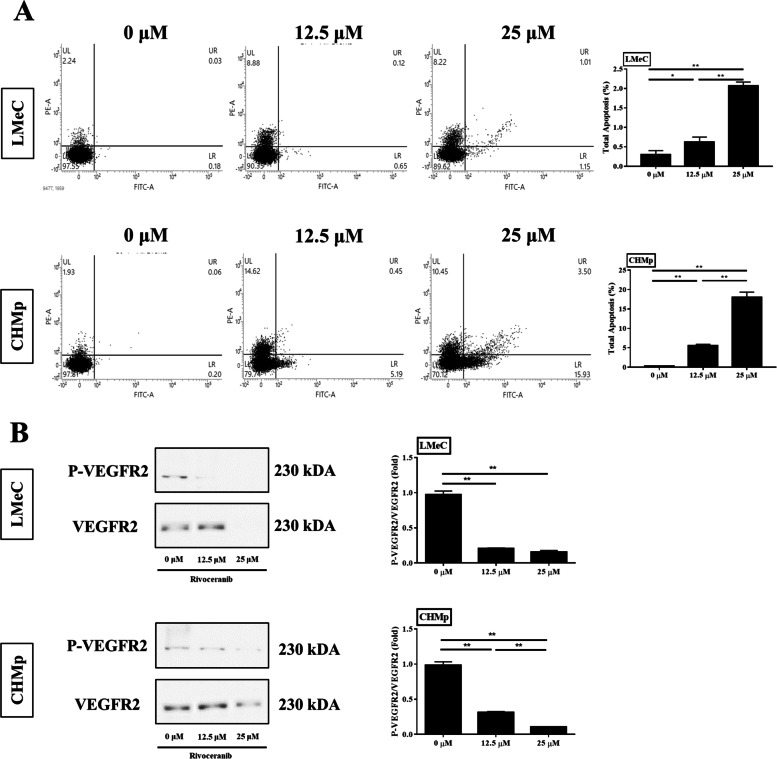
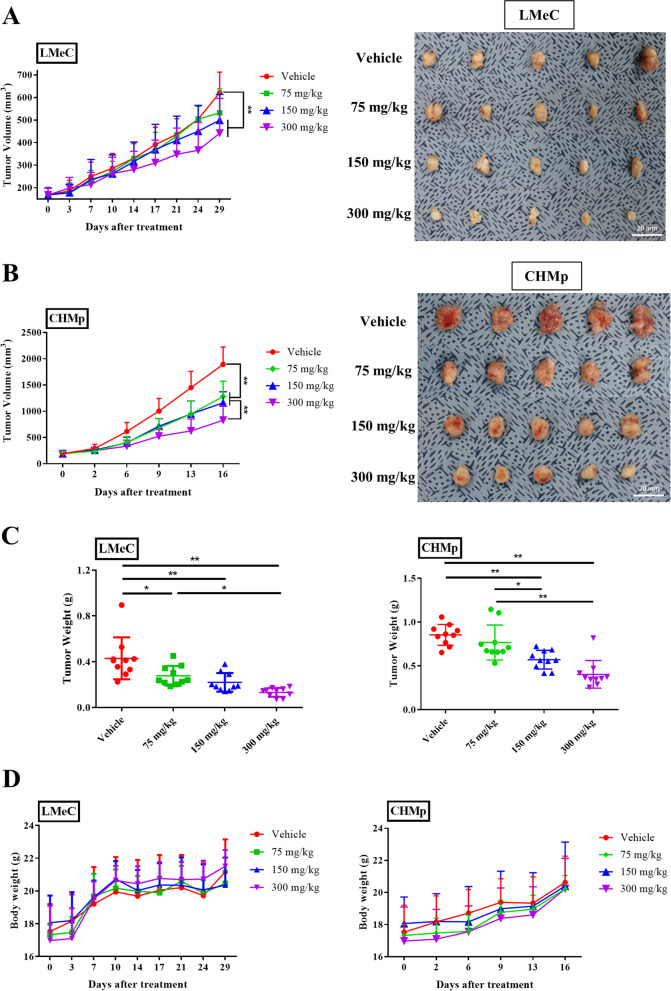
Rivoceranib treatment showed anti-proliferative effects and mediated cell cycle arrest in the canine melanoma cell line (LMeC) and the mammary gland tumour (MGT) cell line (CHMp). In animal experiments, rivoceranib decreased the average volume of LMeC cells compared to that following control treatment, and similar results were observed in CHMp cells. Histologically, rivoceranib induced apoptosis and exerted an anti-angiogenic effect in tumour tissues. It also downregulated the expression of cyclin-D1 and inhibited VEGFR2 activity.
Our results show that rivoceranib inhibits proliferation and migration of tumour cells. These findings support the potential application of rivoceranib as a novel chemotherapeutic strategy for canine melanoma and MGTs.
利沃塞拉尼布是一种新型的酪氨酸激酶抑制剂,通过选择性阻断癌细胞中的血管内皮生长因子受体-2(VEGFR2)发挥抗肿瘤作用。最近,在人类患者中阐明了利沃塞拉尼布对实体瘤的治疗效果。然而,利沃塞拉尼布对犬癌症的抗肿瘤作用尚不清楚。在这里,我们使用体外和体内小鼠异种移植模型研究了利沃塞拉尼布的抗肿瘤作用。
我们进行了细胞增殖、细胞周期和迁移实验,以确定利沃塞拉尼布对体外犬实体瘤细胞系的作用。此外,使用 TUNEL 检测法和抗分化簇 31 抗体的免疫组织化学方法分别检测肿瘤组织中的细胞凋亡和血管生成。此外,使用 Western blot 分析测定细胞周期蛋白 D1 和 VEGFR2 活性的表达水平。
利沃塞拉尼布治疗显示出抗增殖作用,并介导犬黑色素瘤细胞系(LMeC)和乳腺肿瘤细胞系(CHMp)的细胞周期停滞。在动物实验中,与对照治疗相比,利沃塞拉尼布降低了 LMeC 细胞的平均体积,在 CHMp 细胞中也观察到了类似的结果。组织学上,利沃塞拉尼布诱导肿瘤组织中的细胞凋亡并发挥抗血管生成作用。它还下调了细胞周期蛋白 D1 的表达并抑制了 VEGFR2 活性。
我们的结果表明,利沃塞拉尼布抑制肿瘤细胞的增殖和迁移。这些发现支持利沃塞拉尼布作为犬黑色素瘤和 MGT 新型化疗策略的潜在应用。