NHMRC Centre for Research Excellence in Frailty and Healthy Ageing, Adelaide Medical School, University of Adelaide, Adelaide, Australia.
Adelaide Medical School, Faculty of Health and Medical Sciences, University of Adelaide, Adelaide, Australia.
J Med Internet Res. 2021 Oct 28;23(10):e26886. doi: 10.2196/26886.
Most older people after a hip fracture injury never return to their prefracture status, and some are admitted to residential aged care facilities. Advancement of digital technology has helped in optimizing health care including self-management and telerehabilitation.
This study aims to understand the perspectives of older patients with hip fracture and their family members and residential aged caregivers on the feasibility of developing a model of care using a personalized digital health hub.
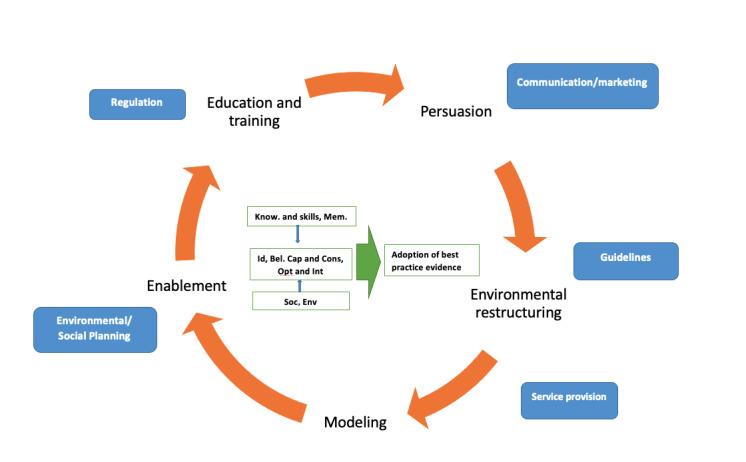
We conducted a mixed methods study in South Australia involving patients aged 50 years and older, their family members, and residential aged caregivers. Quantitative data analysis included basic demographic characteristics, and access to digital devices was analyzed using descriptive statistics. Spearman rank-order correlation was used to examine correlations between the perceived role of a personalized digital health hub in improving health and the likelihood of subsequent use. Findings from qualitative analysis were interpreted using constructs of capability, opportunity, and motivation to help understand the factors influencing the likelihood of potential personalized digital health hub use.
This study recruited 100 participants-55 patients, 13 family members, and 32 residential aged caregivers. The mean age of the patients was 76.4 (SD 8.4, range 54-88) years, and 60% (33/55) of the patients were female. Approximately 50% (34/68) of the patients and their family members had access to digital devices, despite less than one-third using computers as part of their occupation. Approximately 72% (72/100) of the respondents thought that personalized digital health hub could improve health outcomes in patients. However, a moderate negative correlation existed with increasing age and likelihood of personalized digital health hub use (Spearman ρ=-0.50; P<.001), and the perceived role of the personalized digital health hub in improving health had a strong positive correlation with the likelihood of personalized digital health hub use by self (Spearman ρ=0.71; P<.001) and by society, including friends and family members (Spearman ρ=0.75; P<.001). Most patients (54/55, 98%) believed they had a family member, friend, or caregiver who would be able to help them use a personalized digital health hub. Qualitative analysis explored capability by understanding aspects of existing knowledge, including willingness to advance digital navigation skills. Access could be improved through supporting opportunities, and factors influencing intrinsic motivation were considered crucial for designing a personalized digital health hub-enabled model of care.
This study emphasized the complex relationship between capabilities, motivation, and opportunities for patients, their family members, and formal caregivers as a patient networked unit. The next stage of research will continue to involve a cocreation approach followed by iterative processes and understand the factors influencing the development and successful integration of complex digital health care interventions in real-world scenarios.
大多数髋部骨折损伤后的老年人再也无法恢复到骨折前的状态,有些则入住了养老院。数字技术的进步有助于优化医疗保健,包括自我管理和远程康复。
本研究旨在了解髋部骨折的老年患者及其家属和养老院护理人员对使用个性化数字健康中心开发护理模式的可行性的看法。
我们在南澳大利亚进行了一项混合方法研究,涉及 50 岁及以上的患者、他们的家属和养老院护理人员。定量数据分析包括基本人口统计学特征,使用描述性统计分析数字设备的获取情况。使用 Spearman 秩相关检验来检验个性化数字健康中心在改善健康方面的感知作用与后续使用的可能性之间的相关性。使用能力、机会和动机的结构来解释定性分析结果,以帮助理解影响潜在个性化数字健康中心使用可能性的因素。
这项研究招募了 100 名参与者-55 名患者、13 名家属和 32 名养老院护理人员。患者的平均年龄为 76.4(SD 8.4,范围 54-88)岁,60%(33/55)的患者为女性。尽管只有不到三分之一的患者将计算机作为职业的一部分,但大约有 50%(34/68)的患者及其家属可以使用数字设备。大约 72%(100/100)的受访者认为个性化数字健康中心可以改善患者的健康结果。然而,随着年龄的增长和个性化数字健康中心使用可能性的增加,存在中度负相关(Spearman ρ=-0.50;P<.001),而个性化数字健康中心在改善健康方面的感知作用与自我使用(Spearman ρ=0.71;P<.001)和社会使用(包括朋友和家人)的个性化数字健康中心使用可能性具有很强的正相关(Spearman ρ=0.75;P<.001)。大多数患者(55/55,98%)认为他们有一个可以帮助他们使用个性化数字健康中心的家庭成员、朋友或护理人员。定性分析通过了解现有知识的各个方面,包括愿意提高数字导航技能,探索了能力。可以通过支持机会来提高可访问性,并且影响内在动机的因素被认为是设计个性化数字健康中心支持的护理模式的关键。
本研究强调了患者、其家属和正式护理人员作为患者网络单元的能力、动机和机会之间的复杂关系。下一阶段的研究将继续采用共同创造方法,然后进行迭代过程,并了解影响复杂数字医疗保健干预措施在实际场景中成功开发和整合的因素。
