Sydney School of Public Health, University of Sydney, Sydney, New South Wales, Australia
Centre for Kidney Research, The Children's Hospital at Westmead, Westmead, New South Wales, Australia.
BMJ Open. 2019 Oct 28;9(10):e031625. doi: 10.1136/bmjopen-2019-031625.
Modifying lifestyle can prevent the progression of chronic kidney disease (CKD) but the specific elements which lead to favourable behaviour change are not well understood. We aimed to identify and evaluate behaviour change techniques and functions in lifestyle interventions for preventing the progression of CKD.
Systematic review.
MEDLINE, EMBASE, CINAHL and PsycINFO.
Trials of lifestyle behaviour change interventions (including diet, physical activity, smoking and/or alcohol) published to September 2018 in adults with CKD stages 1-5.
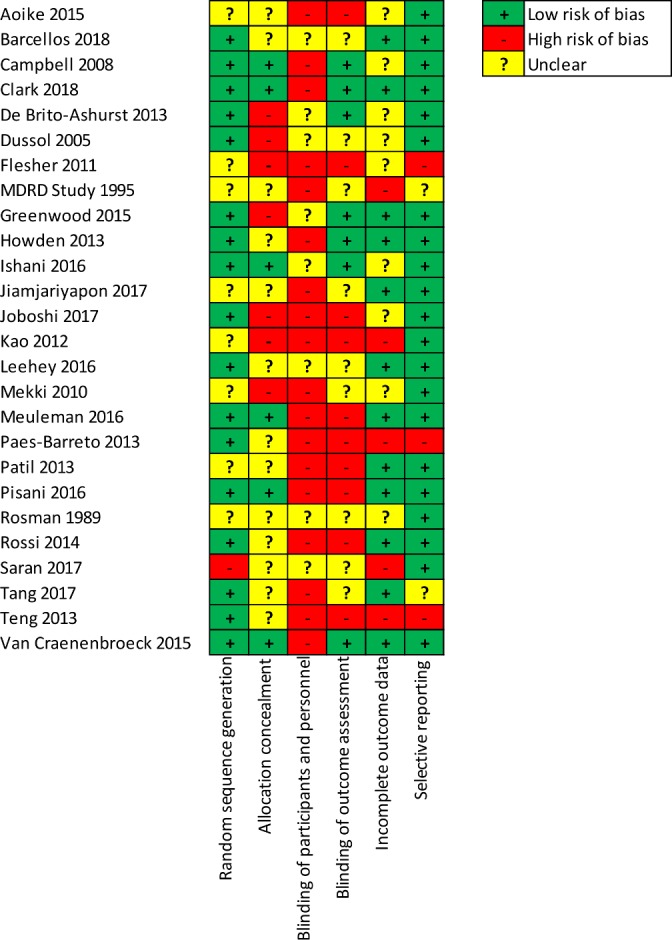
Trial characteristics including population, sample size, study setting, intervention, comparator, outcomes and study duration, were extracted. Study quality was independently assessed by two reviewers using the Cochrane risk of bias tool. The Behaviour Change Technique Taxonomy v1 was used to identify behaviour change techniques (eg, goal setting) and the Health Behaviour Change Wheel was used to identify intervention functions (eg, education). Both were independently assessed by three reviewers.
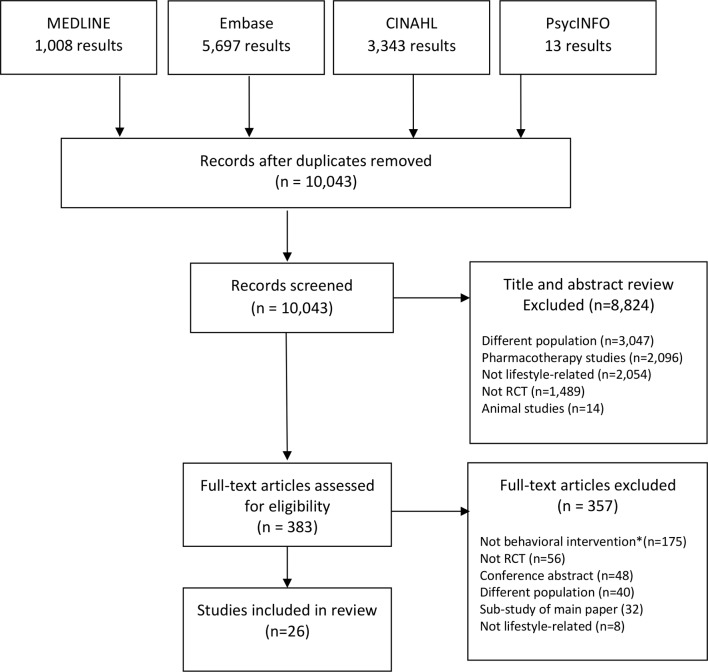
In total, 26 studies involving 4263 participants were included. Risk of bias was high or unclear in most studies. Interventions involved diet (11), physical activity (8) or general lifestyle (7). Education was the most frequently used function (21 interventions), followed by enablement (18), training (12), persuasion (4), environmental restructuring (4), modelling (2) and incentivisation (2). The most common behaviour change techniques were behavioural instruction (23 interventions), social support (16), behavioural demonstration (13), feedback on behaviour (12) and behavioural practice/rehearsal (12). Eighteen studies (69%) showed a significant improvement in at least one primary outcome, all of which included education, persuasion, modelling and incentivisation.
Lifestyle behaviour change interventions for CKD patients frequently used education, goal setting, feedback, monitoring and social support. The most promising interventions included education and used a variety of intervention functions (persuasion, modelling and incentivisation).
CRD42019106053.
改变生活方式可以预防慢性肾脏病(CKD)的进展,但导致有利行为改变的具体因素尚不清楚。我们旨在确定和评估生活方式干预预防 CKD 进展的行为改变技术和功能。
系统评价。
MEDLINE、EMBASE、CINAHL 和 PsycINFO。
截至 2018 年 9 月发表的针对 CKD 1-5 期成人的生活方式行为改变干预试验(包括饮食、体力活动、吸烟和/或饮酒)。
提取试验特征,包括人群、样本量、研究地点、干预、对照、结局和研究持续时间。两位评审员使用 Cochrane 偏倚风险工具独立评估研究质量。使用行为改变技术分类 v1 确定行为改变技术(如目标设定),使用健康行为改变轮确定干预功能(如教育)。这两项均由三位评审员独立评估。
共纳入 26 项研究,涉及 4263 名参与者。大多数研究的偏倚风险较高或不明确。干预措施涉及饮食(11 项)、体力活动(8 项)或一般生活方式(7 项)。教育是最常用的功能(21 项干预),其次是增强(18 项)、培训(12 项)、说服(4 项)、环境重构(4 项)、示范(2 项)和激励(2 项)。最常见的行为改变技术包括行为指导(23 项干预)、社会支持(16 项)、行为示范(13 项)、行为反馈(12 项)和行为实践/排练(12 项)。18 项研究(69%)至少有一项主要结局改善,所有研究均包含教育、说服、示范和激励。
CKD 患者的生活方式行为改变干预措施经常使用教育、目标设定、反馈、监测和社会支持。最有前途的干预措施包括教育,并使用了多种干预功能(说服、示范和激励)。
PROSPERO 注册号:CRD42019106053。