Department of Pathophysiology, School of Basic Medical Sciences, China-US (Henan) Hormel Cancer Institute, AMS, College of Medicine, Zhengzhou University, Zhengzhou, China.
China-US (Henan) Hormel Cancer Institute, Zhengzhou, China.
Clin Transl Med. 2021 Oct;11(10):e548. doi: 10.1002/ctm2.548.
A high risk of post-operative recurrence contributes to the poor prognosis and low survival rate of oesophageal squamous cell carcinoma (ESCC) patients. Increasing experimental evidence suggests that integrin adhesion receptors, in particular integrin αv (ITGAV), are important for cancer cell survival, proliferation and migration. Therefore, targeting ITGAV may be a rational approach for preventing ESCC recurrence.
Protein levels of ITGAV were determined in human ESCC tumour tissues using immunohistochemistry. MTT, propidium iodide staining, and annexin V staining were utilized to investigate cell viability, cell cycle progression, and induction of apoptosis, respectively. Computational docking was performed with the Schrödinger Suite software to visualize the interaction between indomethacin and ITGAV. Cell-derived xenograft mouse models, patient-derived xenograft (PDX) mouse models, and a humanized mouse model were employed for in vivo studies.
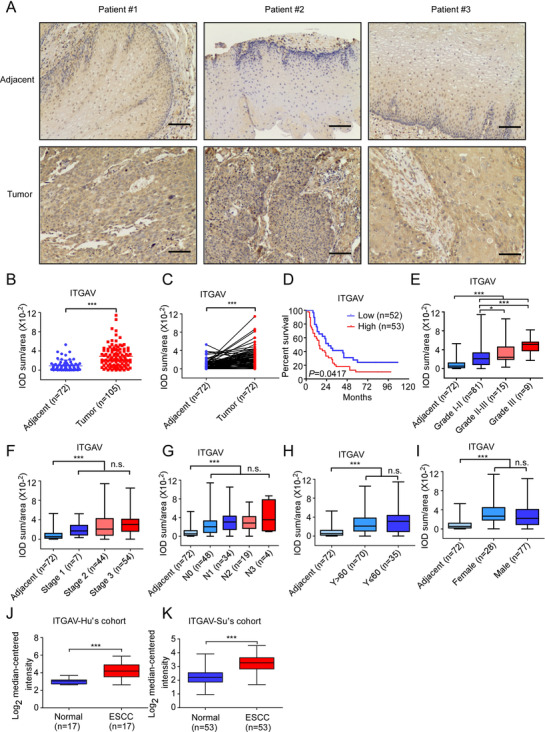
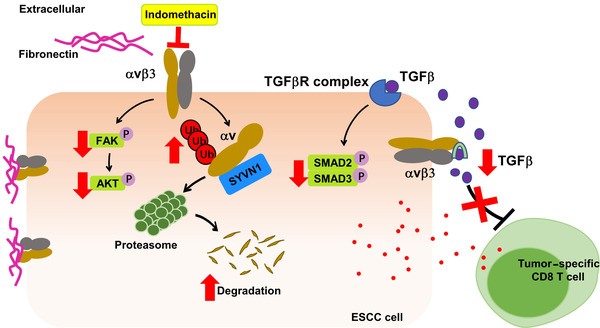
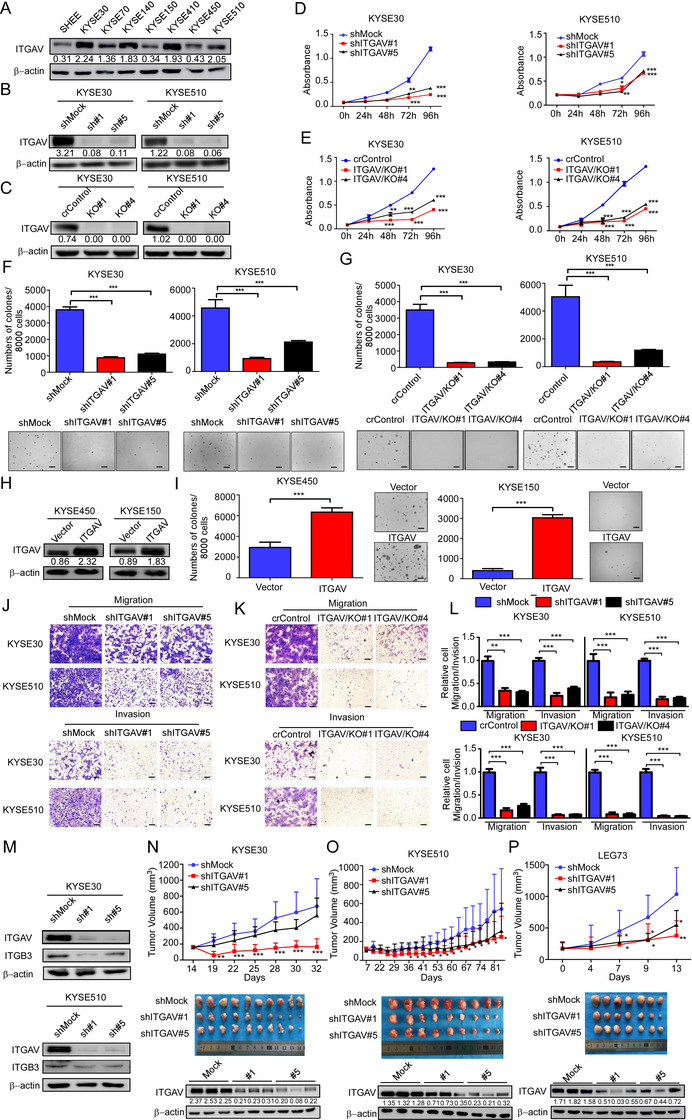
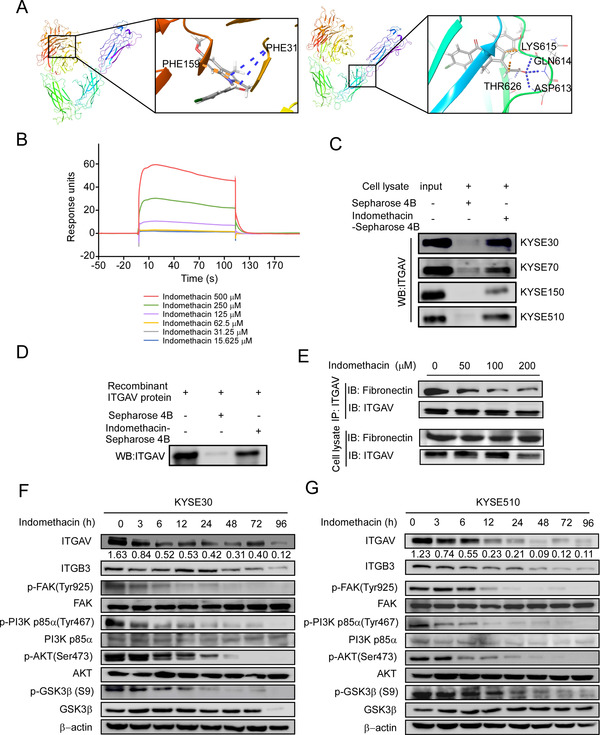
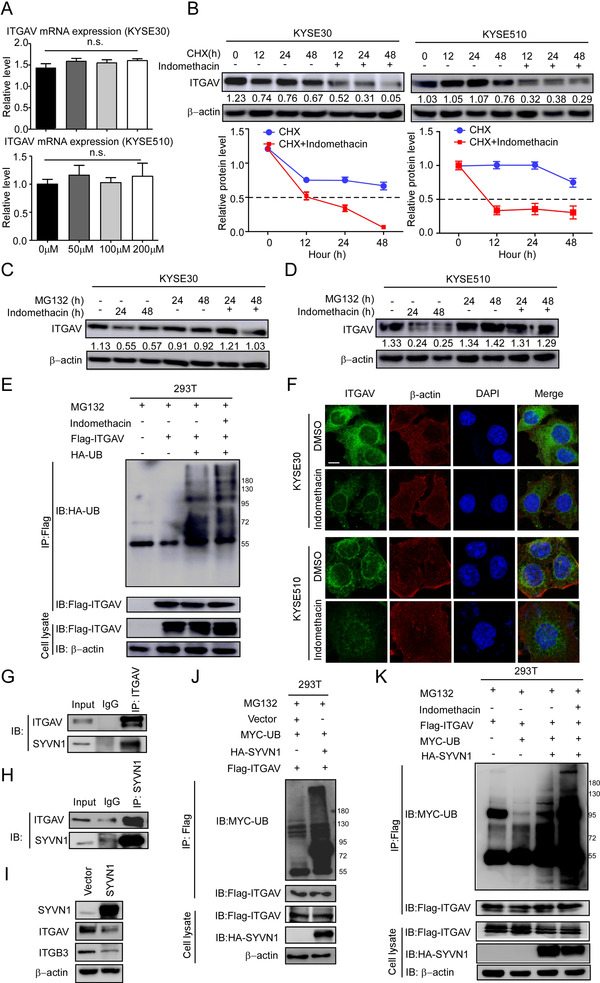
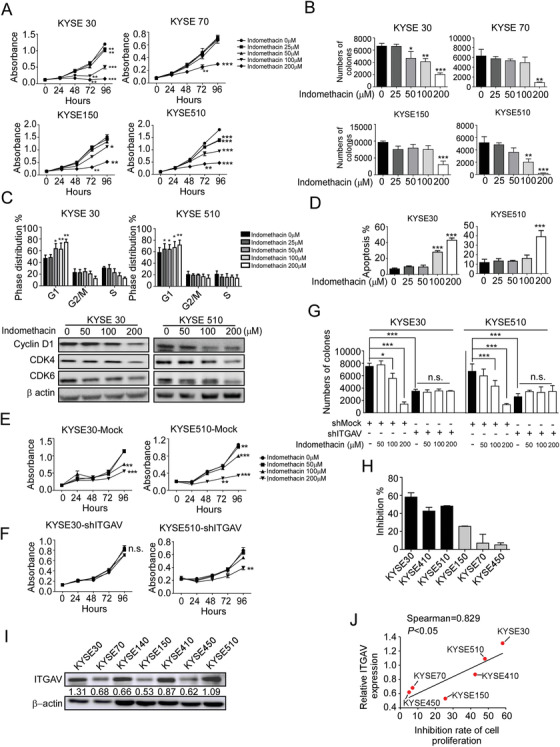
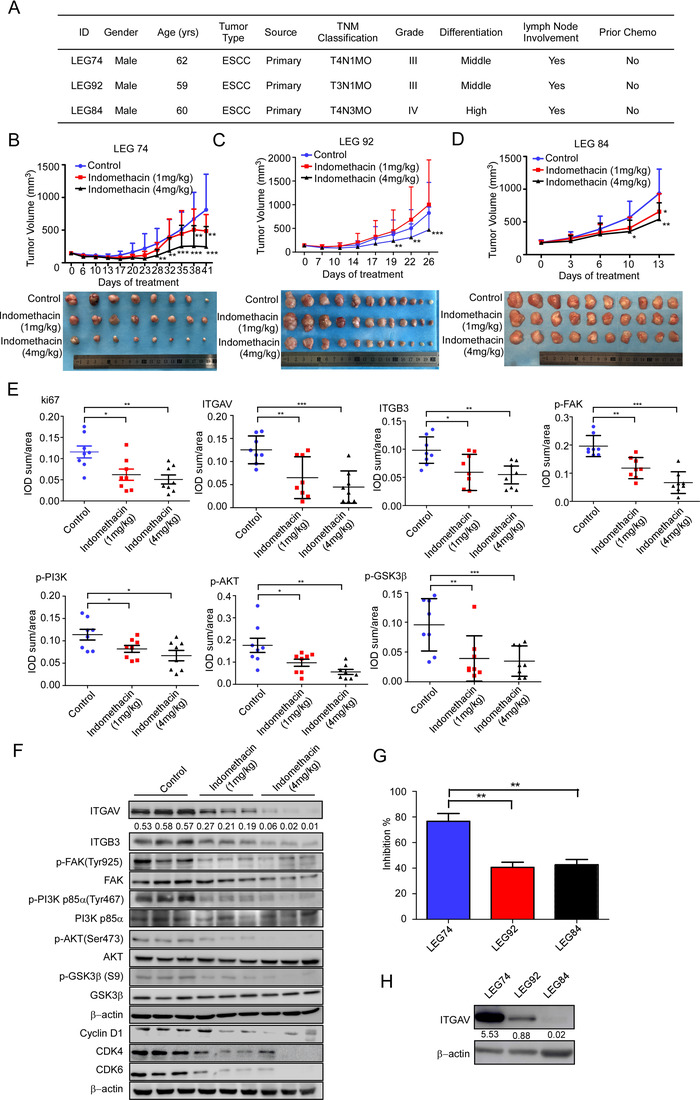
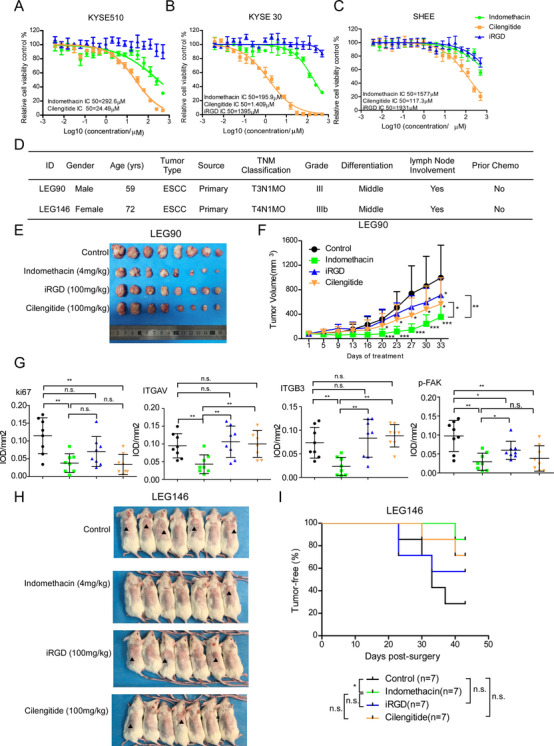
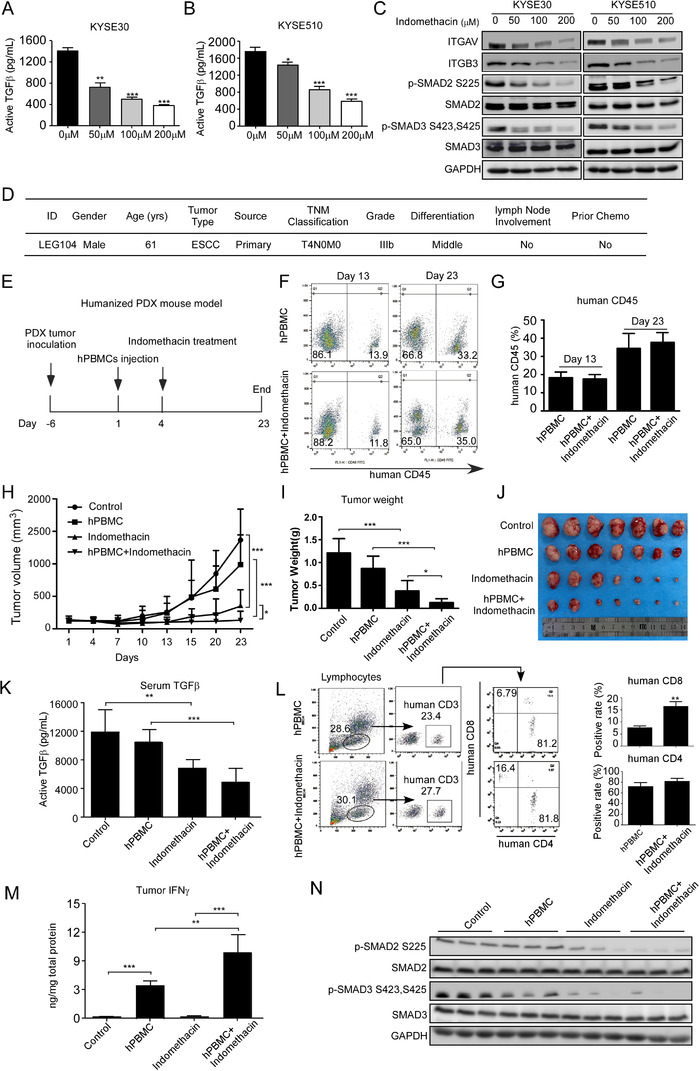
ITGAV was upregulated in human ESCC tumour tissues and increased ITGAV protein levels were associated with poor prognosis. ITGAV silencing or knockout suppressed ESCC cell growth and metastatic potential. Interestingly, we identified that indomethacin can bind to ITGAV and enhance synovial apoptosis inhibitor 1 (SYVN1)-mediated degradation of ITGAV. Integrin β3, one of the β subunits of ITGAV, was also decreased at the protein level in the indomethacin treatment group. Importantly, indomethacin treatment suppressed ESCC tumour growth and prevented recurrence in a PDX mouse model. Moreover, indomethacin inhibited the activation of cytokine TGFβ, reduced SMAD2/3 phosphorylation, and increased anti-tumour immune responses in a humanized mouse model.
ITGAV is a promising therapeutic target for ESCC. Indomethacin can attenuate ESCC growth through binding to ITGAV, promoting SYVN1-mediated ubiquitination of ITGAV, and potentiating cytotoxic CD8 T cell responses.
食管鳞癌(ESCC)患者术后复发风险高,导致预后不良和生存率低。越来越多的实验证据表明,整合素黏附受体,特别是整合素 αv(ITGAV),对癌细胞的存活、增殖和迁移至关重要。因此,靶向 ITGAV 可能是预防 ESCC 复发的合理方法。
采用免疫组织化学法检测人 ESCC 肿瘤组织中 ITGAV 的蛋白水平。采用 MTT、碘化丙啶染色和 Annexin V 染色分别检测细胞活力、细胞周期进程和细胞凋亡诱导。采用 Schrödinger Suite 软件进行计算对接,以可视化吲哚美辛与 ITGAV 的相互作用。采用细胞源性异种移植小鼠模型、患者源性异种移植(PDX)小鼠模型和人源化小鼠模型进行体内研究。
ITGAV 在人 ESCC 肿瘤组织中上调,且 ITGAV 蛋白水平升高与预后不良相关。ITGAV 沉默或敲除抑制 ESCC 细胞生长和转移潜能。有趣的是,我们发现吲哚美辛可以与 ITGAV 结合,并增强滑膜凋亡抑制因子 1(SYVN1)介导的 ITGAV 降解。ITGAV 的β 亚基之一整合素β3,在吲哚美辛处理组中的蛋白水平也降低。重要的是,吲哚美辛治疗抑制了 PDX 小鼠模型中的 ESCC 肿瘤生长并防止了复发。此外,吲哚美辛抑制细胞因子 TGFβ 的激活,减少 SMAD2/3 磷酸化,并在人源化小鼠模型中增强抗肿瘤免疫反应。
ITGAV 是 ESCC 的一个有前途的治疗靶点。吲哚美辛通过与 ITGAV 结合,促进 SYVN1 介导的 ITGAV 泛素化,增强细胞毒性 CD8 T 细胞反应,从而减弱 ESCC 的生长。