Division of Cardiology, Department of Medicine, and.
Department of Physiology and Cellular Biophysics and Clyde & Helen Wu Center for Molecular Cardiology, Vagelos College of Physicians and Surgeons, Columbia University, New York, New York, USA.
JCI Insight. 2021 Oct 28;6(23):e147371. doi: 10.1172/jci.insight.147371.
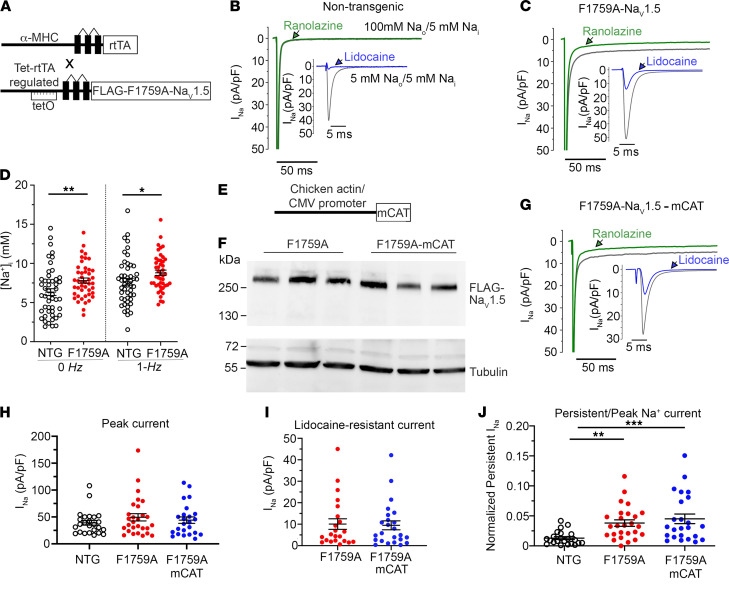
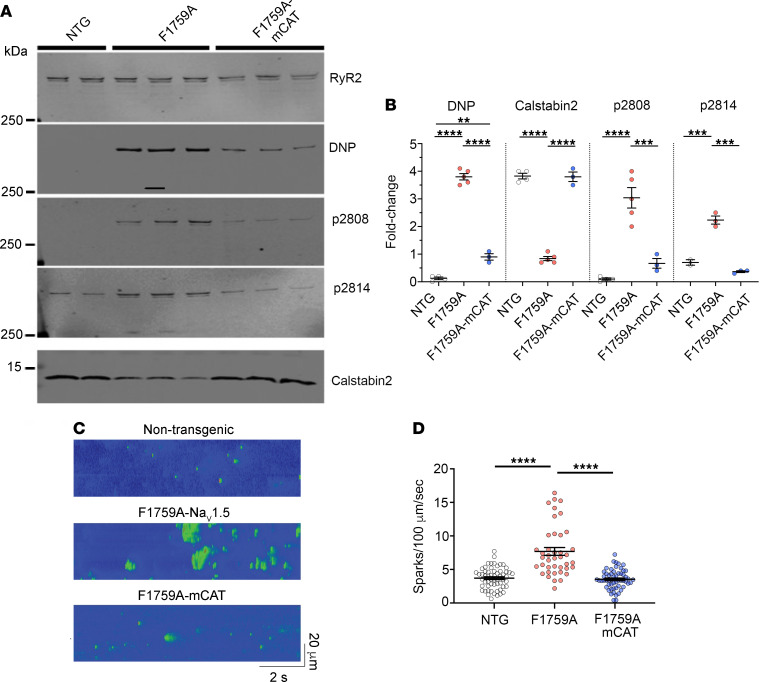
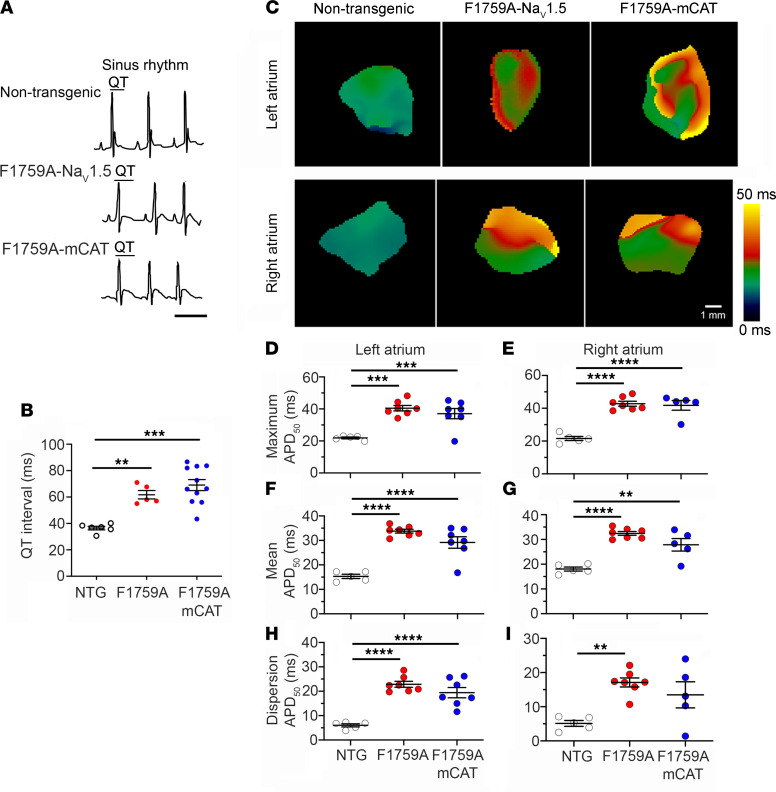
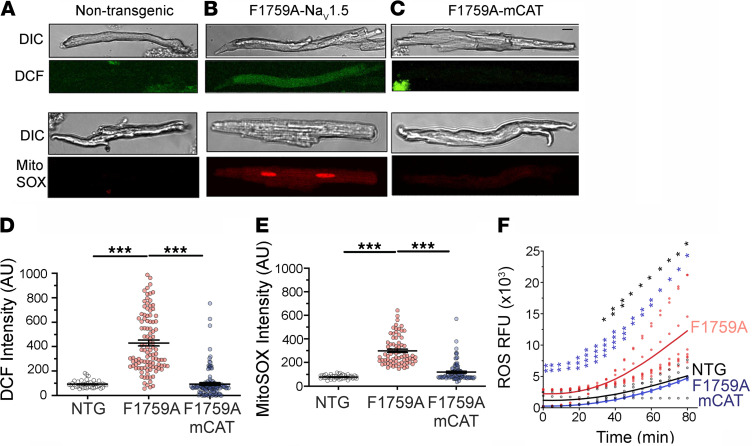
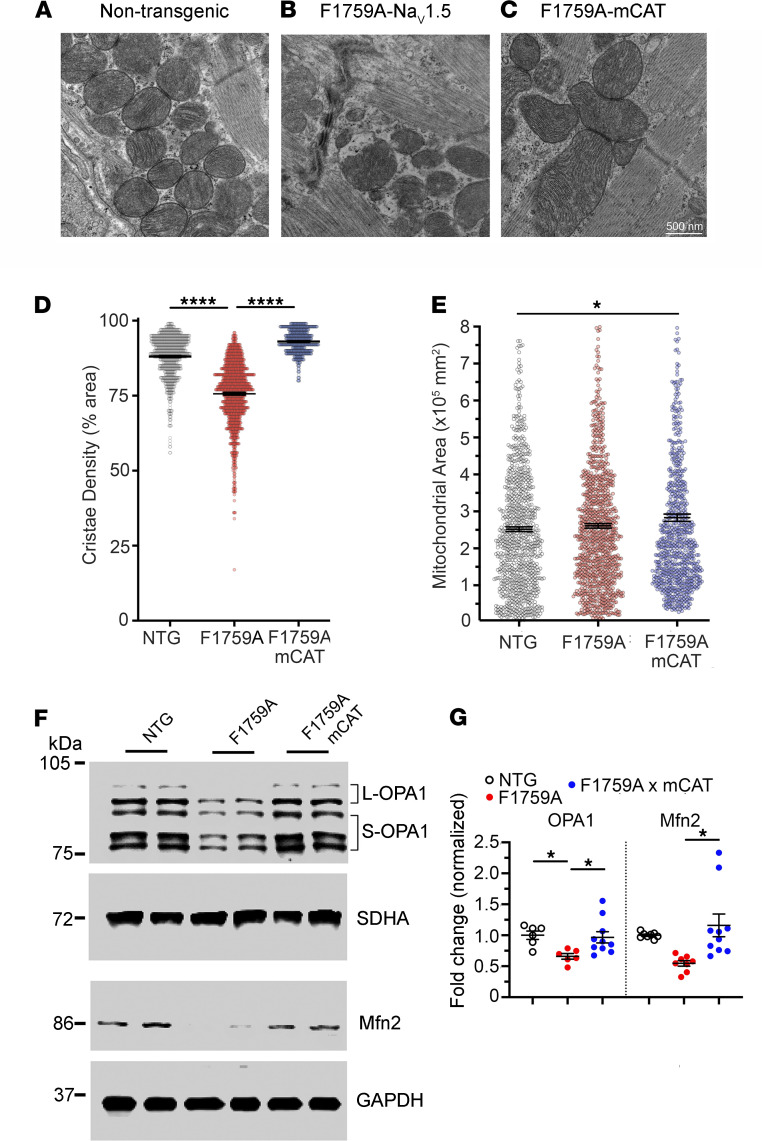
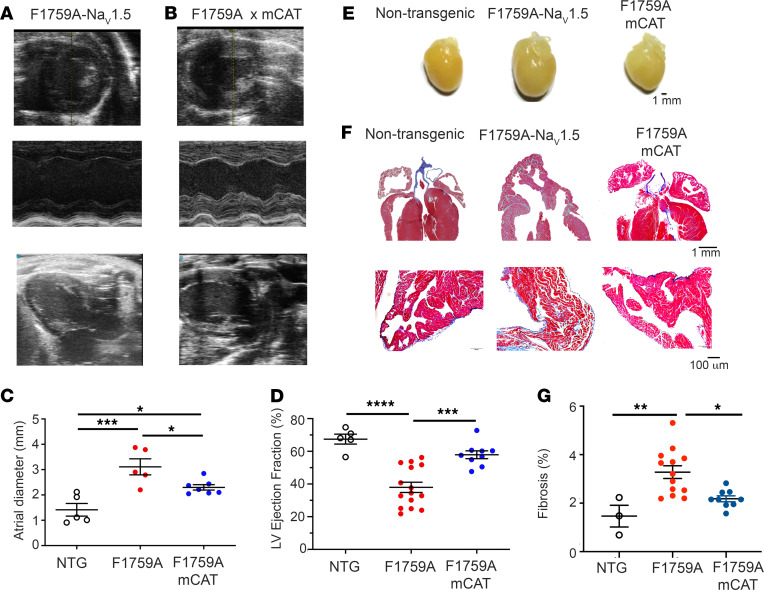
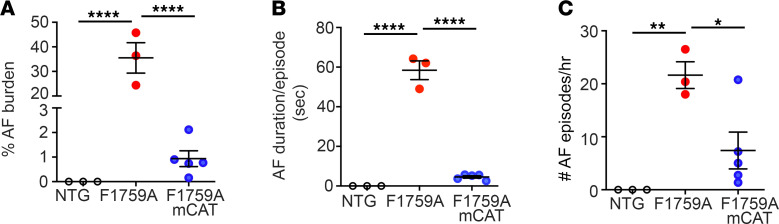
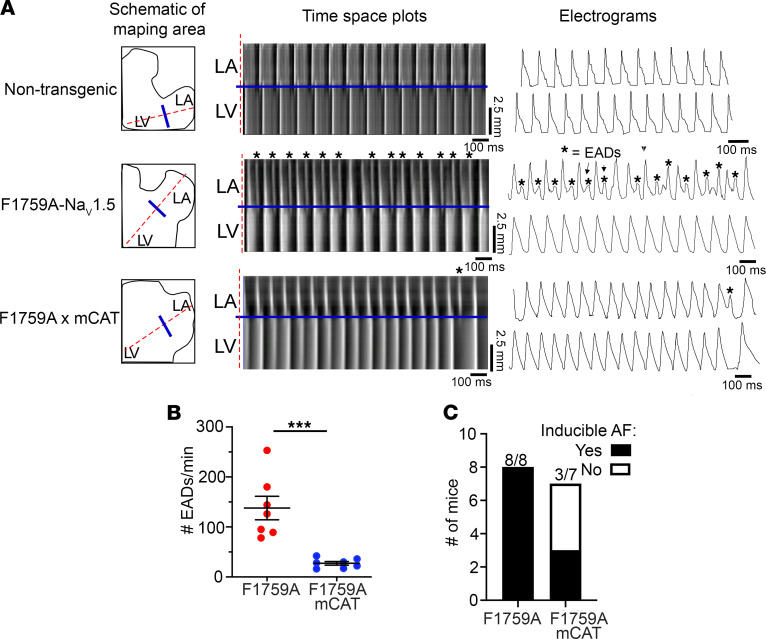
Mechanistically driven therapies for atrial fibrillation (AF), the most common cardiac arrhythmia, are urgently needed, the development of which requires improved understanding of the cellular signaling pathways that facilitate the structural and electrophysiological remodeling that occurs in the atria. Similar to humans, increased persistent Na+ current leads to the development of an atrial myopathy and spontaneous and long-lasting episodes of AF in mice. How increased persistent Na+ current causes both structural and electrophysiological remodeling in the atria is unknown. We crossbred mice expressing human F1759A-NaV1.5 channels with mice expressing human mitochondrial catalase (mCAT). Increased expression of mCAT attenuated mitochondrial and cellular reactive oxygen species (ROS) and the structural remodeling that was induced by persistent F1759A-Na+ current. Despite the heterogeneously prolonged atrial action potential, which was unaffected by the reduction in ROS, the incidences of spontaneous AF, pacing-induced after-depolarizations, and AF were substantially reduced. Expression of mCAT markedly reduced persistent Na+ current-induced ryanodine receptor oxidation and dysfunction. In summary, increased persistent Na+ current in atrial cardiomyocytes, which is observed in patients with AF, induced atrial enlargement, fibrosis, mitochondrial dysmorphology, early after-depolarizations, and AF, all of which can be attenuated by resolving mitochondrial oxidative stress.
机制驱动的治疗心房颤动(AF),最常见的心律失常,是迫切需要的,其发展需要提高对细胞信号通路的理解,促进结构和电生理重塑发生在心房。类似于人类,增加持续的 Na+电流导致心房肌病和自发性和持续性长的 AF 在小鼠中发生。增加的持续 Na+电流如何导致心房的结构和电生理重塑尚不清楚。我们将表达人 F1759A-NaV1.5 通道的小鼠与表达人线粒体过氧化氢酶(mCAT)的小鼠进行杂交。mCAT 的高表达减弱了由持续 F1759A-Na+电流诱导的线粒体和细胞活性氧物质(ROS)和结构重塑。尽管心房动作电位存在异质性延长,但不受 ROS 减少的影响,但自发性 AF、起搏诱导的后除极和 AF 的发生率显著降低。mCAT 的表达显著减少了持续 Na+电流诱导的 Ryanodine 受体氧化和功能障碍。总之,在 AF 患者中观察到的心房肌细胞中增加的持续 Na+电流诱导了心房扩大、纤维化、线粒体形态异常、早期后除极和 AF,所有这些都可以通过解决线粒体氧化应激来减轻。