Key Laboratory of Brain Functional Genomics (Ministry of Education and Shanghai), Institute of Brain Functional Genomics, School of Life Sciences and the Collaborative Innovation Center for Brain Science, East China Normal University, Shanghai, China.
Fujian Provincial Key Laboratory for the Prevention and Control of Animal Infectious Diseases and Biotechnology, School of Life Sciences, Longyan University, Longyan, China.
J Biol Chem. 2021 Nov;297(5):101344. doi: 10.1016/j.jbc.2021.101344. Epub 2021 Oct 25.
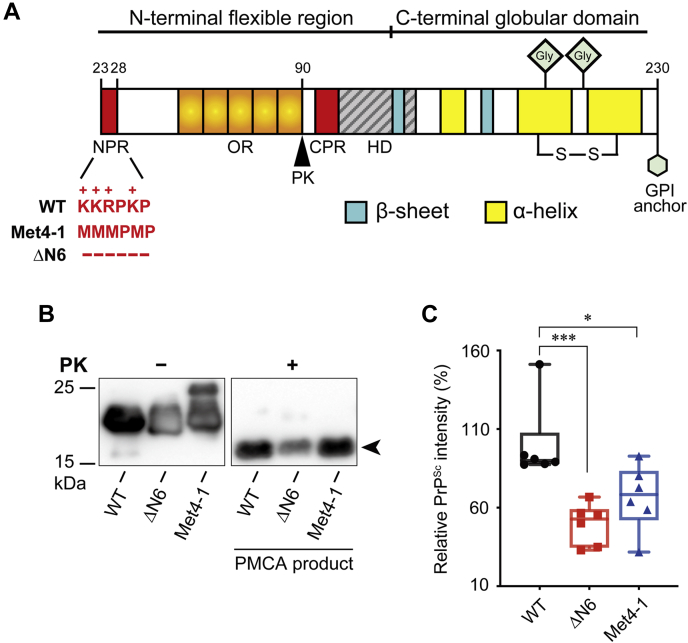
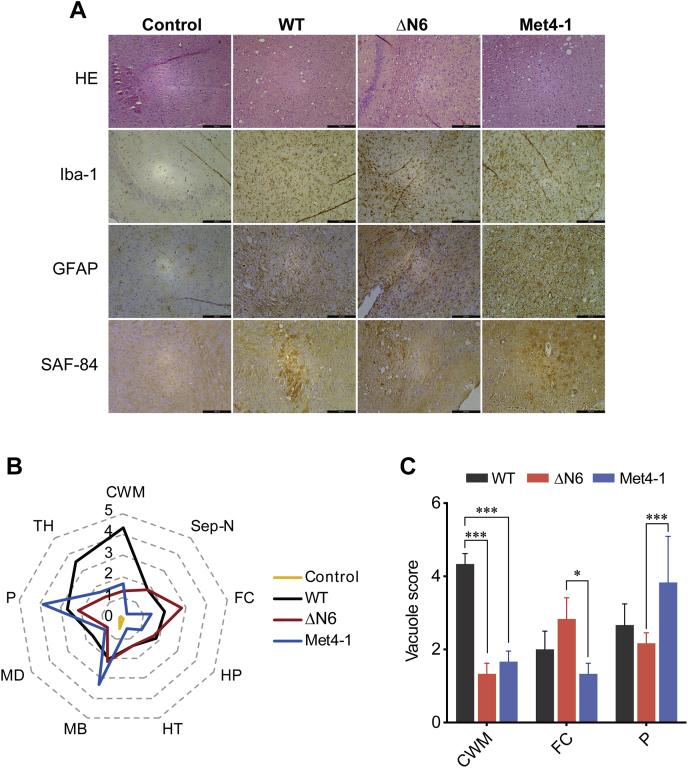
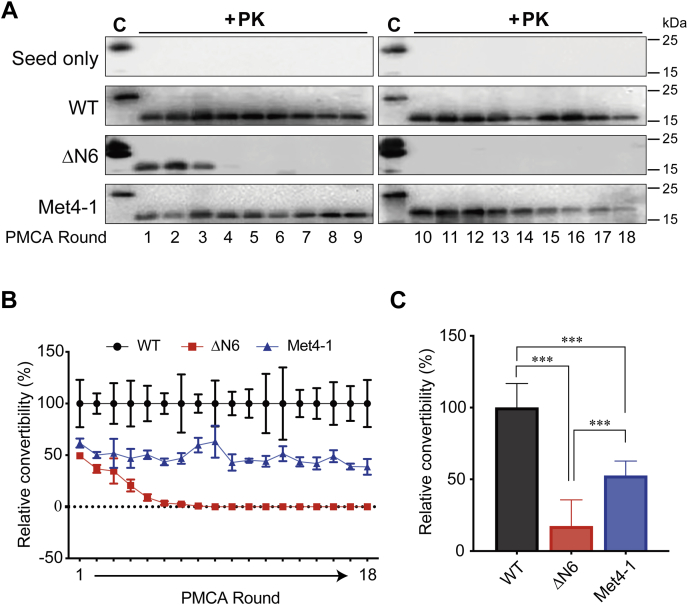
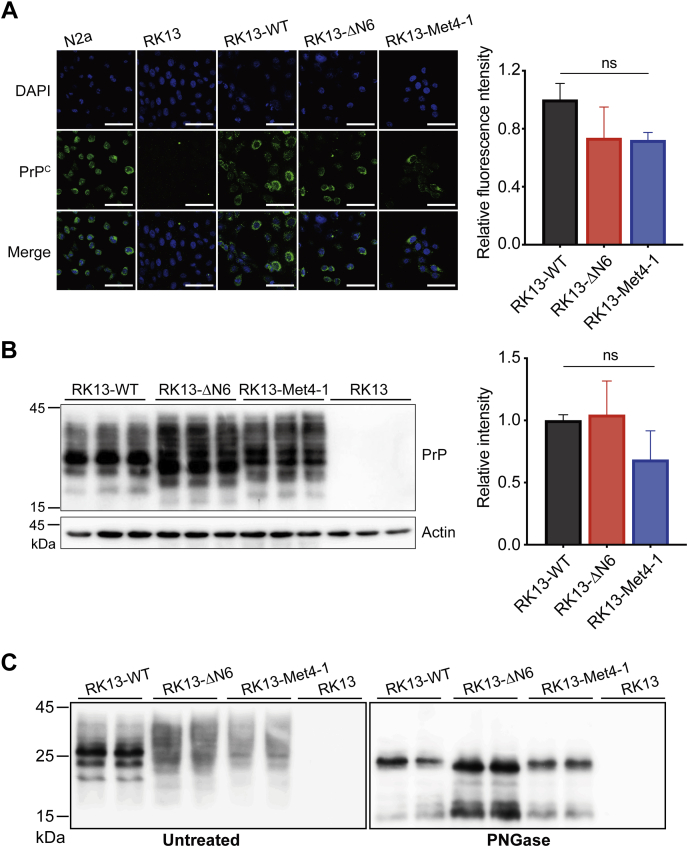
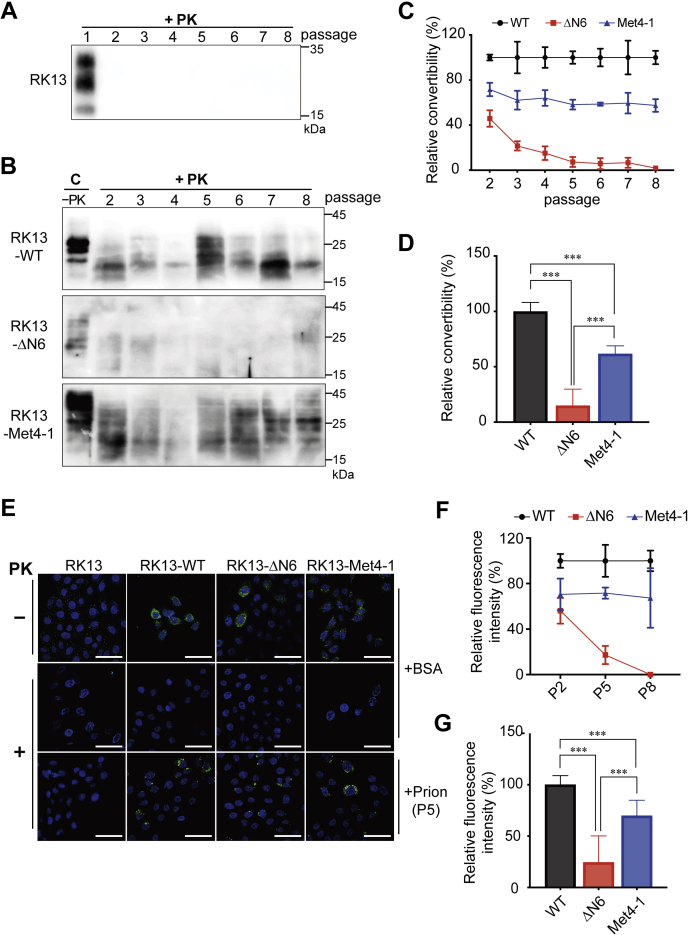
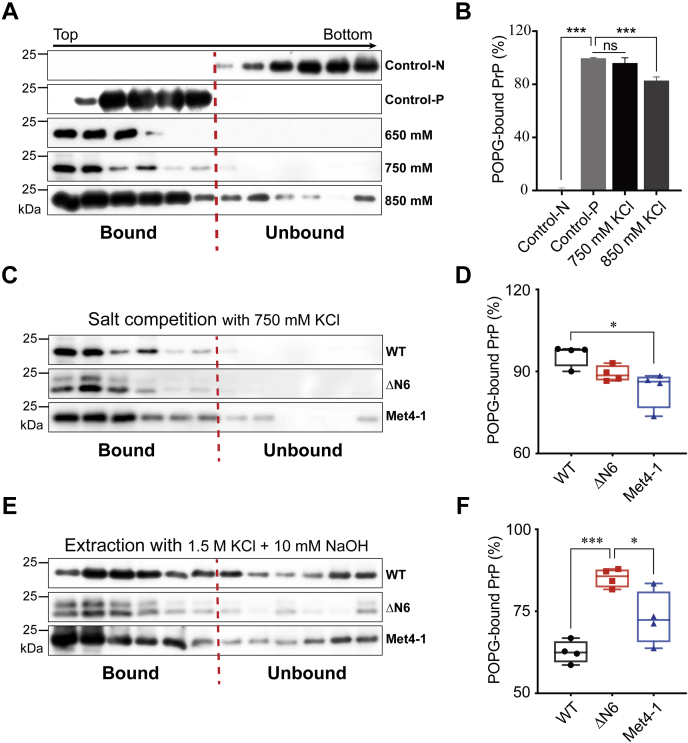
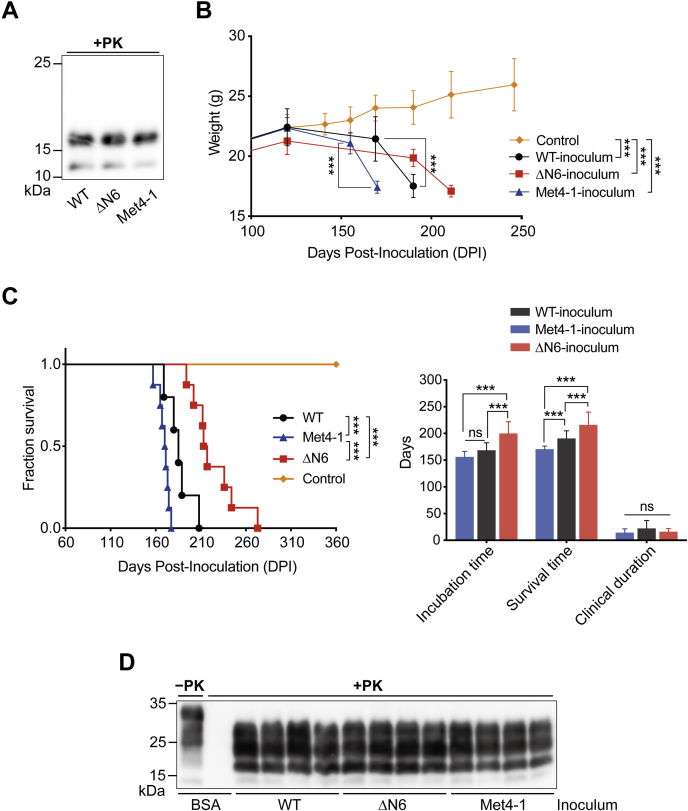
Conversion of normal prion protein (PrP) to the pathogenic PrP conformer is central to prion diseases such as Creutzfeldt-Jakob disease and scrapie; however, the detailed mechanism of this conversion remains obscure. To investigate how the N-terminal polybasic region of PrP (NPR) influences the PrP-to-PrP conversion, we analyzed two PrP mutants: ΔN6 (deletion of all six amino acids in NPR) and Met4-1 (replacement of four positively charged amino acids in NPR with methionine). We found that ΔN6 and Met4-1 differentially impacted the binding of recombinant PrP (recPrP) to the negatively charged phospholipid 1-palmitoyl-2-oleoylphosphatidylglycerol, a nonprotein cofactor that facilitates PrP conversion. Both mutant recPrPs were able to form recombinant prion (recPrP) in vitro, but the convertibility was greatly reduced, with ΔN6 displaying the lowest convertibility. Prion infection assays in mammalian RK13 cells expressing WT or NPR-mutant PrPs confirmed these differences in convertibility, indicating that the NPR affects the conversion of both bacterially expressed recPrP and post-translationally modified PrP in eukaryotic cells. We also found that both WT and mutant recPrP conformers caused prion disease in WT mice with a 100% attack rate, but the incubation times and neuropathological changes caused by two recPrP mutants were significantly different from each other and from that of WT recPrP. Together, our results support that the NPR greatly influences PrP-to-PrP conversion, but it is not essential for the generation of PrP. Moreover, the significant differences between ΔN6 and Met4-1 suggest that not only charge but also the identity of amino acids in NPR is important to PrP conversion.
正常朊病毒蛋白(PrP)向致病性 PrP 构象的转化是 Creutzfeldt-Jakob 病和瘙痒病等朊病毒病的核心;然而,这种转化的详细机制仍不清楚。为了研究 PrP 的 N 端多碱性区(NPR)如何影响 PrP 向 PrP 的转化,我们分析了两种 PrP 突变体:ΔN6(NPR 中所有六个氨基酸缺失)和 Met4-1(NPR 中四个带正电荷的氨基酸被蛋氨酸取代)。我们发现,ΔN6 和 Met4-1 对重组 PrP(recPrP)与带负电荷的磷脂 1-棕榈酰-2-油酰基磷脂酰甘油的结合有不同的影响,这种非蛋白辅因子促进 PrP 的转化。两种突变的 recPrP 都能够在体外形成重组朊病毒(recPrP),但转化率大大降低,ΔN6 的转化率最低。在表达 WT 或 NPR 突变 PrP 的哺乳动物 RK13 细胞中的朊病毒感染实验证实了这种转化率的差异,表明 NPR 影响了细菌表达的 recPrP 和真核细胞中转译后修饰的 PrP 的转化。我们还发现,WT 和突变 recPrP 构象都能在 WT 小鼠中引起朊病毒病,发病率为 100%,但两种 recPrP 突变体引起的潜伏期和神经病理学变化与 WT recPrP 显著不同。总之,我们的结果支持 NPR 极大地影响 PrP 向 PrP 的转化,但它不是 PrP 产生的必要条件。此外,ΔN6 和 Met4-1 之间的显著差异表明,不仅是 NPR 中的电荷,而且氨基酸的身份对 PrP 的转化也很重要。