Department of Medicine, Xi'an Jiaotong University, Xi'an, 710061, Shaanxi, China.
Department of Oncology, The Second Affiliated Hospital of Xi'an Jiaotong University, No. 157, West Five Road, Xi'an, 710000, Shaanxi, China.
BMC Cancer. 2021 Oct 29;21(1):1160. doi: 10.1186/s12885-021-08892-4.
Ferroptosis, a new form of programmed cell death, has great potential for cancer treatment. However, the roles of ferroptosis-related (FR) genes in breast cancer (BC) remain elusive.
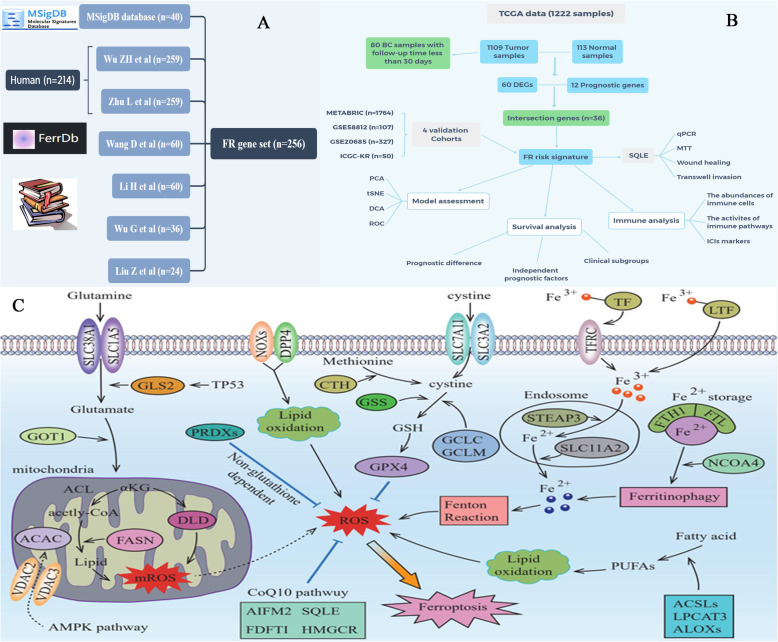
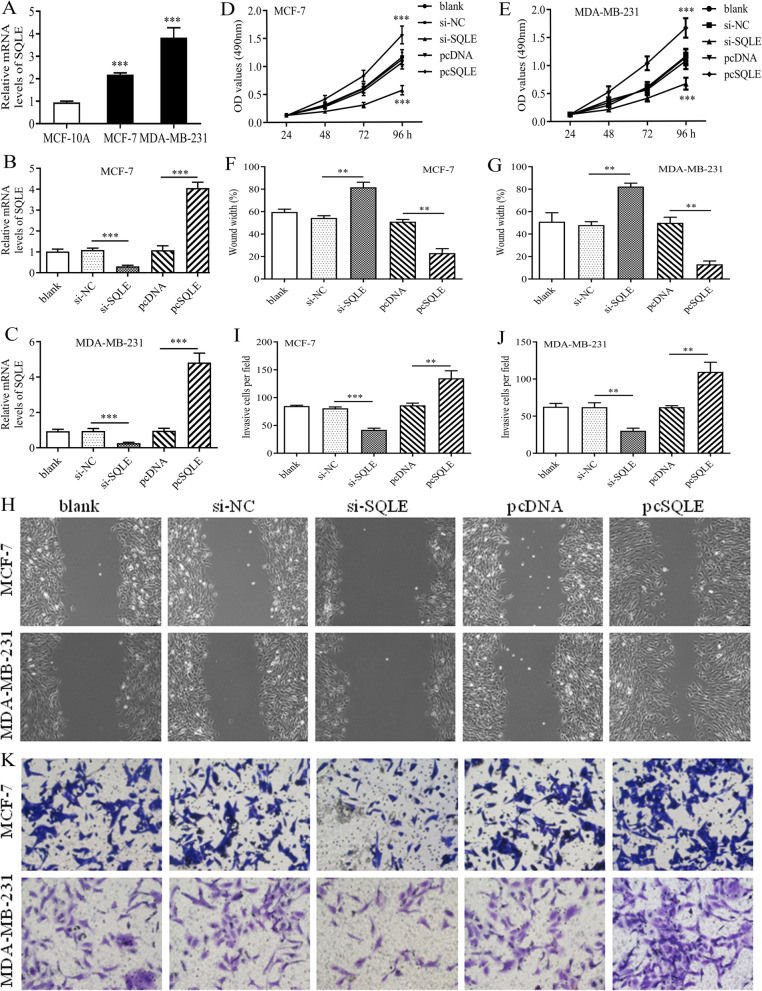
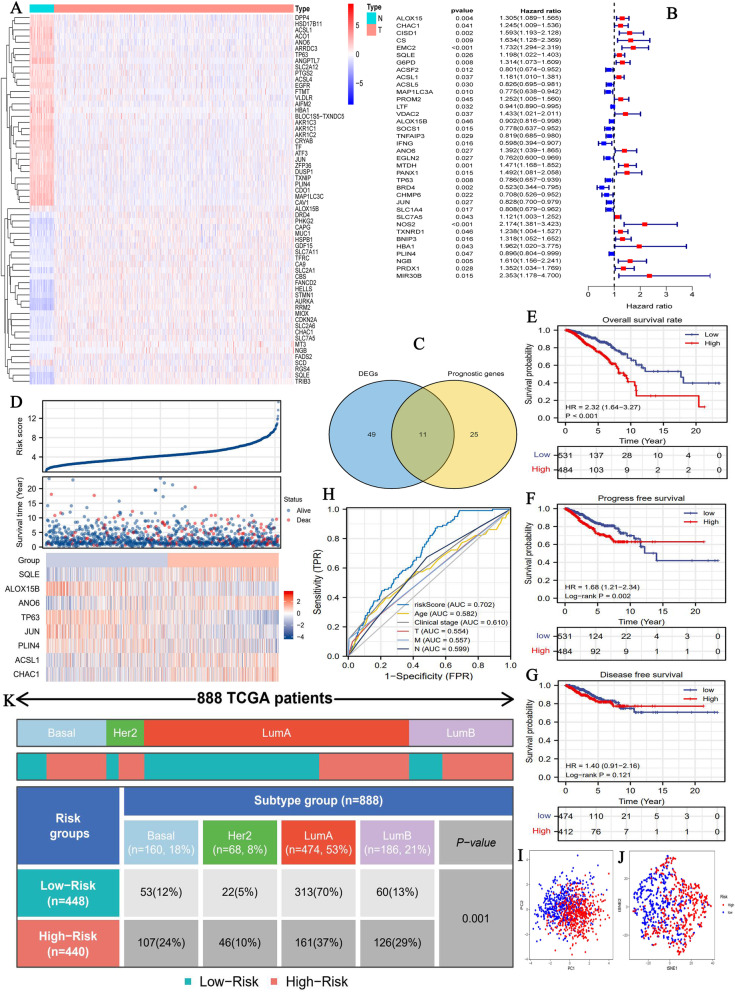
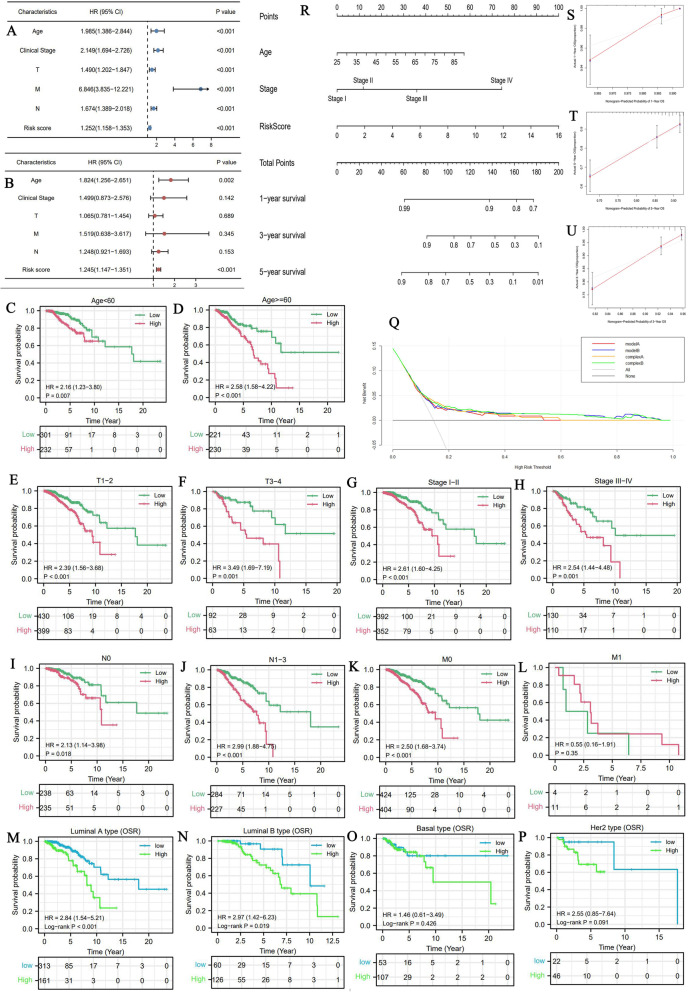
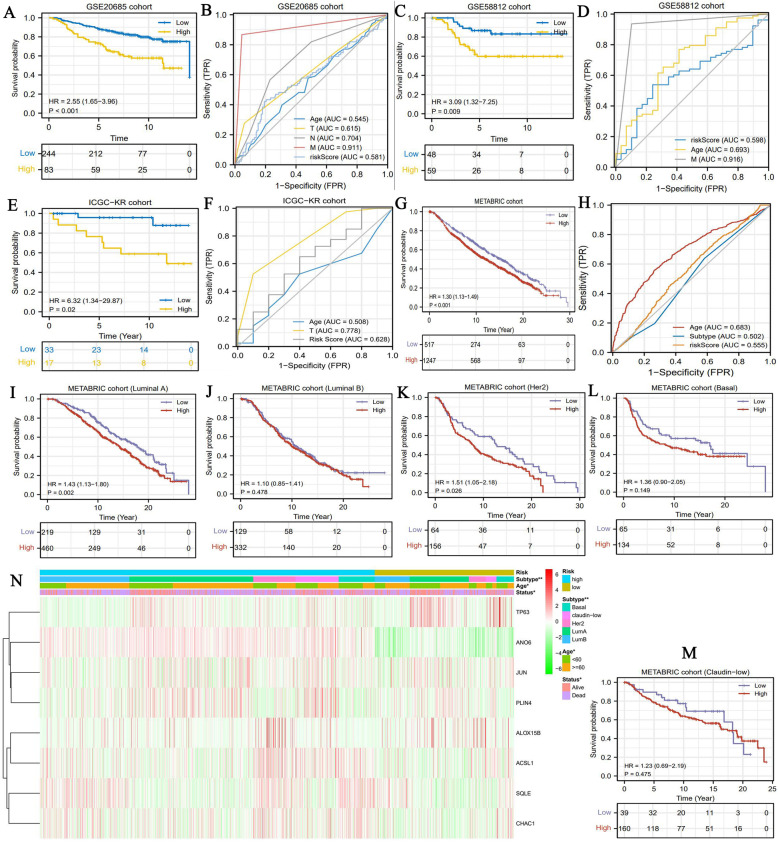
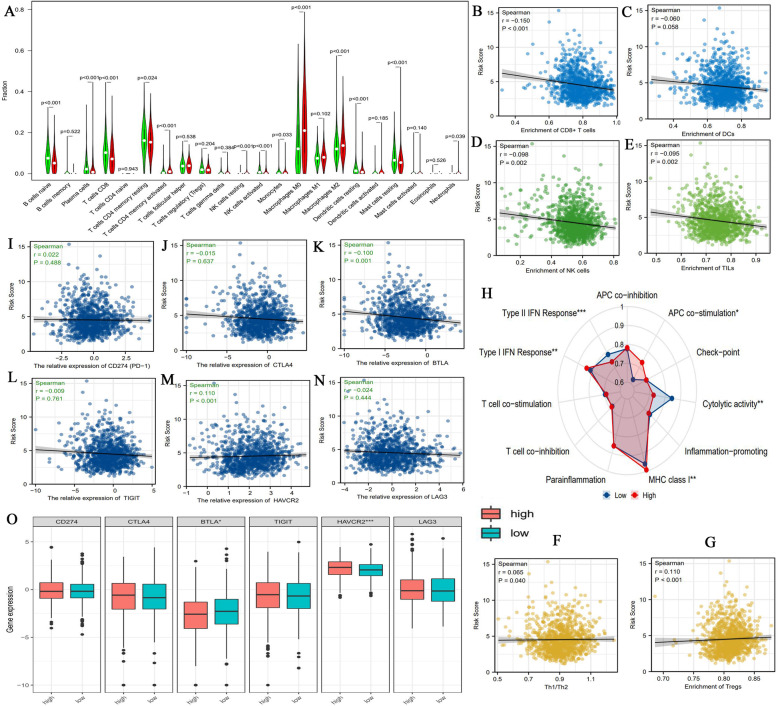
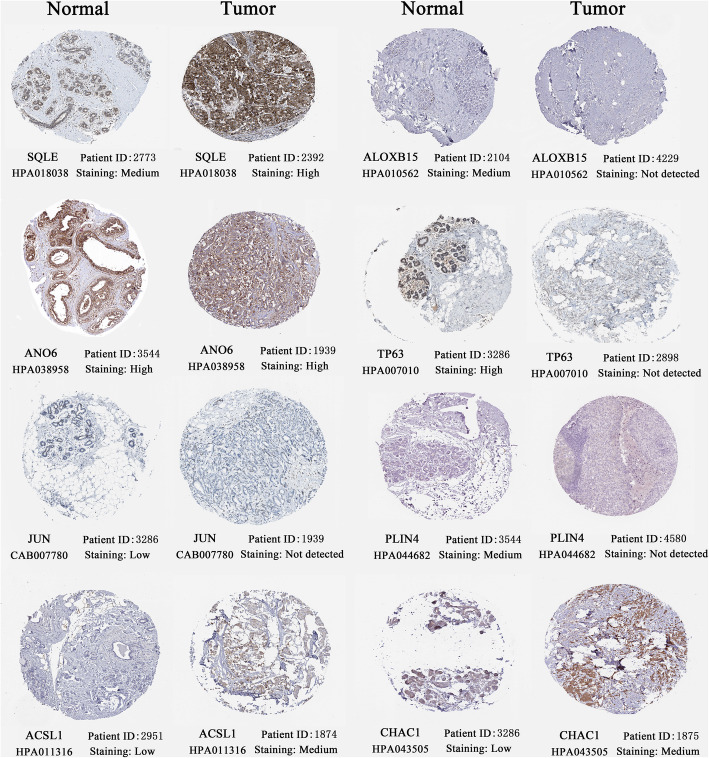
Using TCGA database, a novel FR risk signature was constructed through the Lasso regression analysis. Meanwhile, its prognostic value was assessed by a series of survival analyses. Besides, a nomogram was constructed to predict the overall survival rate (OSR) of individual at 1,3,5 year. Four validation cohorts (n = 2248), including METABRIC, GSE58812, GSE20685 and ICGC-KR datasets, were employed to test the prognostic value of FR risk signature. The effects of FR risk signature on BC immune microenvironment were explored by CIBERSORT algorithm and ssGSEA method. The histological expressions of FR risk genes were presented by HPA database. The biofunctions of SQLE were determined by qPCR, MTT, wound-healing and Transwell assays.
We constructed a novel FR risk signature consisting of eight genes. High FR risk led a poor prognosis and was identified as an independent prognostic factor. Besides, A higher proportion of patients with luminal A type was observed in low-risk group (53%), while a higher proportion of patients with basal type in high-risk group (24%). FR risk score could discriminate the prognostic difference of most clinical subgroups, except for M1 stage, HER2 and basal types. Moreover, its prognostic value was successfully validated in other four cohorts. Through immune analyses, we found that the reduced infiltration levels of CD8+ and NK cells, whereas the enhanced activity of antigen presentation process appeared in high FR risk. Then, FR risk score was found to weakly correlate with the expressions of six immune checkpoints. Through the experiments in vitro, we confirmed that overexpression of SQLE could promote, whereas blocking SQLE could inhibit the proliferative, migrative and invasive abilities of BC cells.
FR risk signature was conducive to BC prognostic assessment. High FR risk level was closely associated with BC immunosuppression, but may not predict ICIs efficacy. Moreover, SQLE was identified as a crucial cancer-promoting gene in BC. Our findings provide new insights into prognostic assessment and molecular mechanism of BC.
铁死亡是一种新的程序性细胞死亡方式,在癌症治疗方面具有巨大的潜力。然而,铁死亡相关基因(FR)在乳腺癌(BC)中的作用仍不清楚。
使用 TCGA 数据库,通过 Lasso 回归分析构建了一个新的 FR 风险特征。同时,通过一系列生存分析评估其预后价值。此外,构建了一个列线图来预测个体 1、3、5 年的总生存率(OSR)。四个验证队列(n=2248),包括 METABRIC、GSE58812、GSE20685 和 ICGC-KR 数据集,用于测试 FR 风险特征的预后价值。通过 CIBERSORT 算法和 ssGSEA 方法探讨 FR 风险特征对 BC 免疫微环境的影响。通过 HPA 数据库展示 FR 风险基因的组织学表达。通过 qPCR、MTT、划痕愈合和 Transwell 测定确定 SQLE 的生物功能。
我们构建了一个由 8 个基因组成的新 FR 风险特征。高 FR 风险导致预后不良,并被确定为独立的预后因素。此外,低风险组中 luminal A 型患者比例较高(53%),而高风险组中基底型患者比例较高(24%)。FR 风险评分可区分大多数临床亚组的预后差异,除 M1 期、HER2 和基底型外。此外,其预后价值在其他四个队列中得到了成功验证。通过免疫分析,我们发现 CD8+和 NK 细胞的浸润水平降低,而抗原呈递过程的活性增强。然后,发现 FR 风险评分与六种免疫检查点的表达呈弱相关。通过体外实验,我们证实 SQLE 的过表达可以促进,而阻断 SQLE 可以抑制 BC 细胞的增殖、迁移和侵袭能力。
FR 风险特征有利于 BC 的预后评估。高 FR 风险水平与 BC 免疫抑制密切相关,但可能无法预测 ICIs 的疗效。此外,SQLE 被鉴定为 BC 中一种重要的促进癌症的基因。我们的研究结果为 BC 的预后评估和分子机制提供了新的见解。