Wang Ding, Wei Guodong, Ma Ju, Cheng Shuai, Jia Longyuan, Song Xinyue, Zhang Ming, Ju Mingyi, Wang Lin, Zhao Lin, Xin Shijie
Department of Vascular Surgery, The First Hospital of China Medical University, Shenyang, Liaoning Province, China.
Department of Pharmacology, School of Pharmacy, China Medical University, Shenyang, Liaoning Province, China.
BMC Cancer. 2021 May 31;21(1):645. doi: 10.1186/s12885-021-08341-2.
Breast cancer (BRCA) is a malignant tumor with high morbidity and mortality, which is a threat to women's health worldwide. Ferroptosis is closely related to the occurrence and development of breast cancer. Here, we aimed to establish a ferroptosis-related prognostic gene signature for predicting patients' survival.
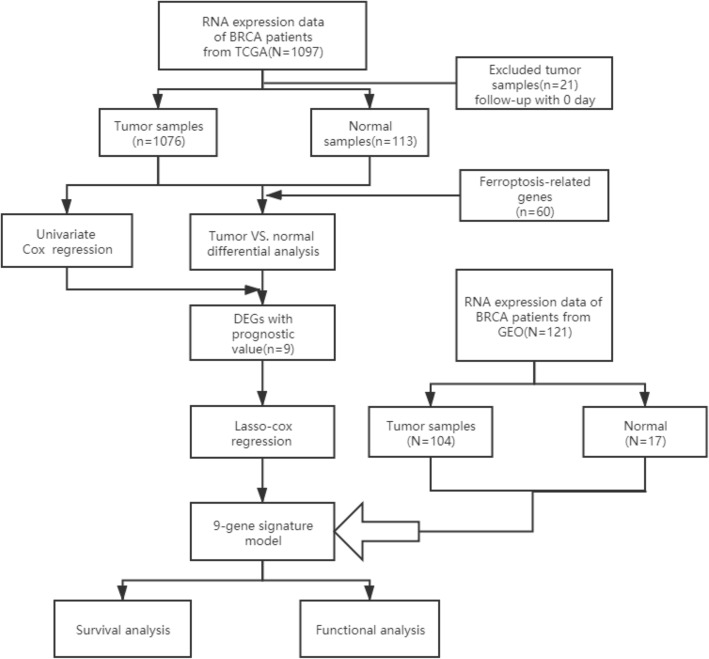
Gene expression profile and corresponding clinical information of patients from The Cancer Genome Atlas (TCGA) database and Gene Expression Omnibus (GEO) database. The Least absolute shrinkage and selection operator (LASSO)-penalized Cox regression analysis model was utilized to construct a multigene signature. The Kaplan-Meier (K-M) and Receiver Operating Characteristic (ROC) curves were plotted to validate the predictive effect of the prognostic signature. Gene Ontology (GO) and Kyoto Encyclopedia of Genes, Genomes (KEGG) pathway and single-sample gene set enrichment analysis (ssGSEA) were performed for patients between the high-risk and low-risk groups divided by the median value of risk score.
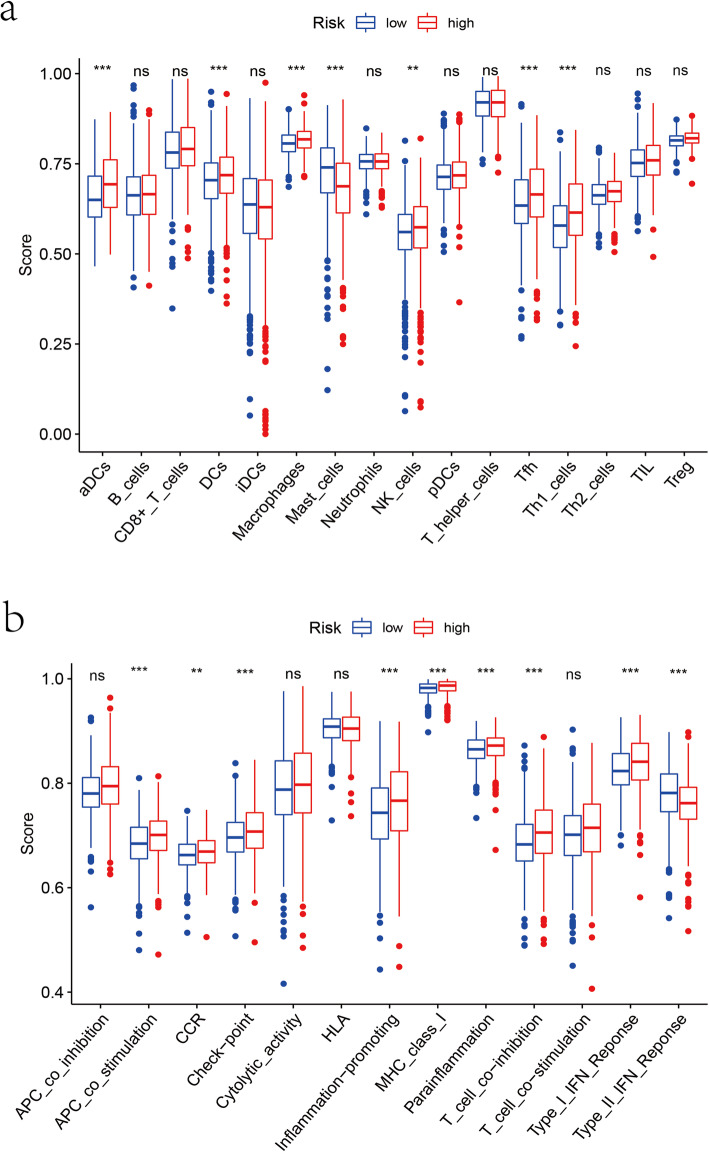
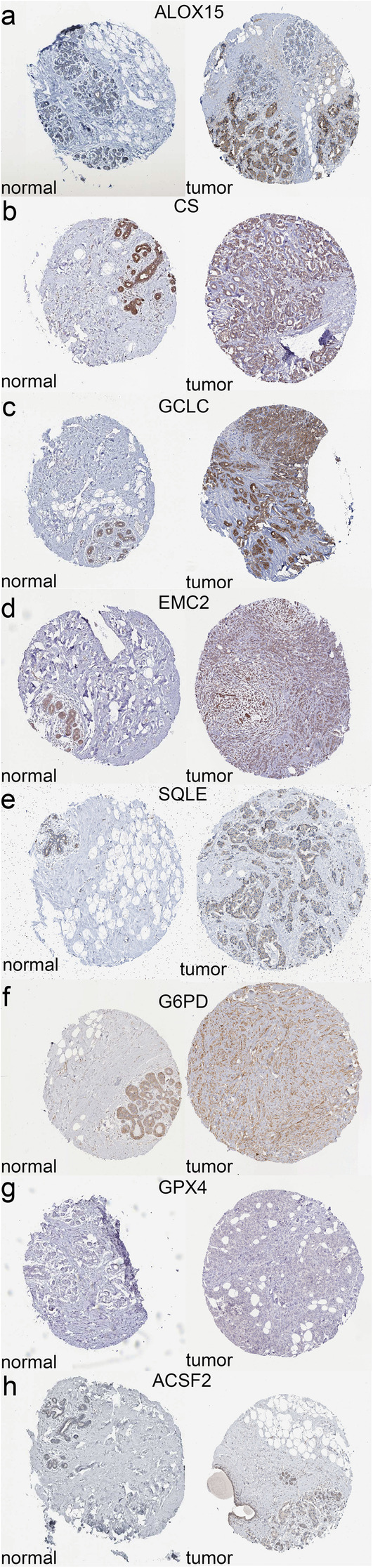
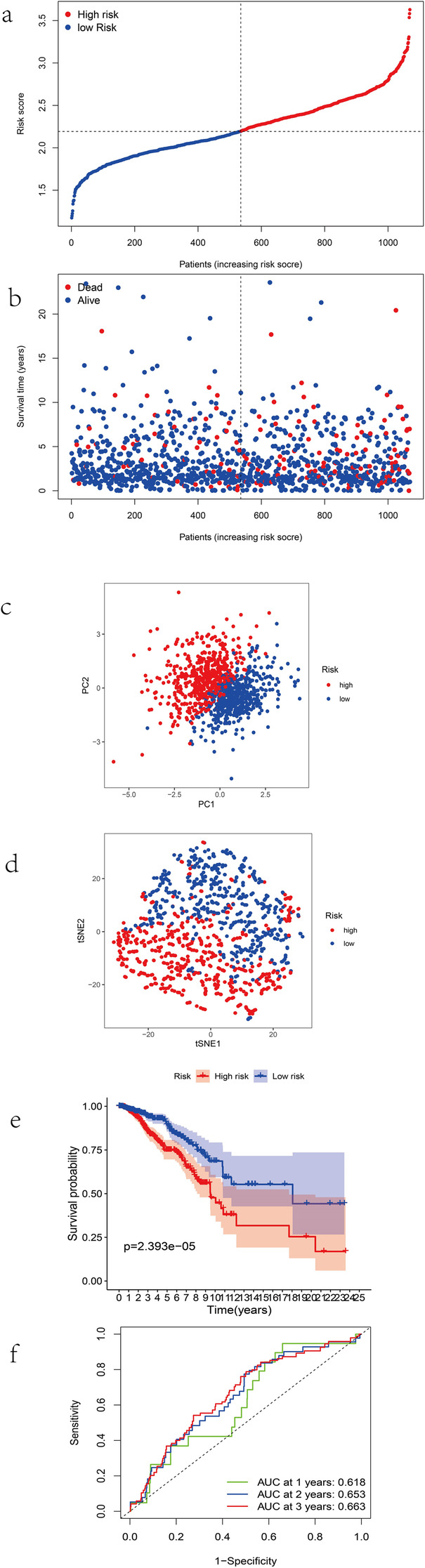
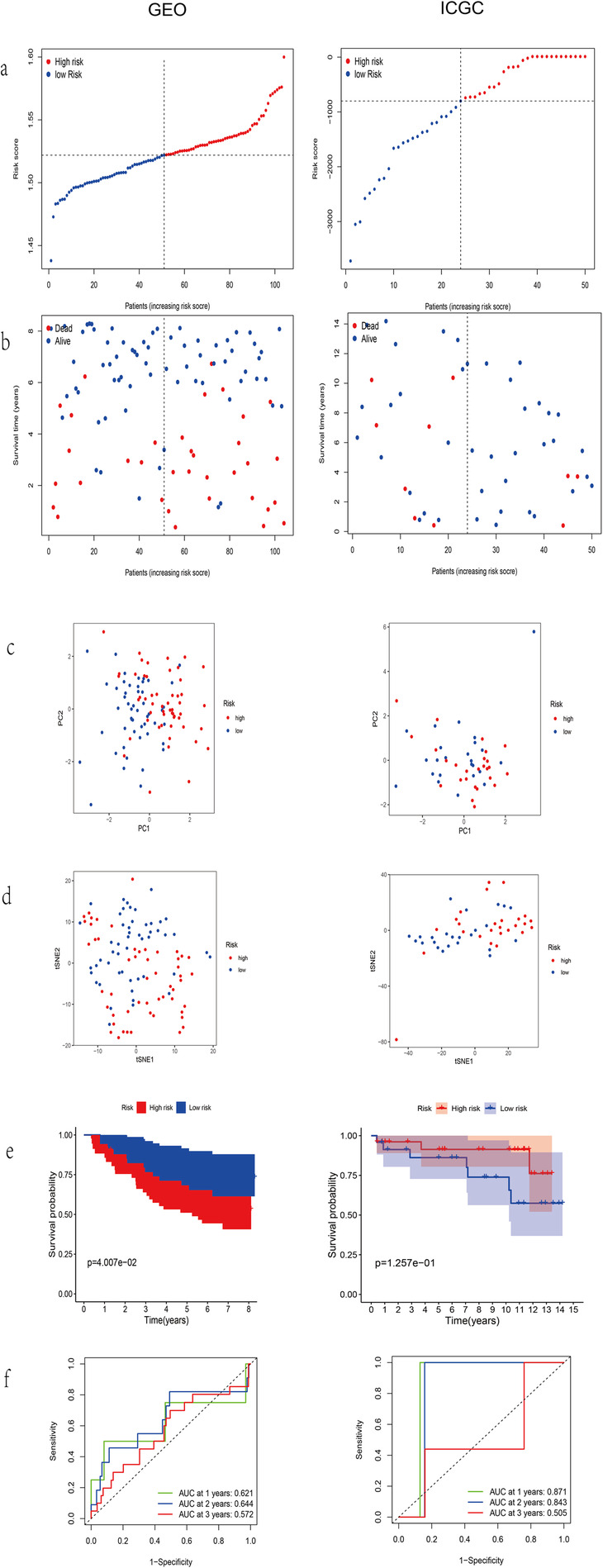
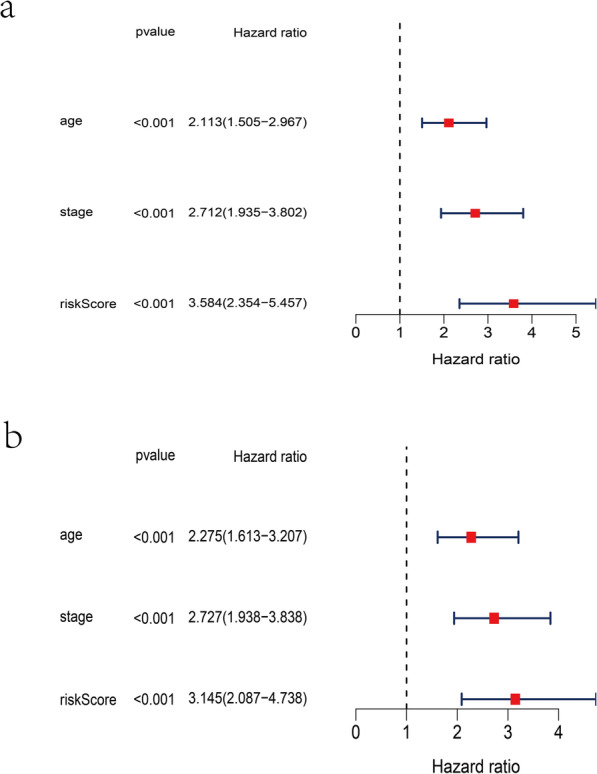
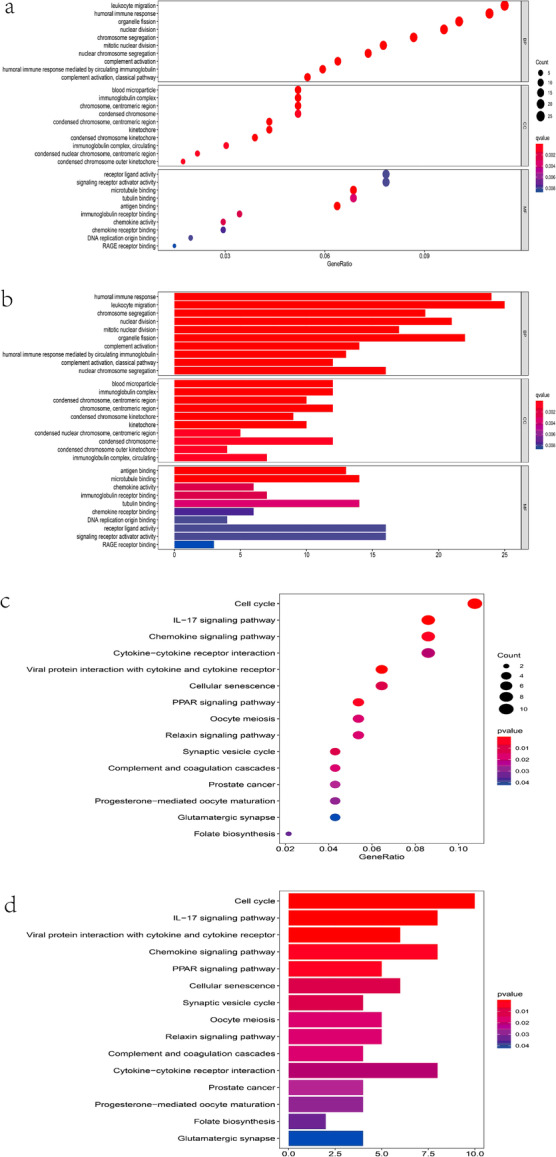
We constructed a prognostic signature consisted of nine ferroptosis-related genes (ALOX15, CISD1, CS, GCLC, GPX4, SLC7A11, EMC2, G6PD and ACSF2). The Kaplan-Meier curves validated the fine predictive accuracy of the prognostic signature (p < 0.001). The area under the curve (AUC) of the ROC curves manifested that the ferroptosis-related signature had moderate predictive power. GO and KEGG functional analysis revealed that immune-related responses were largely enriched, and immune cells, including activated dendritic cells (aDCs), dendritic cells (DCs), T-helper 1 (Th1), were higher in high-risk groups (p < 0.001). Oppositely, type I IFN response and type II IFN response were lower in high-risk groups (p < 0.001).
Our study indicated that the ferroptosis-related prognostic signature gene could serve as a novel biomarker for predicting breast cancer patients' prognosis. Furthermore, we found that immunotherapy might play a vital role in therapeutic schedule based on the level and difference of immune-related cells and pathways in different risk groups for breast cancer patients.
乳腺癌(BRCA)是一种发病率和死亡率都很高的恶性肿瘤,对全球女性健康构成威胁。铁死亡与乳腺癌的发生发展密切相关。在此,我们旨在建立一种与铁死亡相关的预后基因特征,用于预测患者的生存情况。
来自癌症基因组图谱(TCGA)数据库和基因表达综合数据库(GEO)的患者基因表达谱及相应临床信息。利用最小绝对收缩和选择算子(LASSO)惩罚的Cox回归分析模型构建多基因特征。绘制Kaplan-Meier(K-M)曲线和受试者工作特征(ROC)曲线,以验证预后特征的预测效果。对根据风险评分中位数划分的高风险组和低风险组患者进行基因本体论(GO)、京都基因与基因组百科全书(KEGG)通路以及单样本基因集富集分析(ssGSEA)。
我们构建了一个由9个与铁死亡相关的基因(ALOX15、CISD1、CS、GCLC、GPX4、SLC7A11、EMC2、G6PD和ACSF2)组成的预后特征。Kaplan-Meier曲线验证了预后特征的良好预测准确性(p < 0.001)。ROC曲线下面积(AUC)表明,与铁死亡相关的特征具有中等预测能力。GO和KEGG功能分析显示,免疫相关反应大量富集,高风险组中包括活化树突状细胞(aDCs)、树突状细胞(DCs)、辅助性T细胞1(Th1)在内的免疫细胞水平更高(p < 0.001)。相反,高风险组中I型干扰素反应和II型干扰素反应较低(p < 0.001)。
我们的研究表明,与铁死亡相关的预后特征基因可作为预测乳腺癌患者预后的新型生物标志物。此外,基于不同风险组乳腺癌患者免疫相关细胞和通路的水平及差异,我们发现免疫疗法可能在治疗方案中发挥重要作用。