Department of Colorectal Surgery, The Sixth Affiliated Hospital, Sun Yat-Sen University, 26 Yuancun Erheng Rd, Guangzhou, 510655, Guangdong, People's Republic of China.
Guangdong Provincial Key Laboratory of Colorectal and Pelvic Floor Diseases, Guangdong Institute of Gastroenterology, The Sixth Affiliated Hospital, Sun Yat-Sen University, Guangzhou, Guangdong, People's Republic of China.
Mol Med. 2021 Oct 30;27(1):139. doi: 10.1186/s10020-021-00402-3.
Cancer-associated fibroblasts (CAFs) in the tumour microenvironment are associated with poor prognosis and chemoresistance in multiple solid tumours. However, there is a lack of universal measures of CAFs in colorectal cancer (CRC). The aim of this study was to assess the utility of a fibroblast-related gene signature (FRGS) for predicting patient outcomes and reveal its relevant mechanism.
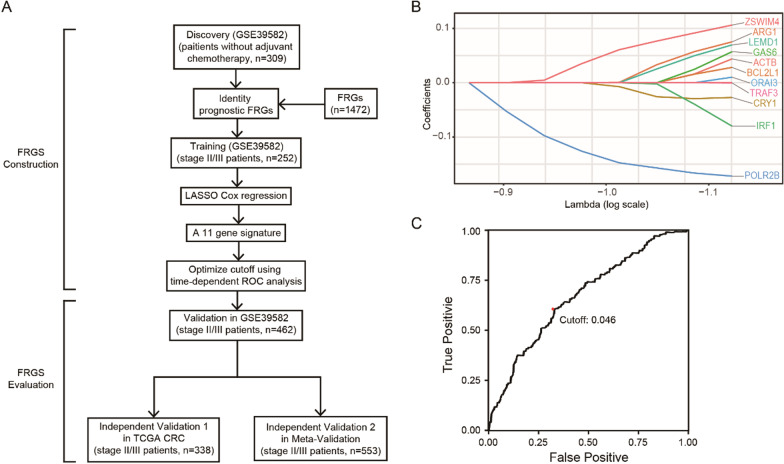
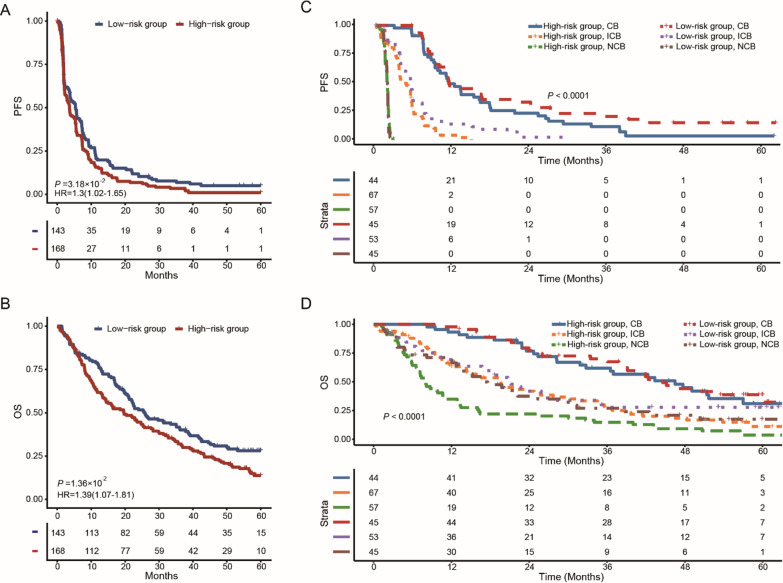
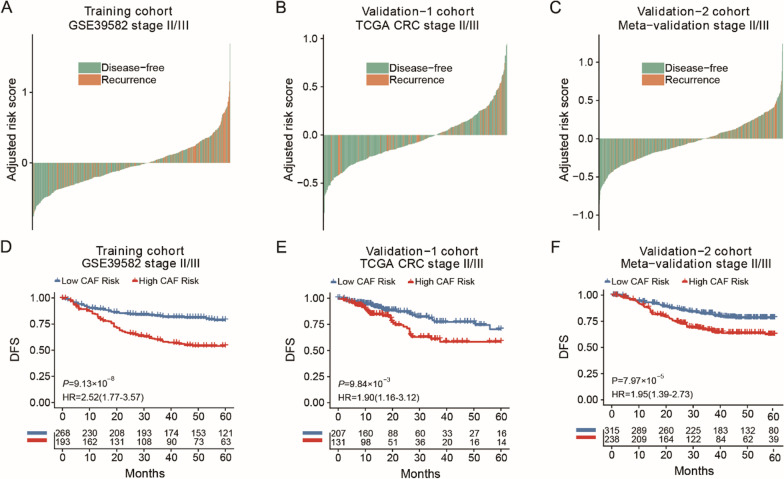
The GSE39582 dataset, which includes 316 CRC patients who did not receive adjuvant chemotherapy was used as a discovery cohort to identify the prognostic fibroblast-related genes (FRGs). A total of 1352 CRC patients were divided into one training cohort (GSE39582, n = 461) and two validation cohorts (TCGA, n = 338; meta-validation, n = 553) for the construction of the FRGS and the verification of its prognostic value in stage II/III CRC patients. Functional annotation and analysis were performed to explore the underlying mechanism. The ability of the FRGS to predict immunotherapy response was further tested in a clear cell renal cell carcinoma (ccRCC) cohort.
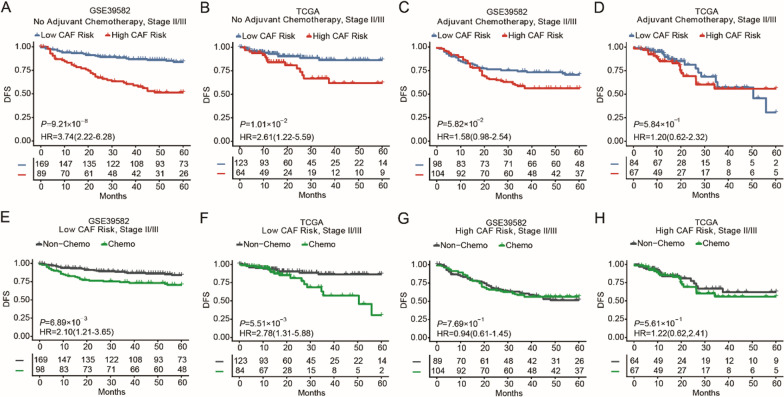
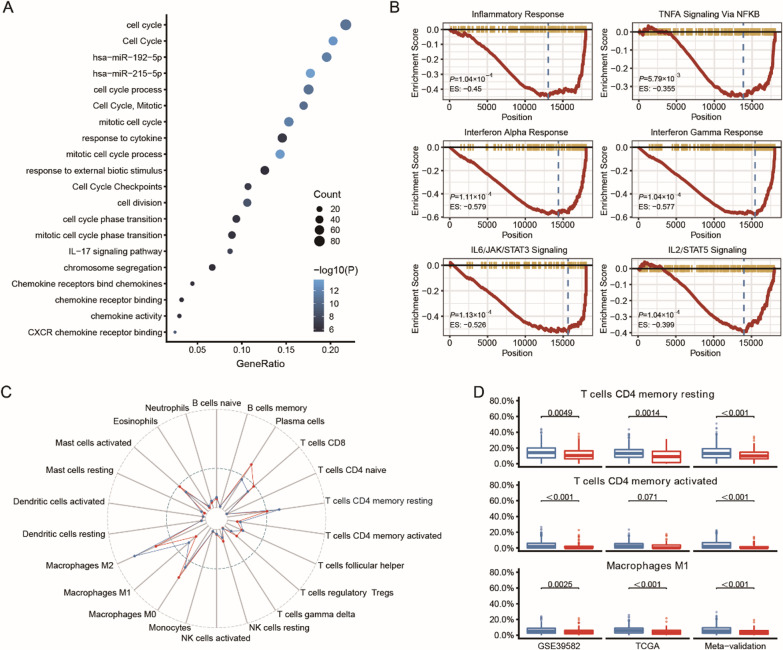
An 11-gene signature that had prognostic value for stage II/III CRC patients in both validation cohorts was developed (TCGA cohort: HR = 1.90, 95% CI 1.16-3.12, P < 0.01; meta-validation cohort: HR = 1.95, 95% CI 1.39-2.73, P < 0.001). A high level of CAFs was correlated with worse prognosis in CRC patients who did not receive adjuvant chemotherapy (HR = 3.63, 95% CI 2.24-5.88, P < 0.001). Importantly, patients in the low-risk group were found to be benefit from chemotherapy (P < 0.01), but not in the high CAF group (P > 0.05). Similar results were found in the TCGA cohort. Integrated with clinical characteristics, the FRGS was confirmed to be an independent prognostic factor in the multivariate analysis after adjustment for tumour TNM stage (GSE39582 cohort: HR = 3.19, 95% CI 1.88-5.41, P < 0.001; TCGA cohort: HR = 5.00, 95% CI 1.58-15.85, P = 0.007; meta-validation cohort: HR = 2.99, 95% CI 1.44-6.21, P = 0.003). Furthermore, the enrichment analysis found that the antitumour immune response was suppressed and the infiltration of CD4 T cells and M1 macrophages was depressed in the high CAF group. The FRGS was also found to have value in predicting for immunotherapy response in the ccRCC cohort.
The 11-gene FRGS had independent prognostic value for CRC patients, as well as utility in the prediction of benefit from chemotherapy. CAFs in the tumour microenvironment might have an impact on the prognosis of CRC patients via inhibiting immune response.
肿瘤微环境中的癌症相关成纤维细胞(CAFs)与多种实体瘤的不良预后和化疗耐药性相关。然而,结直肠癌(CRC)中缺乏普遍的 CAF 测量方法。本研究旨在评估用于预测患者结局和揭示其相关机制的成纤维细胞相关基因特征(FRGS)的效用。
使用包含 316 名未接受辅助化疗的 CRC 患者的 GSE39582 数据集作为发现队列,以确定与预后相关的成纤维细胞基因(FRGs)。共将 1352 名 CRC 患者分为一个训练队列(GSE39582,n=461)和两个验证队列(TCGA,n=338;meta-验证,n=553),用于构建 FRGS 并验证其在 II/III 期 CRC 患者中的预后价值。进行功能注释和分析以探索潜在机制。还在 clear cell renal cell carcinoma (ccRCC) 队列中进一步测试了 FRGS 预测免疫治疗反应的能力。
在两个验证队列中,开发了一个具有 II/III 期 CRC 患者预后价值的 11 基因特征(TCGA 队列:HR=1.90,95%CI 1.16-3.12,P<0.01;meta-验证队列:HR=1.95,95%CI 1.39-2.73,P<0.001)。高水平的 CAFs 与未接受辅助化疗的 CRC 患者的预后较差相关(HR=3.63,95%CI 2.24-5.88,P<0.001)。重要的是,发现低风险组的患者受益于化疗(P<0.01),而在高 CAF 组中则没有(P>0.05)。在 TCGA 队列中也发现了类似的结果。综合临床特征,在调整肿瘤 TNM 分期后,FRGS 在多变量分析中被证实是一个独立的预后因素(GSE39582 队列:HR=3.19,95%CI 1.88-5.41,P<0.001;TCGA 队列:HR=5.00,95%CI 1.58-15.85,P=0.007;meta-验证队列:HR=2.99,95%CI 1.44-6.21,P=0.003)。此外,富集分析发现,高 CAF 组的抗肿瘤免疫反应受到抑制,CD4 T 细胞和 M1 巨噬细胞的浸润受到抑制。FRGS 还具有预测 ccRCC 队列免疫治疗反应的价值。
11 基因 FRGS 对 CRC 患者具有独立的预后价值,并可用于预测化疗获益。肿瘤微环境中的 CAFs 可能通过抑制免疫反应对 CRC 患者的预后产生影响。