School of Chemical Engineering, Sungkyunkwan University, Suwon, 440-746, Republic of Korea.
Department of Chemical Engineering, College of Engineering, Kyung Hee University, Yongin, 17104, Republic of Korea.
J Nanobiotechnology. 2021 Oct 30;19(1):352. doi: 10.1186/s12951-021-01098-7.
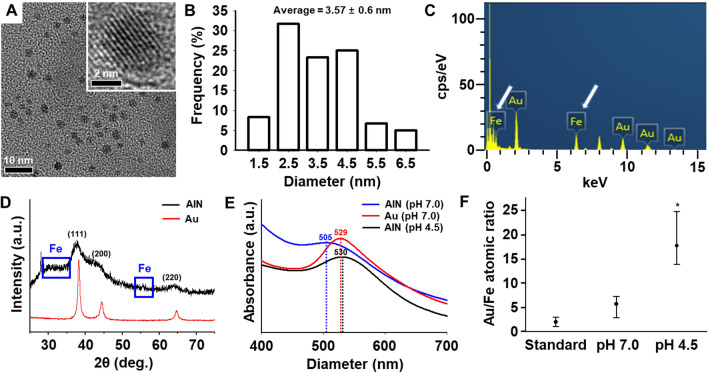
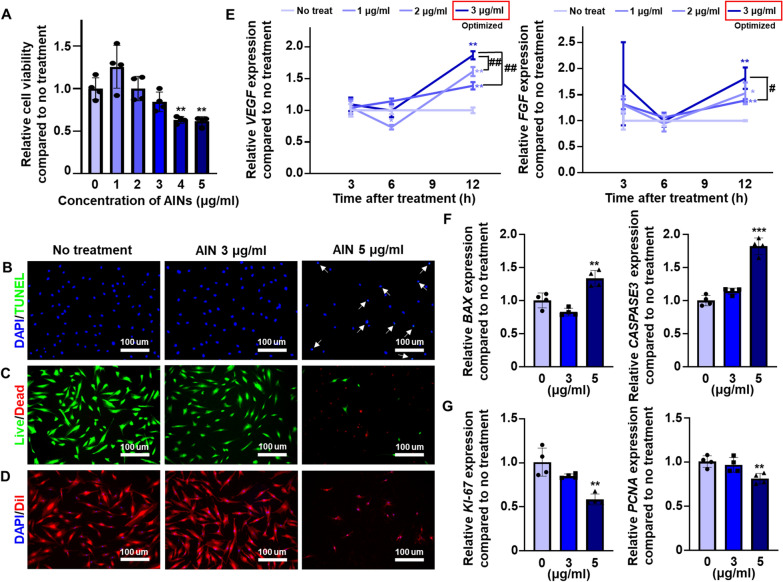
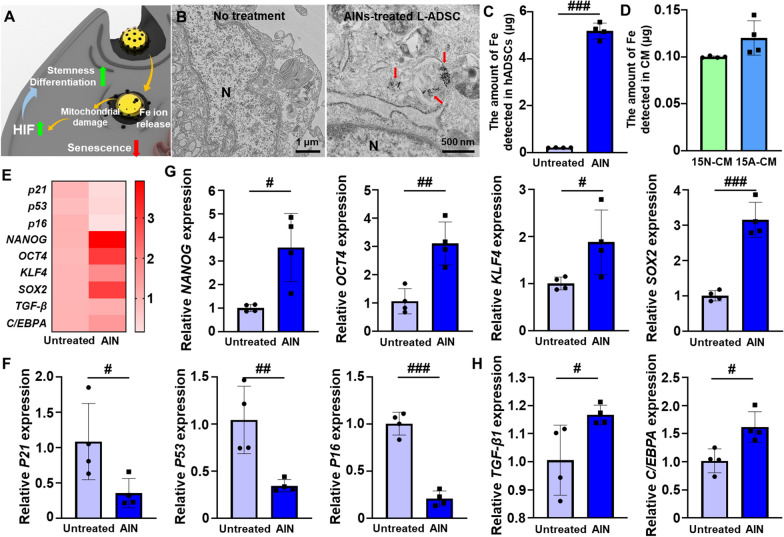
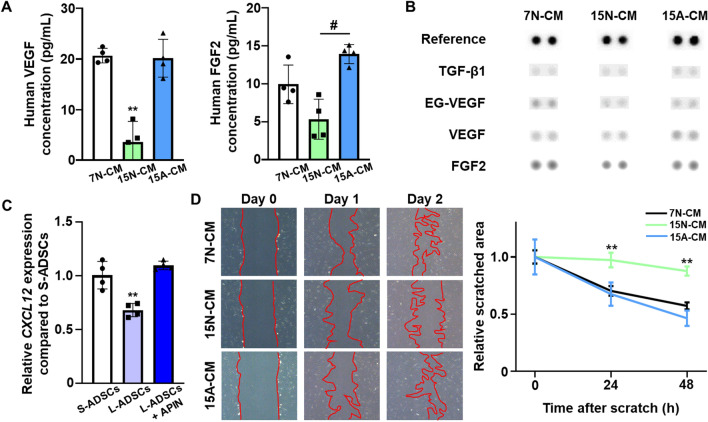
Human adipose-derived stem cells (hADSCs) have been used in various fields of tissue engineering because of their promising therapeutic efficacy. However, the stemness of hADSCs cannot be maintained for long durations, and their therapeutic cellular functions, such as paracrine factor secretion decrease during long-term cell culture. To facilitate the use of long-term-cultured hADSCs (L-ADSCs), we designed a novel therapeutic anti-senescence ion-delivering nanocarrier (AIN) that is capable of recovering the therapeutic properties of L-ADSCs. In the present study, we introduced a low-pH-responsive ion nanocarrier capable of delivering transition metal ions that can enhance angiogenic paracrine factor secretion from L-ADSCs. The AINs were delivered to L-ADSCs in an intracellular manner through endocytosis.
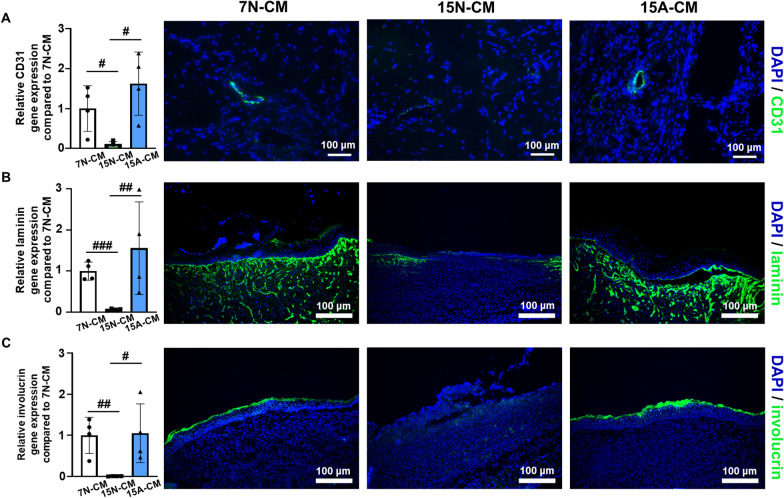
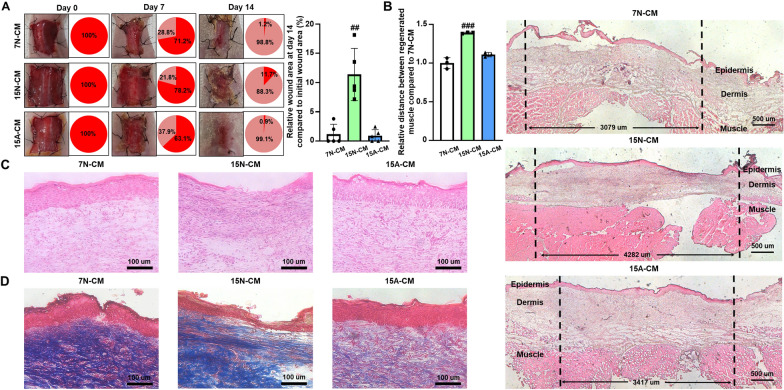
Low pH conditions within the endosomes induced the release of transition metal ions (Fe) into the L-ADSCs that in turn caused a mild elevation in the levels of reactive oxygen species (ROS). This mild elevation in ROS levels induced a downregulation of senescence-related gene expression and an upregulation of stemness-related gene expression. The angiogenic paracrine factor secretion from L-ADSCs was significantly enhanced, and this was evidenced by the observed therapeutic efficacy in response to treatment of a wound-closing mouse model with conditioned medium obtained from AIN-treated L-ADSCs that was similar to that observed in response to treatment with short-term-cultured adipose-derived stem cells.
This study suggests a novel method and strategy for cell-based tissue regeneration that can overcome the limitations of the low stemness and therapeutic efficacy of stem cells that occurs during long-term cell culture.
人脂肪来源干细胞(hADSCs)由于其有希望的治疗效果,已被用于组织工程的各个领域。然而,hADSCs 的干性不能长期维持,并且它们的治疗细胞功能,如旁分泌因子分泌,在长期细胞培养过程中会减少。为了促进长期培养的 hADSCs(L-ADSCs)的使用,我们设计了一种新型的治疗性抗衰老离子递药纳米载体(AIN),能够恢复 L-ADSCs 的治疗特性。在本研究中,我们引入了一种低 pH 响应的离子纳米载体,能够递送电离金属离子,增强 L-ADSCs 的血管生成旁分泌因子分泌。AINs 通过内吞作用以细胞内的方式递送到 L-ADSCs 中。
内涵体中的低 pH 条件诱导过渡金属离子(Fe)释放到 L-ADSCs 中,进而导致活性氧(ROS)水平轻度升高。这种轻度升高的 ROS 水平引起衰老相关基因表达的下调和干性相关基因表达的上调。L-ADSCs 的血管生成旁分泌因子分泌显著增强,这可以从用 AIN 处理的 L-ADSCs 的条件培养基处理伤口闭合小鼠模型观察到的治疗效果中得到证明,该效果与用短期培养的脂肪来源干细胞处理的效果相似。
本研究提出了一种新的基于细胞的组织再生方法和策略,可以克服长期细胞培养中干细胞干性和治疗效果降低的局限性。