The Liver Unit, Queen Elizabeth Hospital Birmingham, Birmingham, United Kingdom.
Centre for Liver and Gastrointestinal Research and National Institute for Health Research (NIHR) Birmingham Biomedical Research Centre, Institute of Immunology and Immunotherapy, University of Birmingham, Birmingham, United Kingdom.
Front Immunol. 2021 Oct 14;12:719954. doi: 10.3389/fimmu.2021.719954. eCollection 2021.
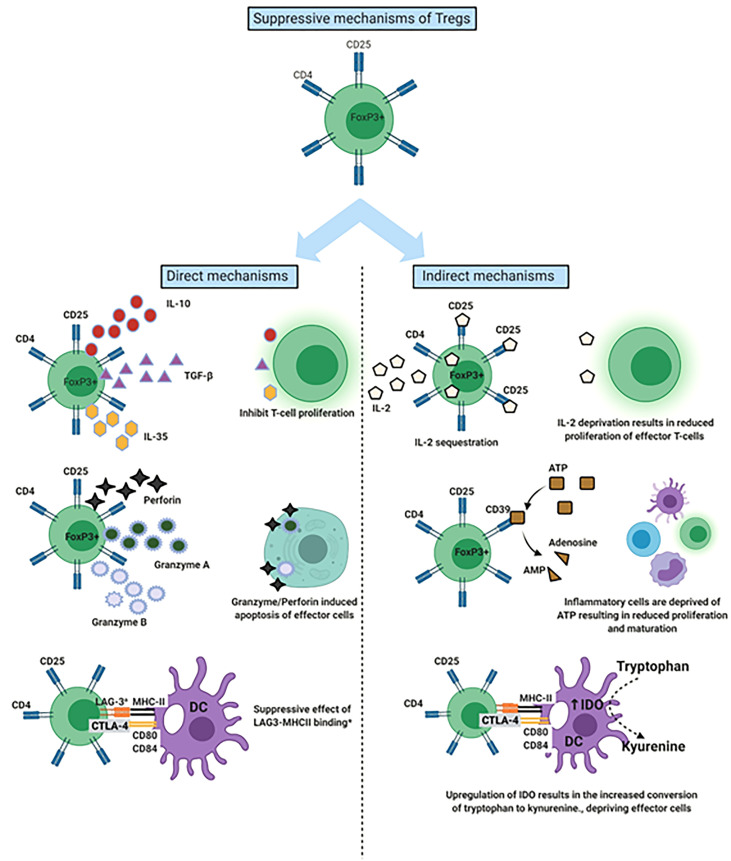
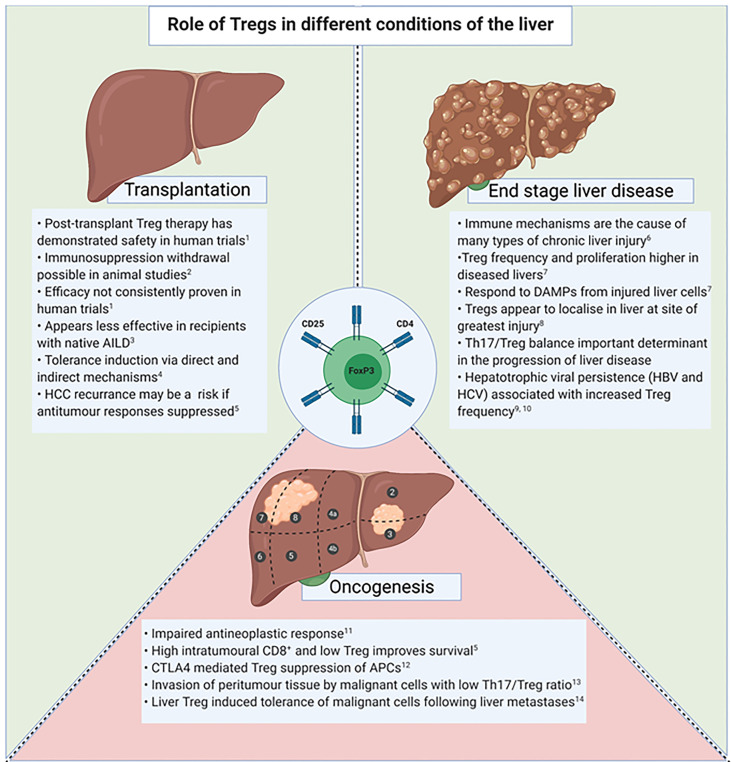
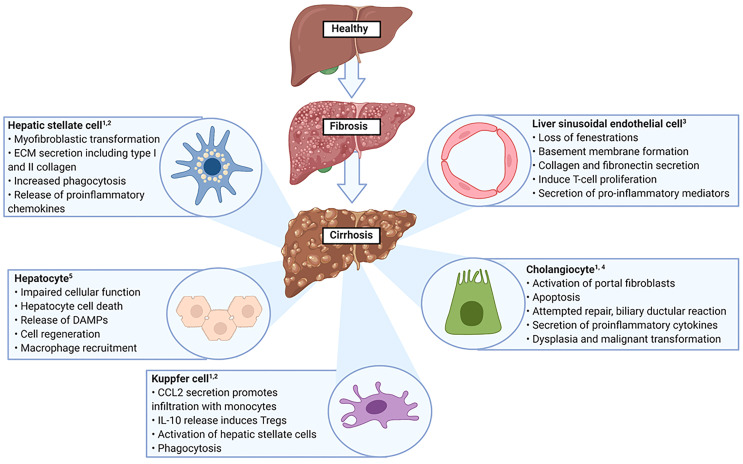
The constant exposure of the liver to gut derived foreign antigens has resulted in this organ attaining unique immunological characteristics, however it remains susceptible to immune mediated injury. Our understanding of this type of injury, in both the native and transplanted liver, has improved significantly in recent decades. This includes a greater awareness of the tolerance inducing CD4 CD25 CD127 T-cell lineage with the transcription factor FoxP3, known as regulatory T-Cells (Tregs). These cells comprise 5-10% of CD4 T cells and are known to function as an immunological "braking" mechanism, thereby preventing immune mediated tissue damage. Therapies that aim to increase Treg frequency and function have proved beneficial in the setting of both autoimmune diseases and solid organ transplantations. The safety and efficacy of Treg therapy in liver disease is an area of intense research at present and has huge potential. Due to these cells possessing significant plasticity, and the potential for conversion towards a T-helper 1 (Th1) and 17 (T17) subsets in the hepatic microenvironment, it is pre-requisite to modify the microenvironment to a Treg favourable atmosphere to maintain these cells' function. In addition, implementation of therapies that effectively increase Treg functional activity in the liver may result in the suppression of immune responses and will hinder those that destroy tumour cells. Thus, fine adjustment is crucial to achieve this immunological balance. This review will describe the hepatic microenvironment with relevance to Treg function, and the role these cells have in both native diseased and transplanted livers.
肝脏不断暴露于肠道来源的外来抗原,导致该器官获得独特的免疫特征,但仍易受到免疫介导的损伤。在过去几十年中,我们对这种在天然和移植肝脏中发生的损伤类型的理解有了显著提高。这包括对具有转录因子 FoxP3 的 CD4 CD25 CD127 T 细胞谱系(称为调节性 T 细胞[Tregs])诱导耐受的认识不断提高。这些细胞占 CD4 T 细胞的 5-10%,已知其作为免疫“制动”机制发挥作用,从而防止免疫介导的组织损伤。旨在增加 Treg 频率和功能的疗法已被证明在自身免疫性疾病和实体器官移植中是有益的。目前,Treg 疗法在肝脏疾病中的安全性和有效性是一个研究热点,具有巨大的潜力。由于这些细胞具有显著的可塑性,并且在肝微环境中有可能向 T 辅助 1(Th1)和 17(T17)亚群转化,因此必须改变微环境使其有利于 Treg,以维持这些细胞的功能。此外,实施可有效增加肝脏中 Treg 功能活性的疗法可能会抑制免疫反应,并阻碍那些破坏肿瘤细胞的反应。因此,精细调节对于实现这种免疫平衡至关重要。这篇综述将描述与 Treg 功能相关的肝微环境,以及这些细胞在天然患病和移植肝脏中的作用。