Doherty Sean Paul, Henderson Stuart, Fiddyment Sarah, Finch Jonathan, Collins Matthew J
Department of Archaeology, University of Exeter, Exeter, UK.
Department of Archaeology, University of York, York, UK.
Herit Sci. 2021;9(1):29. doi: 10.1186/s40494-021-00503-6. Epub 2021 Mar 25.
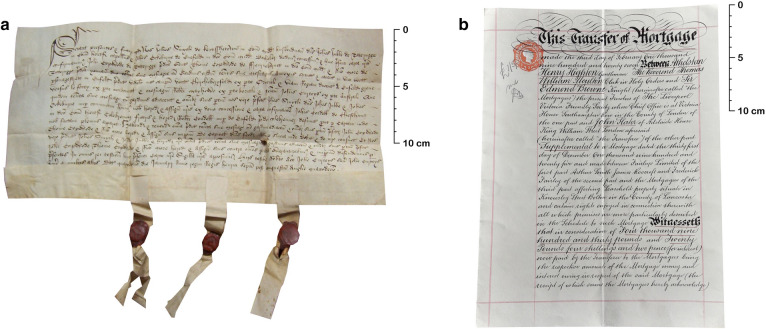
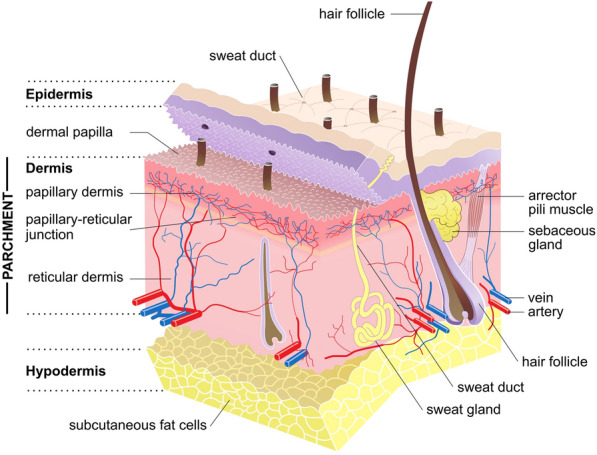
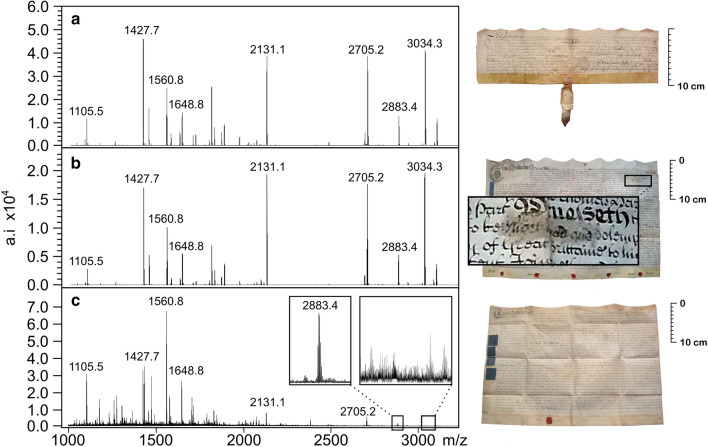
Historic legal deeds are one of the most abundant resources in British archives, but also one of the most neglected. Despite the millions that survive, we know remarkably little about their manufacture, including the species of animal on which they were written. Here we present the species identification of 645 sixteenth-twentieth century skins via peptide mass fingerprinting (ZooMS), demonstrating the preferential use of sheepskin parchment. We argue that alongside their abundance and low cost, the use of sheepskins over those of other species was motivated by the increased visibility of fraudulent text erasure and modification afforded by the unique structure of their skin.
The online version contains supplementary material available at 10.1186/s40494-021-00503-6.
历史法律契约是英国档案中最丰富的资源之一,但也是最被忽视的资源之一。尽管现存数百万份,但我们对它们的制作过程知之甚少,包括书写它们所用的动物种类。在这里,我们通过肽质量指纹图谱(ZooMS)对645张16至20世纪的兽皮进行了物种鉴定,证明了羊皮纸的优先使用。我们认为,除了数量丰富和成本低廉之外,使用羊皮而非其他物种的皮是因为其独特的皮肤结构能使欺诈性文本擦除和修改更易被发现。
在线版本包含可在10.1186/s40494-021-00503-6获取的补充材料。