Deng Shanshan, Solinas Antonio, Calvisi Diego F
Department of Bioengineering and Therapeutic Sciences and Liver Center, University of California, San Francisco, San Francisco, CA, United States.
Department of Biomedical Sciences, University of Sassari, Sassari, Italy.
Front Oncol. 2021 Oct 13;11:756672. doi: 10.3389/fonc.2021.756672. eCollection 2021.
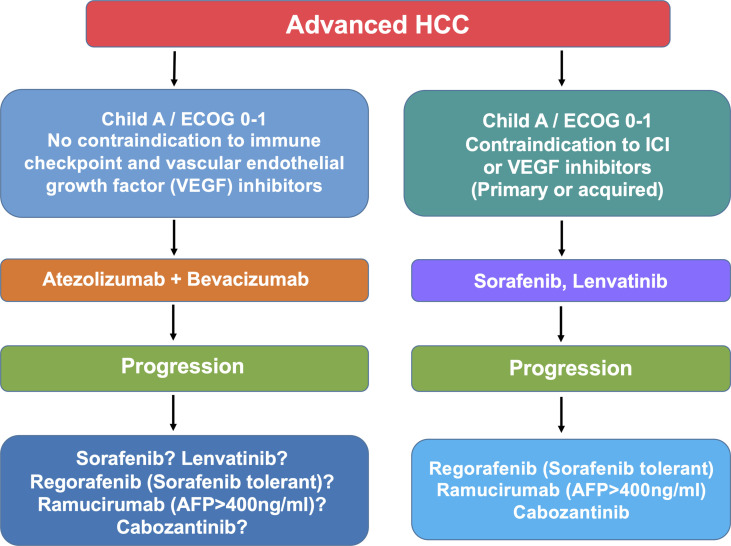
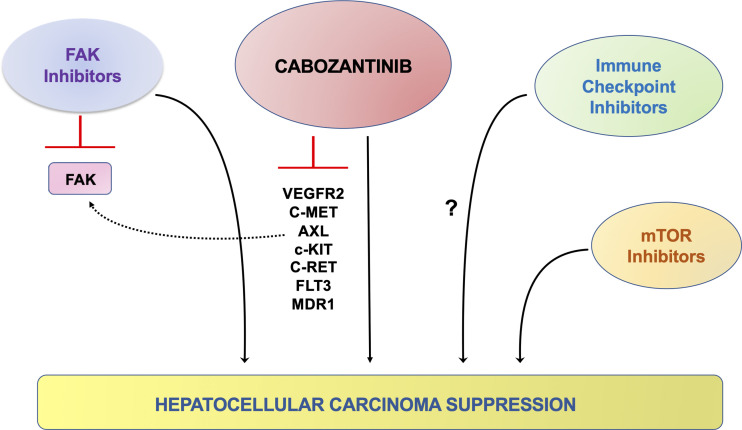
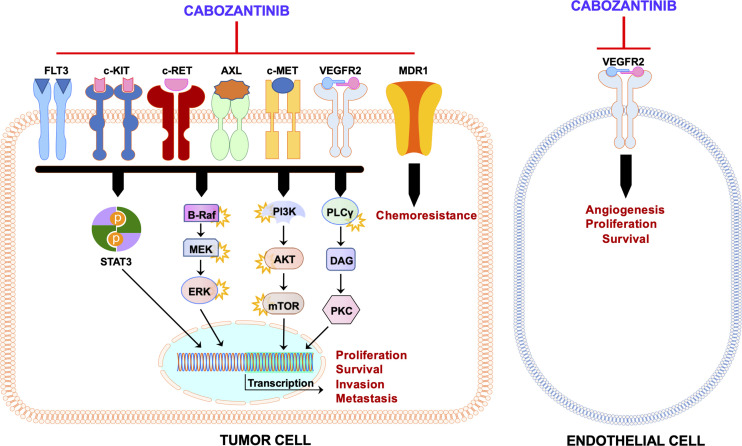
Hepatocellular carcinoma (HCC) is the fourth leading cause of cancer-related mortality worldwide. Patients with early-stage HCC can be treated successfully with surgical resection or liver transplantation. However, the usual late diagnosis of HCC precludes curative treatments, and systemic therapies are the only viable option for inoperable patients. Sorafenib, an orally available multikinase inhibitor, is a systemic therapy approved for treating patients with advanced HCC yet providing limited benefits. Consequently, new drugs have been developed to overcome sorafenib resistance and improve patients' prognoses. A new promising strategy is using c-MET inhibitors, such as cabozantinib, as activation of c-MET occurs in up to 40% of HCC patients. In particular, cabozantinib, in combination with the checkpoint inhibitor atezolizumab, is currently in phase 3 clinical trial for HCC, and the results are eagerly awaited. Herein, we summarize and review the drugs approved for the treatment of advanced HCC, mainly focusing on the clinical and preclinical efficacy evaluation of cabozantinib. Also, we report the available preclinical data on cabozantinib-based combination therapies for HCC, current obstacles for cabozantinib therapy, and the future directions for cabozantinib-based treatment for HCC.
肝细胞癌(HCC)是全球癌症相关死亡的第四大主要原因。早期HCC患者可通过手术切除或肝移植成功治疗。然而,HCC通常诊断较晚,无法进行根治性治疗,对于无法手术的患者,全身治疗是唯一可行的选择。索拉非尼是一种口服多激酶抑制剂,是一种被批准用于治疗晚期HCC的全身治疗药物,但疗效有限。因此,已开发出新药以克服索拉非尼耐药性并改善患者预后。一种新的有前景的策略是使用c-MET抑制剂,如卡博替尼,因为高达40%的HCC患者会出现c-MET激活。特别是,卡博替尼与检查点抑制剂阿替利珠单抗联合使用,目前正处于HCC的3期临床试验中,结果备受期待。在此,我们总结并综述了被批准用于治疗晚期HCC的药物,主要侧重于卡博替尼的临床和临床前疗效评估。此外,我们报告了关于卡博替尼用于HCC联合治疗的现有临床前数据、卡博替尼治疗的当前障碍以及基于卡博替尼的HCC治疗的未来方向。