University of Arizona College of Medicine - Phoenix, 475 N 5th St, Phoenix, AZ, 85004, USA.
BMC Med Educ. 2021 Nov 1;21(1):556. doi: 10.1186/s12909-021-02989-x.
Students with a greater number of research experiences are more successful in the National Residency Match Program (NRMP.) As a result, approximately two-thirds of allopathic medical schools have implemented a scholarly research project (SP) as a part of their curriculum. While inclusion of an SP in the medical school curriculum increases research productivity, literature to date has not investigated the frequency with which it is a discussion topic during residency interviews.
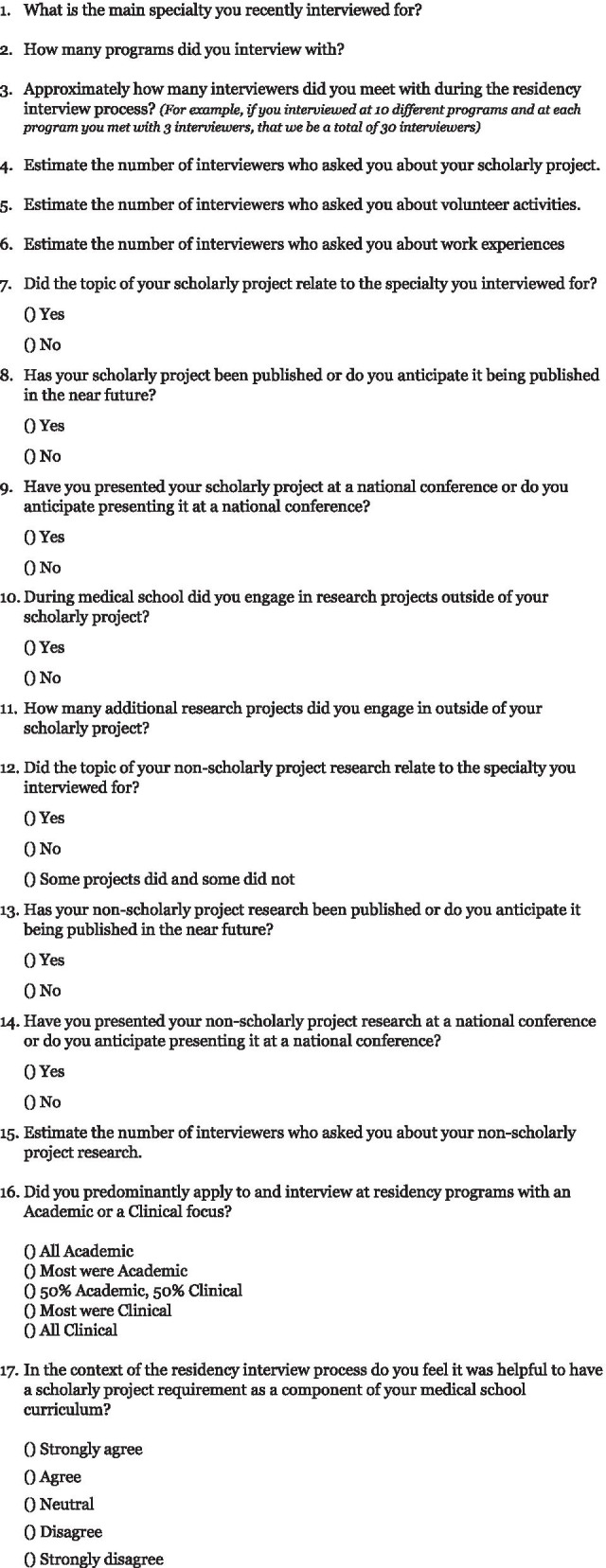
One hundred twenty-three students from the graduating class of 2019 and 2020 at the University of Arizona College of Medicine - Phoenix (UACOMP) completed a 17-question survey examining the student's SP and whether they completed additional research, with an overall response rate of 82.6%. Survey participants were asked to quantify how many residency interviewers asked about their SP or additional research during the interview process.
Twenty-seven percent of interviewers asked students about their SP and 41% of interviewers asked students about additional non-SP research. 40% of interviewers asked about research overall to include SP and/or non-SP research. A greater percentage of interviewers (50%) asked students about their SP if they had undertaken additional research compared to interviewers of students who did not undertake additional research (29%, p = 0.0237). A greater percentage of interviewers at academic institutions (31%) asked students about their SP, compared with a smaller percentage of interviewers at predominantly non-academic programs (22%, p = 0.0054). There were no significant differences in the proportion of interviewers asking about the SP based on the type of specialty, competitiveness of specialty, relatedness project topic to specialty, and publication/presentation status of project.
Student research experiences may serve as a frequent discussion topic during the residency interview. Approximately one-quarter of interviewers ask about the SP regardless of specialty, research topic, and publication/presentation status of the project. Students with additional research experiences beyond their SP may experience a higher percentage of interviewers asking about their SP. Also, students applying to predominantly academic programs may experience a higher proportion of interview questions about research compared to peers interviewing at non-academic programs.
在全国住院医师匹配项目 (NRMP) 中,有更多研究经验的学生更成功。因此,大约三分之二的医学院都将学术研究项目 (SP) 作为课程的一部分。虽然在医学院课程中纳入 SP 会增加研究成果,但迄今为止,文献并未调查它在住院医师面试中被讨论的频率。
亚利桑那大学医学院凤凰城分校 (UACOMP) 2019 年和 2020 年毕业的 123 名学生完成了一项包含 17 个问题的调查,调查学生的 SP 以及他们是否完成了额外的研究,总体回复率为 82.6%。调查参与者被要求量化有多少住院医师面试官在面试过程中询问他们的 SP 或额外的研究。
27%的面试官询问学生的 SP,41%的面试官询问学生的非 SP 研究。40%的面试官询问整体研究,包括 SP 和/或非 SP 研究。与没有进行额外研究的学生相比,进行额外研究的学生的面试官(50%)询问学生的 SP 比例更高(29%,p=0.0237)。与主要是非学术项目的面试官相比(22%,p=0.0054),学术机构的面试官询问学生 SP 的比例更高(31%)。根据专业的竞争程度、专业的相关性、项目主题与专业的相关性以及项目的出版/演示状态,询问 SP 的面试官比例没有显著差异。
学生的研究经验可能是住院医师面试中的一个常见讨论话题。大约四分之一的面试官会询问 SP,无论专业、研究主题和项目的出版/演示状态如何。学生在 SP 之外有额外的研究经验,可能会有更高比例的面试官询问他们的 SP。此外,与在非学术项目面试的同龄人相比,申请主要学术项目的学生可能会遇到更多关于研究的面试问题。