Jin Ye, Zhou Wangxiao, Zhan Qing, Zheng Beiwen, Chen Yunbo, Luo Qixia, Shen Ping, Xiao Yonghong
State Key Laboratory for Diagnosis and Treatment of Infectious Diseases, National Clinical Research Center for Infectious Diseases, Collaborative Innovation Center for Diagnosis and Treatment of Infectious Diseases, The First Affiliated Hospital, Zhejiang University School of Medicine, Hangzhou, China.
Infection Control Department, The First Affiliated Hospital, Zhejiang University School of Medicine, Hangzhou, China.
mSystems. 2021 Dec 21;6(6):e0083721. doi: 10.1128/mSystems.00837-21. Epub 2021 Nov 2.
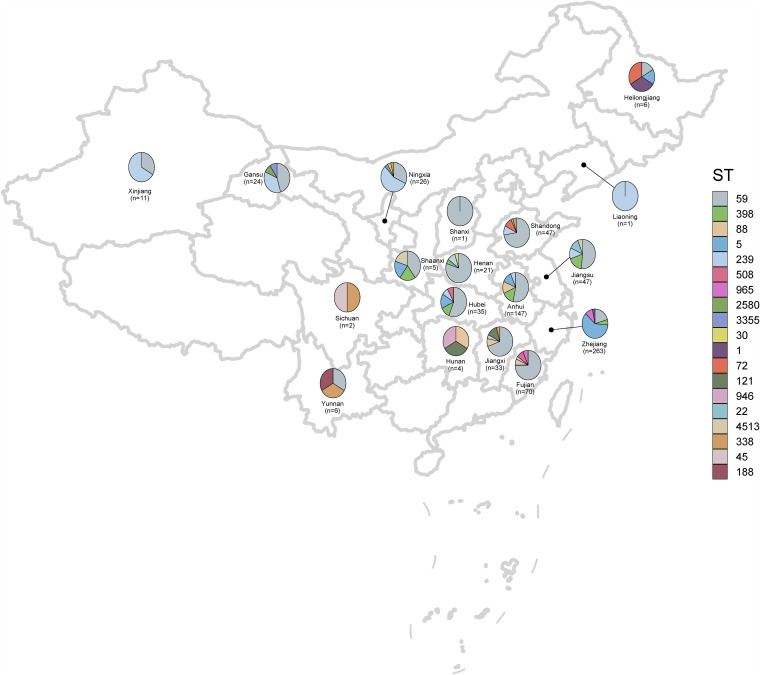
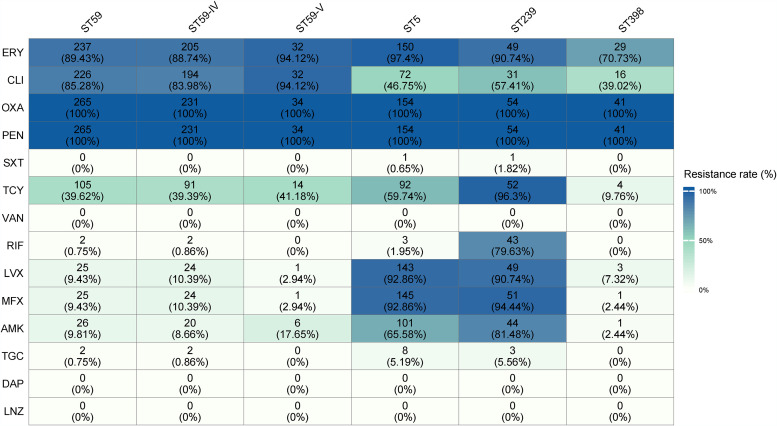
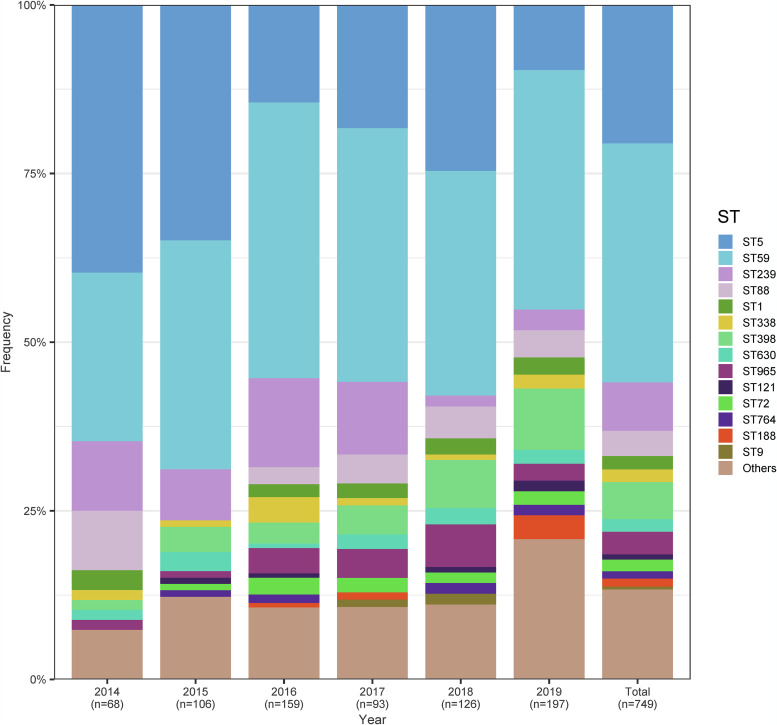
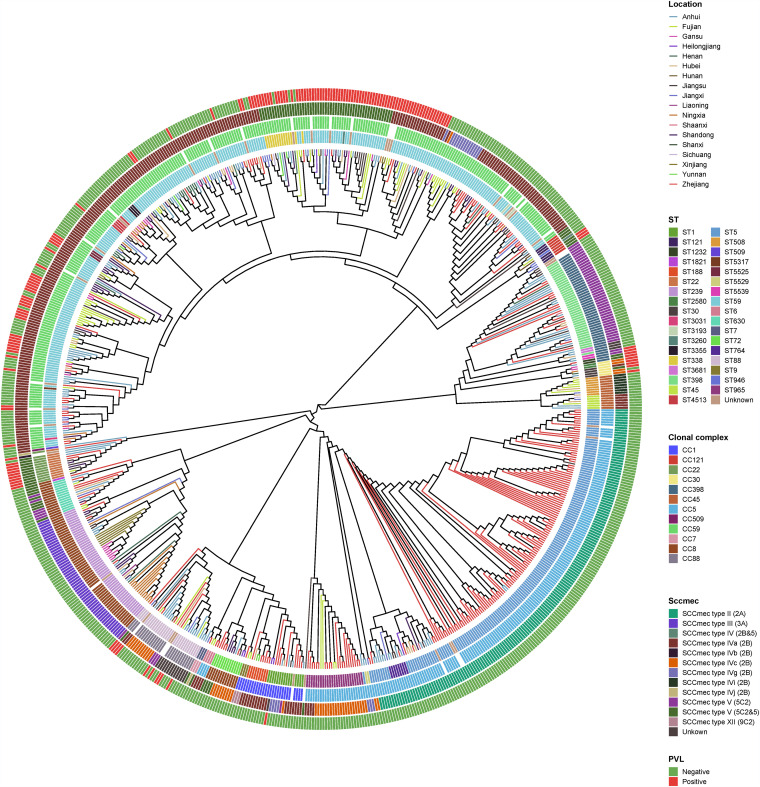
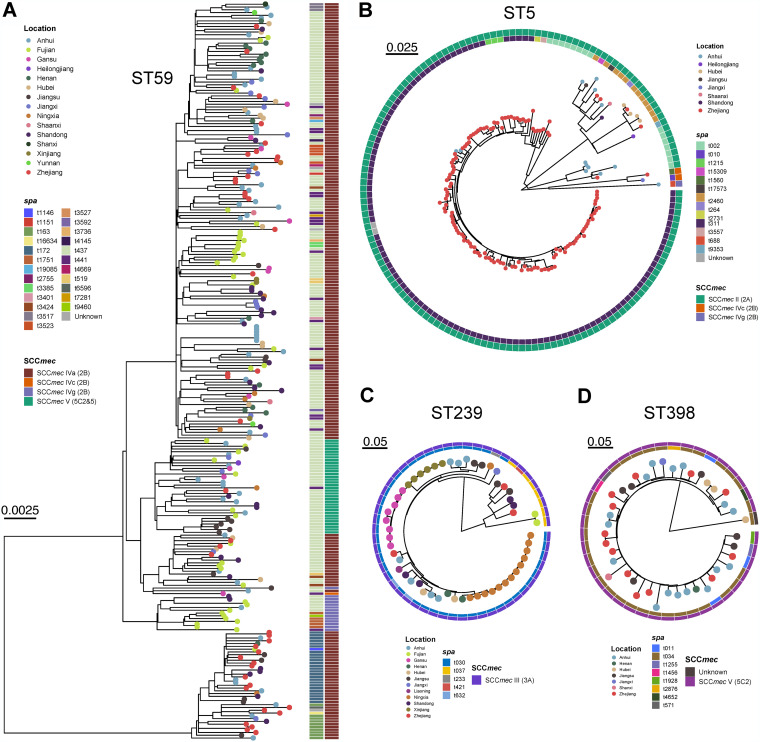
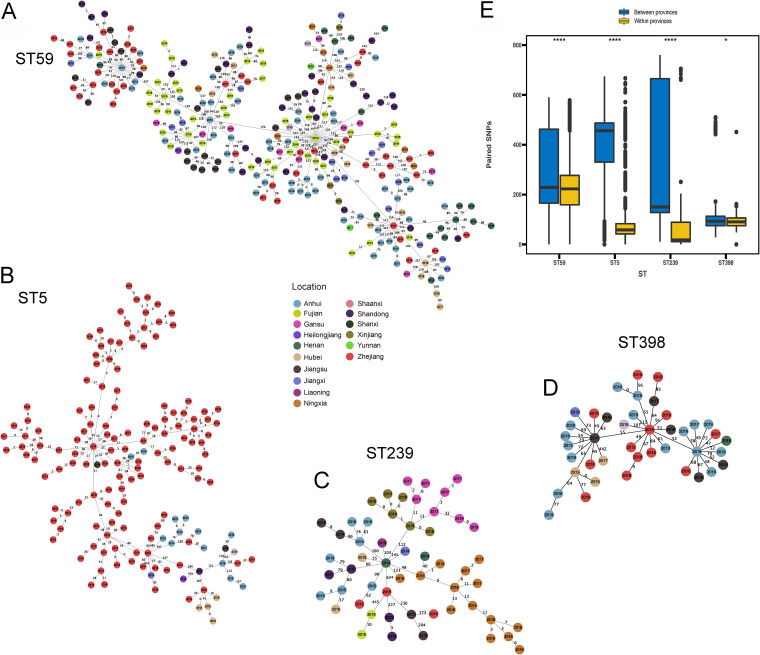
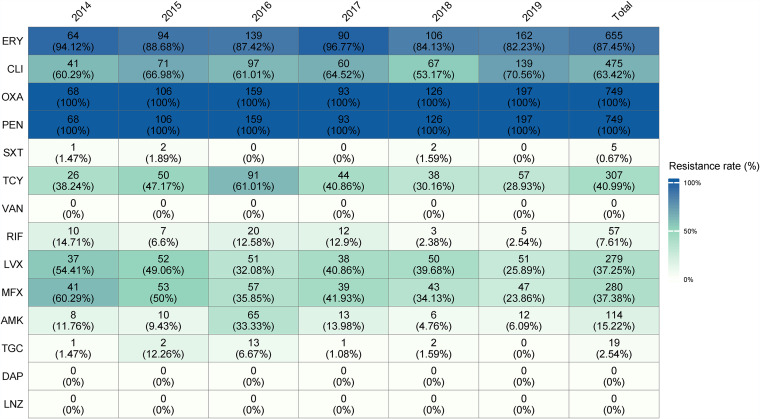
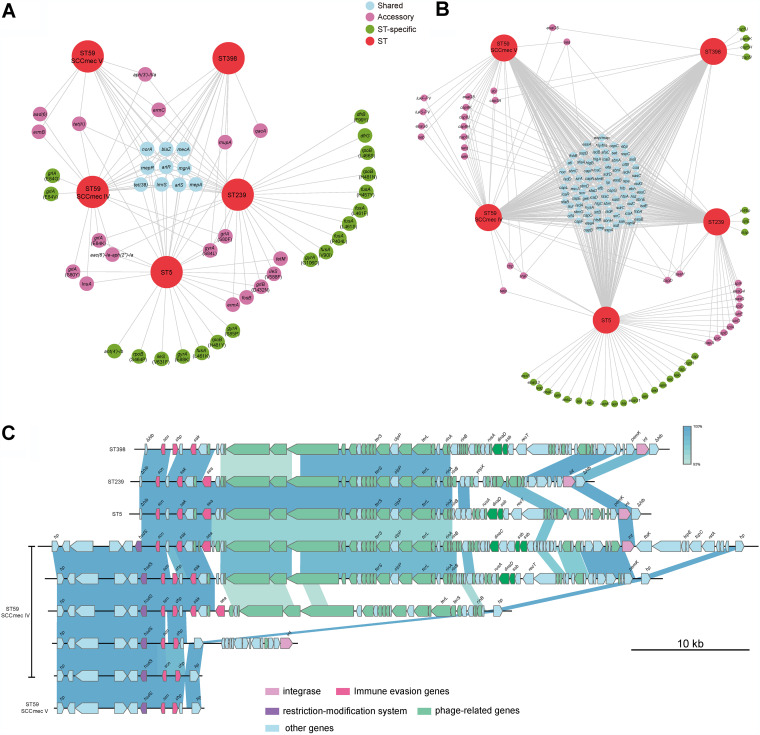
Since 2010, methicillin-resistant (MRSA) ST59 began to increase in prevalence in China, gradually replacing ST239 and has become the dominant clone in most hospitals in China. Here, we investigated the changing epidemiology, phylogenetic reconstruction, and genomic characterization of MRSA clones in China to identify the genomic driving factors in the prevalence of ST59. Most MRSA isolates were identified as ST59 (36.98%; 277/749), which increased from 25.09% in 2014 to 35.53% in 2019. The phylogenetic analysis of the 749 MRSA isolates showed a high level of diversity and the copresence of hospital-associated, community-associated, livestock-associated, and hypervirulent clones. Furthermore, minimum spanning trees revealed that ST59 MRSA clones from different hospitals and regions were integrated, suggesting that frequent exchanges had occurred between regions and hospitals. ST59 clones displayed higher susceptibility to antimicrobials than did ST239 and ST5 MRSA clones, indicating that resistance to non-β-lactam and fluoroquinolone antibiotics may be not critical for the epidemic success of ST59 clones. Virulence factors detection showed that and genes enriched in MRSA ST59 may be associated with the enhanced spreading success of ST59, whereas may have contributed to the predominance of ST5 in East China. Our refined analysis of different clones among ST239, ST5, ST59, and ST398 demonstrated the existence of potential driving factors for the evolution of nosocomial MRSA populations and diversity of the evolutionary events surrounding clonal replacement. As a developing country, China has an unbalanced health care system due to regional differences in economic development. However, China is also a country worthy of study with regard to the population dynamics of MRSA within the more resource-rich health care systems. In this study, we carried out genomic analysis to investigate the genomic epidemiology and characterization of MRSA isolated from bloodstream infections over a timespan of 6 years. Our refined analysis of different MRSA clones among ST59, ST5, ST239, and ST398 demonstrated the existence of driving factors for the evolution of nosocomial MRSA populations and diversity of the evolutionary events surrounding clonal replacement.
自2010年以来,耐甲氧西林金黄色葡萄球菌(MRSA)ST59在中国的流行率开始上升,逐渐取代ST239,并已成为中国大多数医院中的优势克隆株。在此,我们调查了中国MRSA克隆株的流行病学变化、系统发育重建及基因组特征,以确定ST59流行的基因组驱动因素。大多数MRSA分离株被鉴定为ST59(36.98%;277/749),其比例从2014年的25.09%升至2019年的35.53%。对749株MRSA分离株的系统发育分析显示出高度的多样性,且存在医院相关、社区相关、家畜相关及高毒力克隆株。此外,最小生成树显示来自不同医院和地区的ST59 MRSA克隆株相互整合,表明地区和医院之间频繁发生了交换。与ST239和ST5 MRSA克隆株相比,ST59克隆株对抗菌药物表现出更高的敏感性,这表明对非β-内酰胺类和氟喹诺酮类抗生素的耐药性可能对ST59克隆株的流行成功并不关键。毒力因子检测表明,MRSA ST59中富集的 和 基因可能与ST59传播成功增强有关,而 可能促成了ST5在华东地区的优势地位。我们对ST239、ST5、ST59和ST398中不同克隆株的精细分析表明,存在医院内MRSA群体进化的潜在驱动因素以及围绕克隆替代的进化事件的多样性。作为一个发展中国家,由于经济发展的地区差异,中国的医疗保健系统不均衡。然而,就资源较为丰富的医疗保健系统中MRSA的种群动态而言,中国也是一个值得研究的国家。在本研究中,我们进行了基因组分析,以调查6年间从血流感染中分离出的MRSA的基因组流行病学和特征。我们对ST59、ST5、ST239和ST398中不同MRSA克隆株的精细分析表明,存在医院内MRSA群体进化的驱动因素以及围绕克隆替代的进化事件的多样性。