Research Hub for Coral Reef Ecosystem Functions, College of Science and Engineering, James Cook University, Townsville, Australia.
ARC Centre of Excellence for Coral Reef Studies, James Cook University, Townsville, Australia.
PLoS Biol. 2021 Nov 2;19(11):e3001435. doi: 10.1371/journal.pbio.3001435. eCollection 2021 Nov.
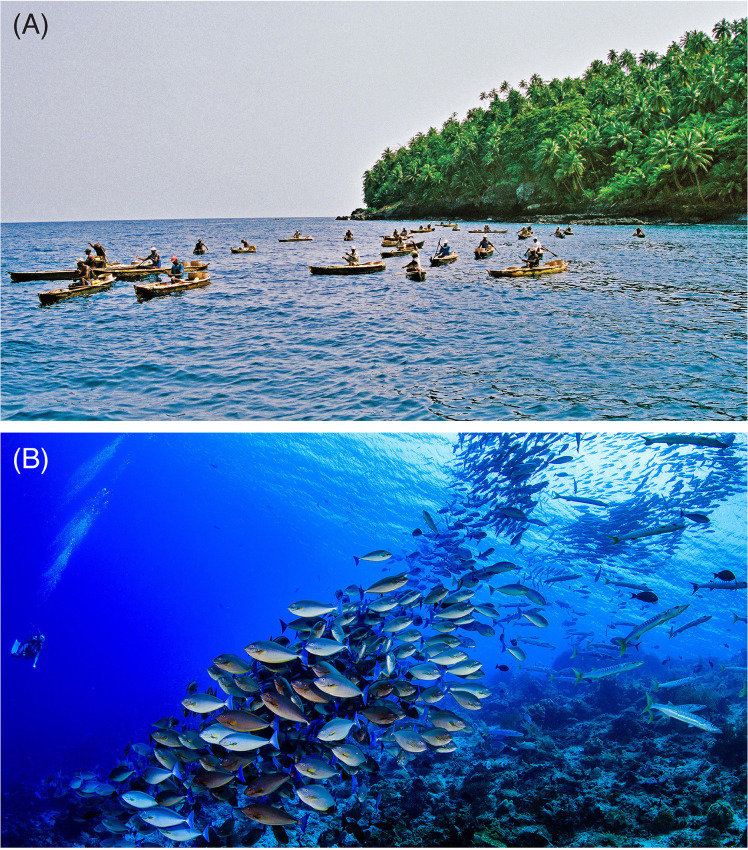
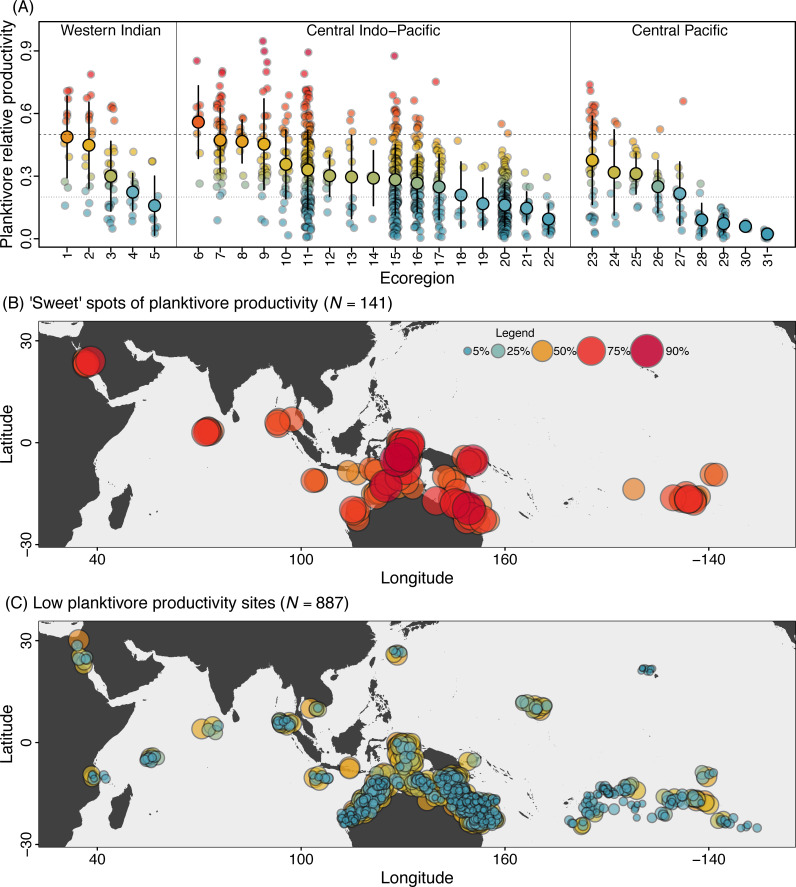
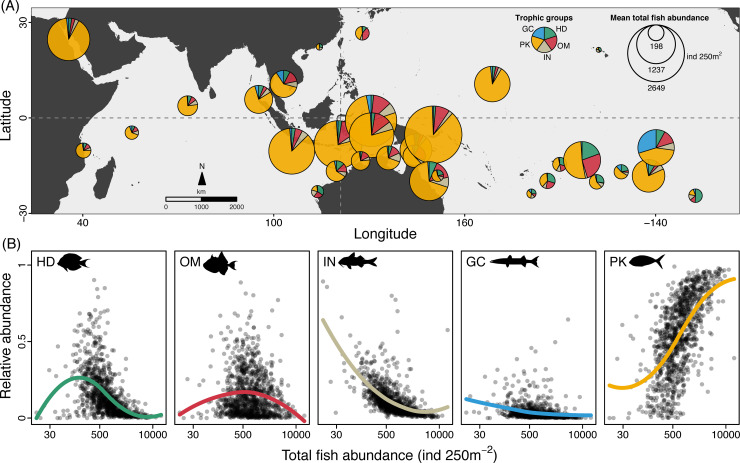
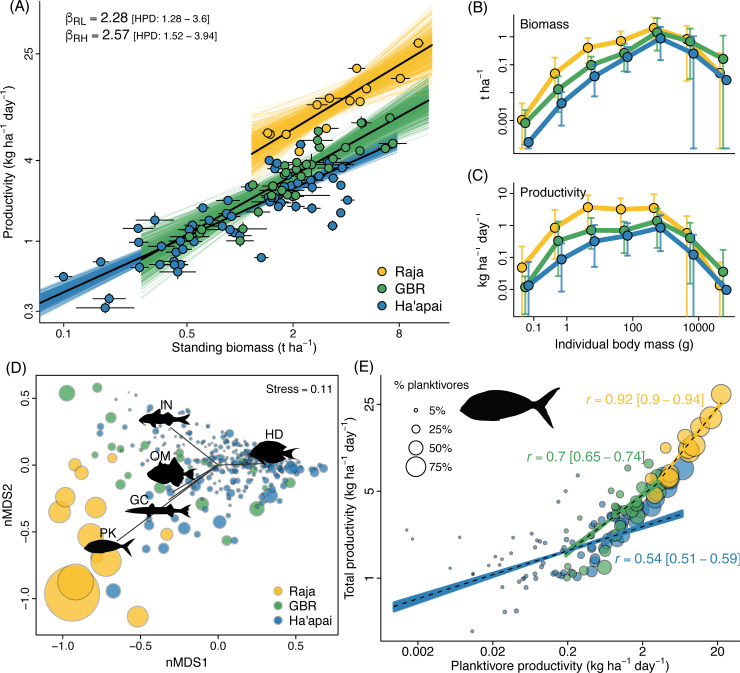
Spatial subsidies increase local productivity and boost consumer abundance beyond the limits imposed by local resources. In marine ecosystems, deeper water and open ocean subsidies promote animal aggregations and enhance biomass that is critical for human harvesting. However, the scale of this phenomenon in tropical marine systems remains unknown. Here, we integrate a detailed assessment of biomass production in 3 key locations, spanning a major biodiversity and abundance gradient, with an ocean-scale dataset of fish counts to predict the extent and magnitude of plankton subsidies to fishes on coral reefs. We show that planktivorous fish-mediated spatial subsidies are widespread across the Indian and Pacific oceans and drive local spikes in biomass production that can lead to extreme productivity, up to 30 kg ha-1 day-1. Plankton subsidies form the basis of productivity "sweet spots" where planktivores provide more than 50% of the total fish production, more than all other trophic groups combined. These sweet spots operate at regional, site, and smaller local scales. By harvesting oceanic productivity, planktivores bypass spatial constraints imposed by local primary productivity, creating "oases" of tropical fish biomass that are accessible to humans.
空间补贴增加了当地的生产力,并在当地资源所限之外促进了消费者的丰富性。在海洋生态系统中,更深的水和开阔海域的补贴促进了动物的聚集,并增加了对人类收获至关重要的生物量。然而,热带海洋系统中这种现象的规模尚不清楚。在这里,我们将在三个关键地点的生物量生产的详细评估与鱼类计数的海洋规模数据集相结合,以预测浮游生物对珊瑚礁鱼类的空间补贴的范围和规模。我们表明,浮游动物食性鱼类介导的空间补贴在印度洋和太平洋广泛存在,并导致当地生物量生产的峰值,可导致极端生产力,高达 30 公斤/公顷/天。浮游生物补贴是生产力“甜蜜点”的基础,浮游动物提供的鱼类总产量超过 50%,超过所有其他营养组的总和。这些甜蜜点在区域、地点和更小的本地尺度上运作。通过收获海洋生产力,浮游动物绕过了由当地初级生产力施加的空间限制,创造了人类可进入的热带鱼类生物量“绿洲”。