Liu Youxia, Yu Huyan, Wu Sijing, Yang Xia, Cao Congcong, Wang Fanghao, Jia Junya, Yan Tiekun
Department of Nephrology, Tianjin Medical University General Hospital, No. 154, Anshan Road, Heping District, Tianjin, P.R. China.
Department of Nephrology, Tianjin Medical University General Hospital, Tianjin, P.R. China.
Ther Adv Chronic Dis. 2021 Oct 11;12:20406223211048644. doi: 10.1177/20406223211048644. eCollection 2021.
Our previous study revealed that plasma levels of a-2,6-sialyltransferase 1 (ST6GAL1) were increased in patients with IgA nephropathy (IgAN). ST6GAL1 catalyzes terminal sialylation of IgG to shift the antibody effector function to the anti-inflammatory pattern. However, the role of plasma ST6GAL1 in the progression of IgAN and underlying mechanisms are still unknown.
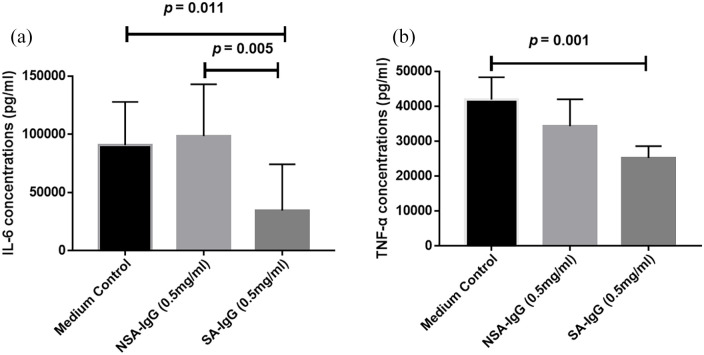
A total of 180 IgAN patients were included. The kidney outcomes were defined as the eGFR decline or proteinuria remission. Peripheral blood mononuclear cells (PBMCs) were either stimulated with purified sialylated IgG (SA-IgG) or with non-sialylated IgG (NSA-IgG) from IgAN patients to detect the levels of interleukin (IL)-6 and tumor necrosis factor-α (TNF-α) in supernatant.
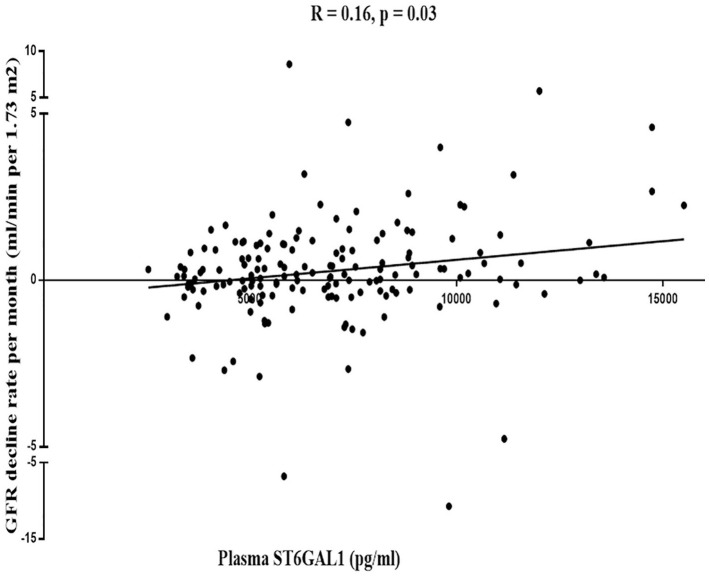
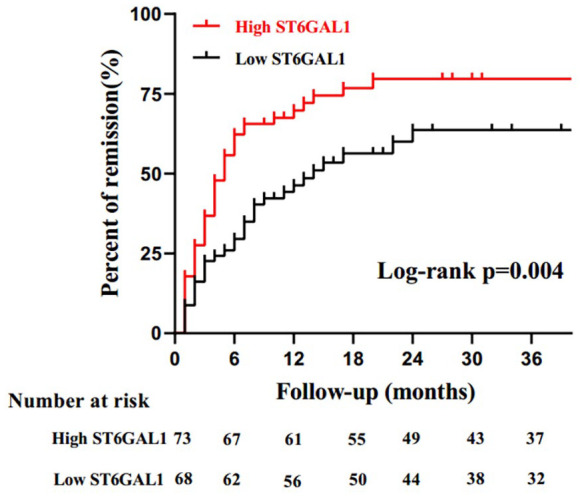
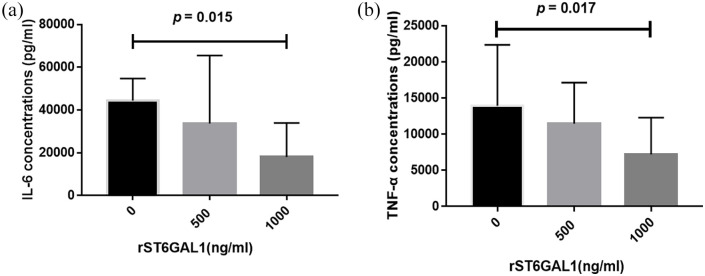
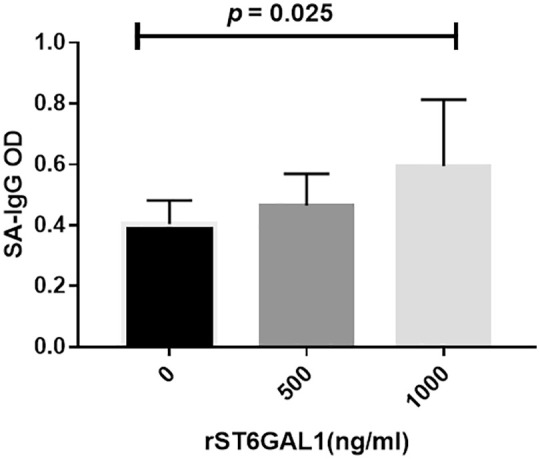
Compared with the lower ST6GAL1 (reference), the risk of eGFR decline decreased for the higher ST6GAL1 group after adjustment for baseline eGFR, systolic blood pressure (SBP), and proteinuria. The results showed that patients with higher ST6GAL1 levels had a higher rate of proteinuria remission. ST6GAL1, expressed as a continuous variable, was a protective factor for eGFR decline and proteinuria remission. An study showed that the administration of recombinant ST6GAL1 (rST6GAL1) decreased the levels of IL-6 and TNF-α in PBMCs. Furthermore, the administration of rST6GAL1 resulted in the enrichment of SA-IgG in a concentration-dependent manner. In addition, as compared to control, purified SA-IgG-treated PBMCs showed a significant decrease in the expression of IL-6 and TNF-α.
Our study indicated that elevated ST6GAL1 was associated with a slower progression of IgAN, which may play a protective effect by increasing IgG sialylation to inhibit the production of proinflammatory cytokines in PBMCs.
我们之前的研究表明,IgA肾病(IgAN)患者血浆中α-2,6-唾液酸转移酶1(ST6GAL1)水平升高。ST6GAL1催化IgG的末端唾液酸化,使抗体效应功能转向抗炎模式。然而,血浆ST6GAL1在IgAN进展中的作用及其潜在机制仍不清楚。
共纳入180例IgAN患者。肾脏结局定义为估算肾小球滤过率(eGFR)下降或蛋白尿缓解。用来自IgAN患者的纯化唾液酸化IgG(SA-IgG)或非唾液酸化IgG(NSA-IgG)刺激外周血单个核细胞(PBMC),以检测上清液中白细胞介素(IL)-6和肿瘤坏死因子-α(TNF-α)的水平。
与较低的ST6GAL1(参照)相比,在对基线eGFR、收缩压(SBP)和蛋白尿进行校正后,较高ST6GAL1组eGFR下降的风险降低。结果显示,ST6GAL1水平较高的患者蛋白尿缓解率较高。以连续变量表示的ST6GAL1是eGFR下降和蛋白尿缓解的保护因素。一项研究表明,给予重组ST6GAL1(rST6GAL1)可降低PBMC中IL-6和TNF-α的水平。此外,给予rST6GAL1导致SA-IgG以浓度依赖的方式富集。另外,与对照组相比,纯化的SA-IgG处理的PBMC中IL-6和TNF-α的表达显著降低。
我们的研究表明,ST6GAL1升高与IgAN进展较慢有关,其可能通过增加IgG唾液酸化以抑制PBMC中促炎细胞因子的产生而发挥保护作用。